False Ceiling Lights: Every Type Explained, Room by Room
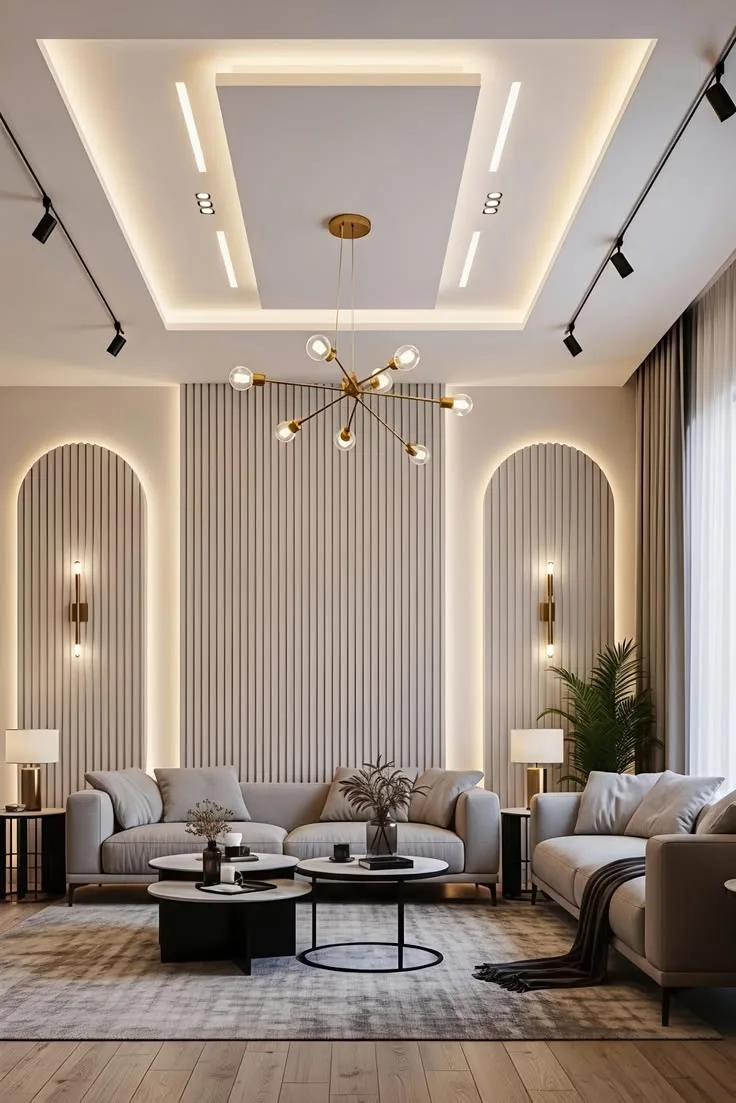
The main types of false ceiling light are cove strips, profile lights, COB downlights, panel lights, spotlights, track lights, pendants and chandeliers, and star or backlit ceilings. Most good rooms use three of them together: one to light the whole room, one for tasks and one for accents.
Choose by the job first, then the type. Every light in a ceiling does one of three jobs: fills the room (ambient), lights something you do (task), or draws the eye (accent). A cove and a panel do the same job in different ways. A COB spotlight and a cove never do. Once you know the jobs a room needs, the choice of type gets simple.
Search for false ceiling lights and you get catalogues: fifty photos of fifty fittings. That is useful once you know what you need, and overwhelming before. This guide starts one step earlier.
Why does one type of light never work on its own?
Because a room is used for different things at different times. A single central light, or a grid of identical downlights, gives the room one setting. It is either bright enough to read by and too harsh for a quiet evening, or soft enough for the evening and too dim to cook or read.
Lighting designers solve this by layering: light for the whole room, light for tasks and light for accents, each on its own circuit. We explain the layers, and why the cove usually carries the first one, in our false ceiling lighting guide. This page is the catalogue that goes with it.
What are the types of false ceiling lights?
Twelve types cover almost every Indian home. The "job" column is the one to read first.
| Type | What it is | Job | Best rooms | Watch out for |
|---|---|---|---|---|
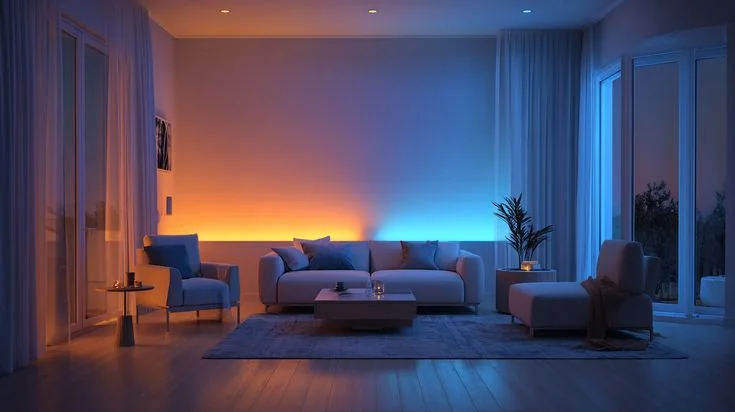
| Cove strip | LED strip hidden in a ceiling recess, washing the ceiling | Whole room, mood | Living room, bedroom | Recess too shallow, so the strip shows |
| Profile (linear) light | Strip in a metal channel under a frosted cover, one smooth line of light | Whole room or accent | Living room, kitchen, passage | Cheap diffusers that show the dots |
| COB downlight | One powerful chip in a small recessed fitting, a focused beam | Task and accent | Everywhere | Laid in a grid instead of aimed at something |
| Panel or slim downlight | Flat, wide face spreading light evenly | Whole room | Kitchen, study, utility | Flat, office-like light in a living room |
| Adjustable spot (gimbal) | A recessed spot that tilts | Accent | Art walls, TV walls, pooja unit | Aimed once, then forgotten after furniture moves |
| Trimless (plaster-in) | A fitting set flush into the ceiling with no visible rim | Task and accent | Minimal living rooms and bedrooms | Must be fixed while the ceiling is built |
| Magnetic track | Low-voltage rail with clip-on spots and bars that can move | Task and accent | Living and dining rooms that change layout | A visible rail, where downlights would disappear |
| Wall washer or grazer | A linear light aimed down a wall, evenly or at a low angle | Accent | Textured, panelled or stone walls | Grazing shows every flaw in plain plaster |
| Pendant | A fitting hanging on a rod or cord | Task and decoration | Dining table, kitchen island, bedside | Hung too high to light the table |
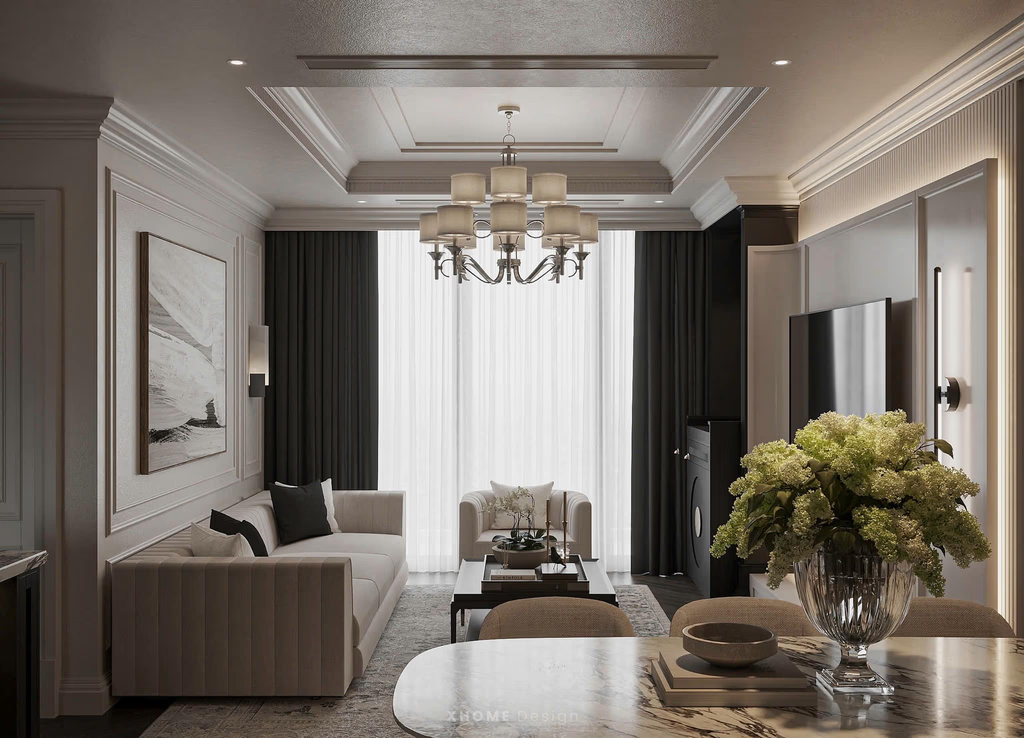
| Chandelier (jhoomar) | A large decorative multi-light fitting | Decoration, some whole-room light | Hall, double-height living room | Hung from the board instead of the slab |
| Backlit or stretch ceiling | A translucent membrane lit from behind, a glowing plane | Whole room, feature | Feature areas, windowless rooms | Needs depth and access for maintenance |
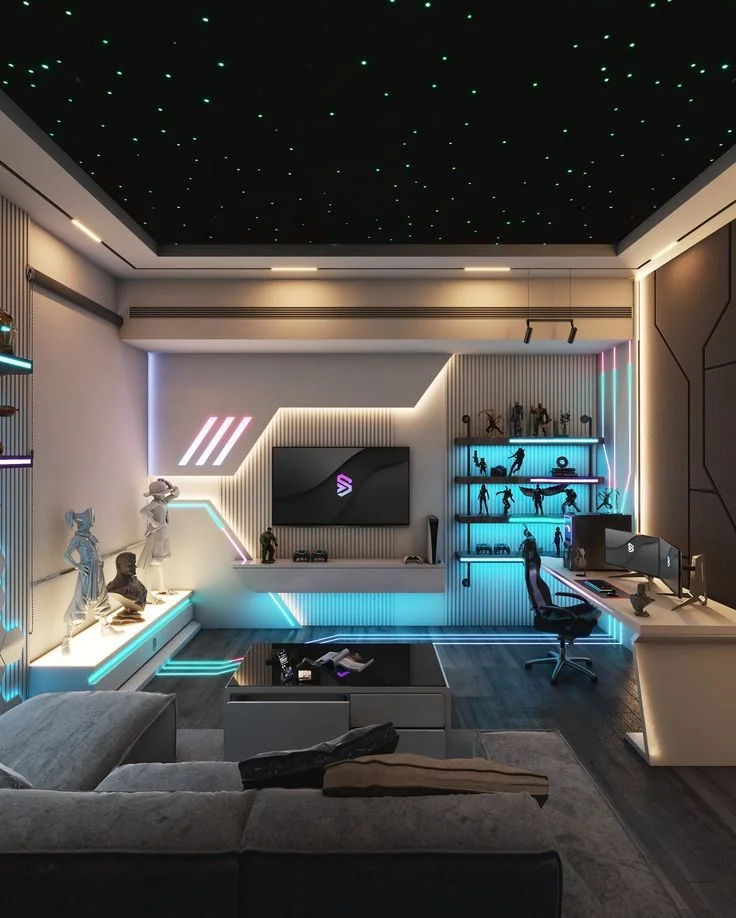
| Star ceiling | Points of light across a dark ceiling, by fibre optics or a projector | Feature, mood | Kids room, media room, bedroom | Fibre versions have to be built into the ceiling |
Cove and profile get mixed up more than any other pair here. One describes where the light sits, the other what holds it, so choosing between them is the wrong question. For cove depth and how many downlights a room needs, see the false ceiling lighting guide.
Which lights does each room need?
A starting point for a Mumbai flat. Warm white suits living rooms and bedrooms, and neutral white suits kitchens and study desks; we explain the choice in warm white vs cool white.
| Room | Whole room | Task | Accent or feature |
|---|---|---|---|
| Living room | Cove, warm white | COB downlights over seating | Spots on the TV or art wall, a chandelier |
| Master bedroom | Peripheral cove, dimmable | Bedside reading lights | A few trimless spots, under-bed night light |
| Kids room | Panel or downlights | Study desk light | Colour strip, star ceiling, night light |
| Kitchen | Downlights or panel, neutral white | Profile under the wall cabinets | Rarely needed |
| Dining | Cove or downlights | Pendant over the table | Spot on a sideboard or art |
| Bathroom | IP-rated downlights | Light at the mirror | Niche strip, IP-rated |
| Passage and foyer | Profile or downlights | None | Low night light |
| Pooja unit | From the room | None | A warm spot on the idol, a strip inside the unit |
The one row most homes get wrong is the kitchen. Ceiling lights sit behind you when you stand at the counter, so you cast a shadow on your own work. A profile under the wall cabinets fixes it, and it has to be wired before the cabinets go up.
What do bathroom and balcony ceiling lights need?
Protection from water, rated by IP number. Bathrooms are divided into zones by how close a light is to the water. As The Bathroom Showroom's guide to bathroom zones sets out:
- Directly above the shower or bath, up to 2.25 m IP65 recommended (IP44 technically allowed)
- Within 60 cm of the shower or bath, up to 2.25 m IP44 minimum
- Inside the bath or shower itself IP67, and 12V only
- The rest of the bathroom No rating required, but IP44 recommended for humidity
In Mumbai, that last line deserves more weight than it gets. Monsoon humidity reaches every bathroom ceiling, and an open balcony takes rain driven sideways. We would treat IP44 as the floor for any bathroom ceiling light and pick IP65 for balconies.
Can a chandelier or pendant hang from a false ceiling?
Not from the board itself. A gypsum or POP board is built to be a ceiling, not to hold a heavy fitting. A chandelier, and anything heavier than a light pendant, should be fixed to the concrete slab above, with its rod or chain passing through a hole in the false ceiling.
That fixing point has to be planned before the ceiling is built, along with the height it hangs at. Tell your carpenter the weight and position of every hanging fitting at the drawing stage.
It also changes what dimming means. A chandelier on its own circuit and dimmer can be bright for guests and a soft glow for the rest of the week. A chandelier on the same switch as the downlights is only ever on or off.
Can every type of false ceiling light be dimmed?
Almost every type, if the part behind it allows it. An LED fitting is dimmed by its driver, the small unit that powers it, and the driver has to match whatever is controlling it. A driver built for one kind of dimmer will flicker, buzz or ignore a different one.
Large systems use digital control. The best known, DALI, gives each device its own address, up to 64 in a basic system, so every fitting can be set on its own. Homes can get the same result without running control cables.
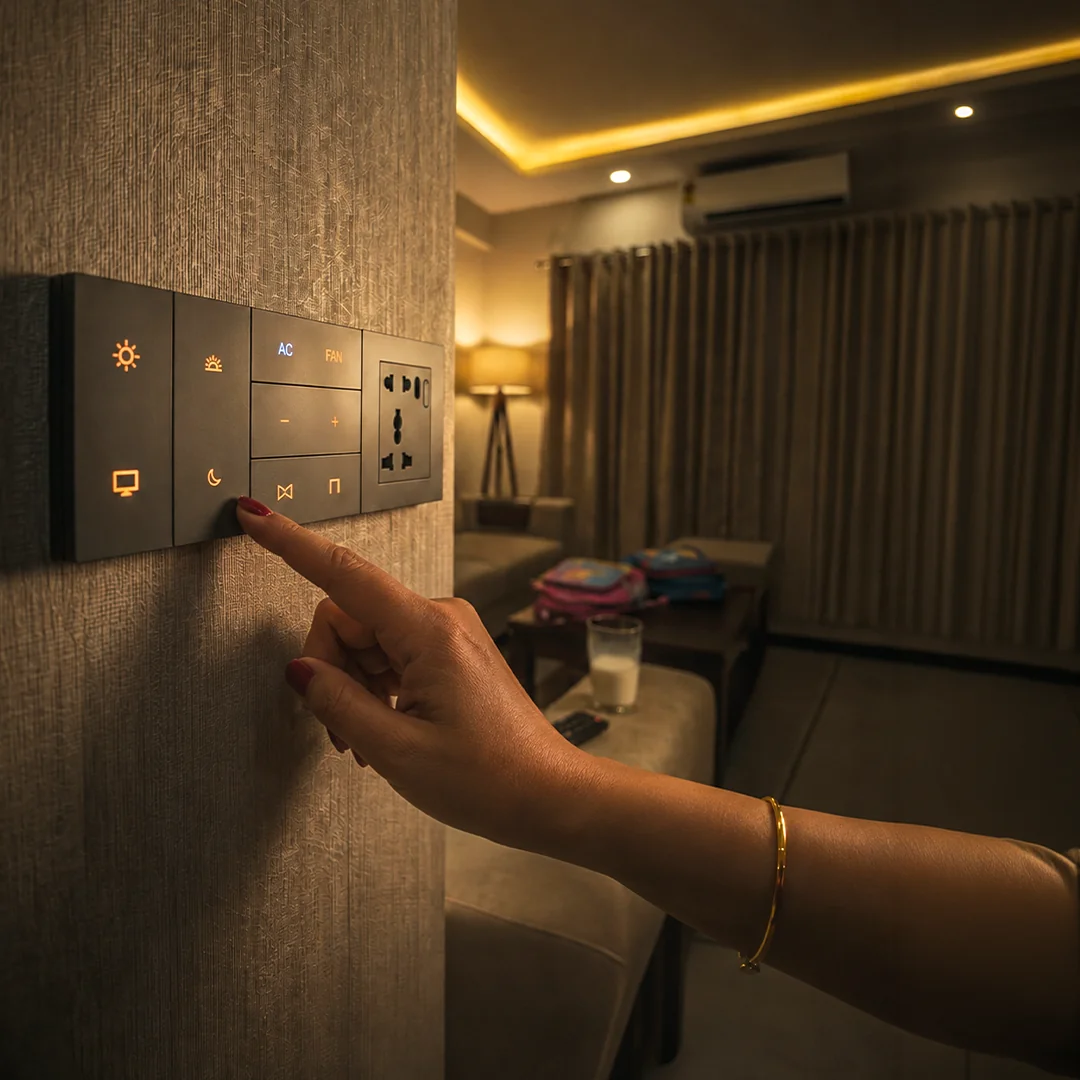
In an AHA home, a smart driver sits with each fitting and controls its brightness and colour temperature on its own, not one dimmer for a whole circuit. There are three kinds to match the types above: COB drivers for downlights and spots, strip and profile drivers (one covers up to 15 feet of strip), and PCB drivers for track lighting. The lights then join scenes, so one button can set the cove low, the spots on the art and the chandelier off.
Two things matter for any system, ours or not. Every driver needs a place in the ceiling that can be reached later, because the driver is the part that eventually needs attention. And the decision has to be made before the boards go up. The false ceiling cost guide covers what the lighting layer adds to the budget.
How does a star ceiling work?
There are two ways to put stars on a ceiling. A fibre-optic ceiling runs hundreds of fine fibres from a light source to points drilled through the ceiling, which means building it in while the ceiling is made. A projector throws the stars onto an ordinary ceiling from a small unit.
The AHA StarLight Projector takes the second route: the same soft effect as a fibre-optic ceiling, with no fibres, and it plugs in rather than being built in. Its colours shift from cool blue-white to warm amber, which suits kids rooms and media rooms.
What can this guide not decide for you?
- The exact number of lights. It depends on the room's size, ceiling height and furniture. Our false ceiling lighting guide gives a starting rule for downlights, and a lighting drawing settles it.
- Brands and prices. We do not sell light fittings; you choose your own. We supply the control behind them.
- Whether your ceiling is deep enough. Coves, trimless fittings and backlit ceilings all need depth, and many newer Mumbai flats are low to begin with. That is a site measurement, not a rule of thumb.
What do people ask us next?
Which light is best for a false ceiling?
No single type. Most good rooms combine three: a cove or panel for light across the whole room, COB downlights or a pendant for the places you read, cook or work, and spots or wall lights for accents. Pick by the job each light has to do, then choose the type.
What is the difference between a COB light and a panel light?
A COB light packs its LEDs into one small chip, so it throws a focused beam at something, like a counter or a painting. A panel spreads light evenly over a wide area from a flat face. COB lights are for pointing, panels are for filling a room.
What is the difference between a cove light and a profile light?
A cove is where the light sits: tucked into a recess so it lights the ceiling rather than the room. A profile is what holds it: a metal channel with a frosted cover that turns a row of LED dots into one smooth line. They are not alternatives, and most well-lit coves use both.
How many types of light should one room have?
Usually three: one for the whole room, one for tasks and one for accents. A room lit by one kind of light has one mood. Each type should be on its own circuit so it can be switched or dimmed separately.
What IP rating do bathroom ceiling lights need?
It depends on the zone. Directly above a shower or bath, up to 2.25 metres, IP65 is recommended. Within 60 cm of the shower or bath, IP44 is the minimum. Elsewhere in the bathroom no rating is required, but IP44 is still recommended because of humidity, and in a Mumbai monsoon that advice matters more.
Can a chandelier hang from a gypsum false ceiling?
Not from the board itself. Gypsum board is not built to carry a heavy fitting. A chandelier should be fixed to the concrete slab above, with its rod or chain passing through the false ceiling. Tell your carpenter before the ceiling is built so the fixing point is planned.
The short version: decide the jobs first, whole room, task and accent, then pick a type for each, put each type on its own circuit, and settle how they will be controlled before the ceiling closes. That order is what separates a ceiling full of lights from a room that is lit well.
You can see cove, COB, profile and star lighting working together, and dimming on their own, at either of our experience centres in Santacruz West and Lower Parel, open daily 11am to 7pm. Walk in, or book ahead. More on smart lighting.
Book a free consultation →