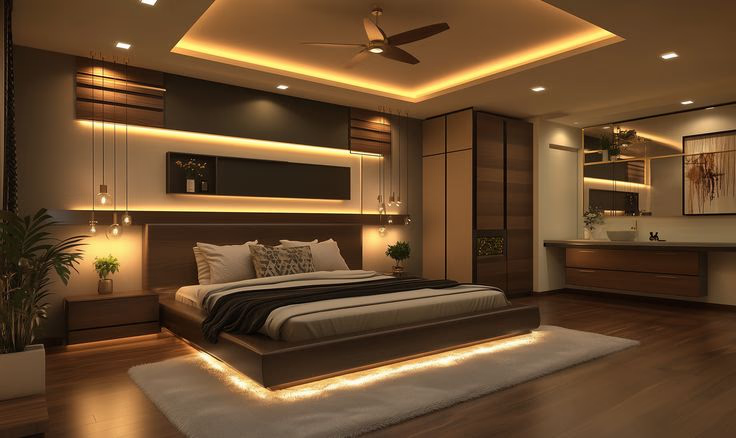
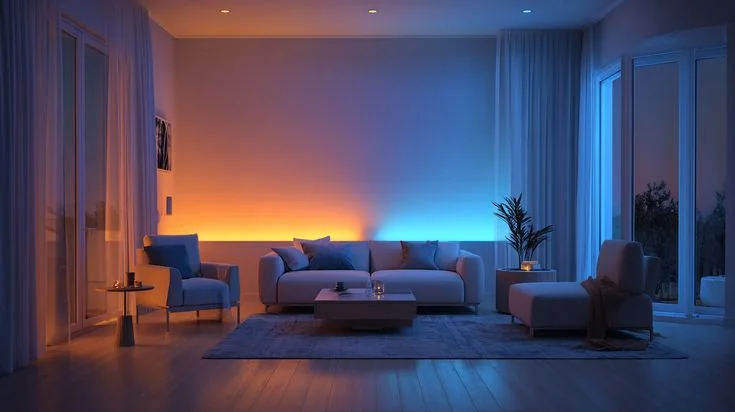
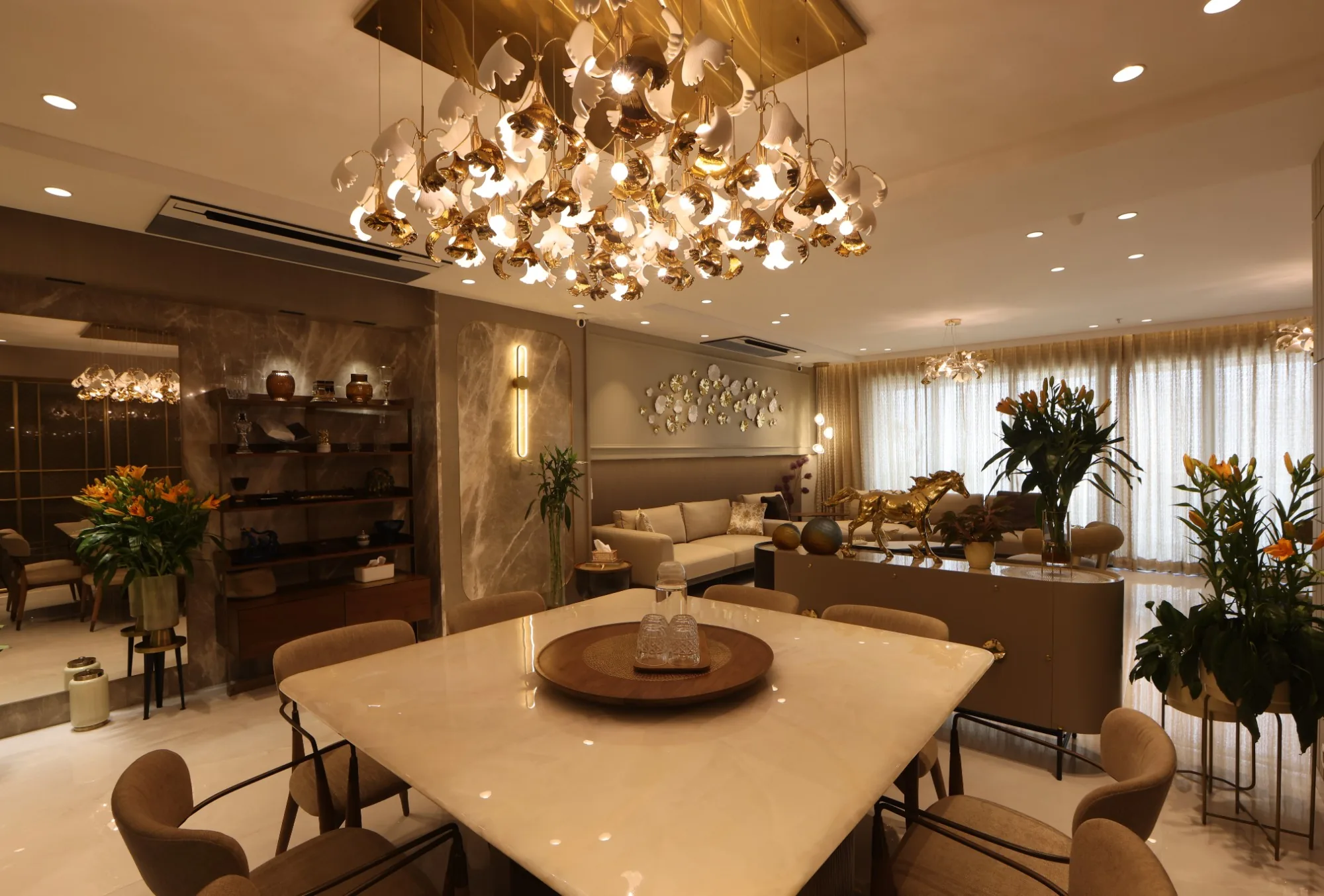
Why Does Your Wall Colour Look Different at Night?
Because the paint never had a colour of its own. A wall returns whatever light falls on it, and daylight, a warm lamp and a cool downlight are three different lights. The shade you approved in the showroom is not the shade your bedroom will show you at 9pm.
You did not choose a colour, you chose a colour under a light. Every shade card you have ever held was lit by something, usually a bright cool tube in a shop. Your home is lit by something else. The paint is behaving exactly as it should.
It is one of the most common complaints after a repaint, and one of the easiest to predict: the colour that looked warm and calm on the card looks grey, or green, or dead, on the wall at night.
What is actually happening?
A surface has no colour without light. It absorbs part of what falls on it and returns the rest, and what returns is what you see. Change the light and you change the mix that comes back.
India's own lighting code has a name for this. IS 3646 (Part 1) : 1992, the Bureau of Indian Standards code of practice for interior illumination, defines colour rendering as "a general expression for the appearance of surface colours when illuminated by light from a given source compared, consciously or unconsciously, with their appearance under light from some reference source". The reference source most of us carry in our heads is daylight, which is why a colour that looks wrong at night often looks fine again the next morning.
The same code sorts lamps into colour appearance groups, warm, intermediate and cold, and puts the tension plainly: a room needs "a colour appearance compatible with daylight and yet to provide a white colour at night". That is the whole problem in one line, written in 1992.
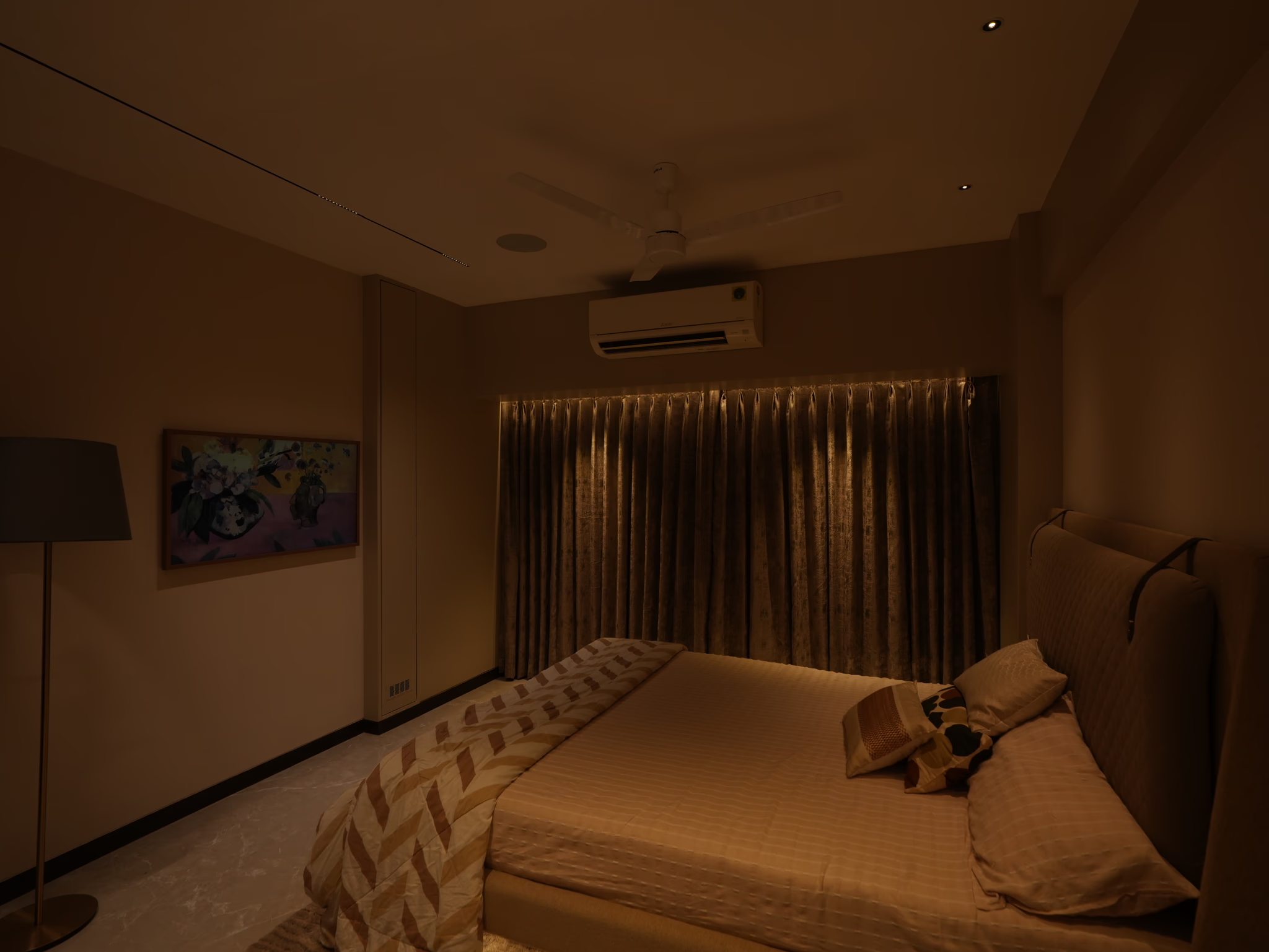
Which colours shift the most?
Not the ones people expect. The shades that misbehave are rarely the bold ones.
| Colour family | What happens when the light changes |
|---|---|
| Greys and greiges | The worst offenders. They carry small amounts of several pigments, and a light source can lift any one of them, so the wall reads blue under cool light and brown under warm light |
| Off-whites and creams | They take on the tint of whatever is lighting them. A cream wall under cool light looks dirty; a cool white wall under warm light looks yellow |
| Strong, saturated colours | Shift less in hue, more in depth. A deep blue stays blue but can go flat and heavy in dim, warm light |
| Greens and teals | Move furthest between daylight and lamplight, because daylight carries more of the short wavelengths that make them read fresh |
There is a second effect underneath all of this, and it is about quantity rather than colour. The code's recommendations assume a room where the ceiling reflects at least half the light that hits it and the walls at least a quarter. Go much darker than that and the room does not just look different, it is genuinely returning less light to your eye. That is the reflectance point covered in what to decide before painting.
How should you test a shade?
Three rules, and they cost nothing but patience.
- Test on the wall, not on the card. A patch big enough to read from across the room, on the wall that worries you most, usually the one facing away from the window.
- Look three times. Morning daylight, mid-afternoon, and after dark with the lights you actually own. Judging a shade only in daylight is how rooms end up wrong at exactly the hour they are used most.
- Test it next to what stays. The sofa, the flooring, the wardrobe shutters. Colour is always relative to its neighbours, and those neighbours are not moving.
India publishes recommended light levels room by room in IS 3646 (Part 2) : 1966, its schedule of illumination and glare index, which covers ordinary domestic spaces including bedrooms, kitchens, corridors and stairs. The practical lesson is simply that a bedroom and a kitchen are not meant to be lit to the same level, so it is no surprise when one shade succeeds in one room and fails in the other.
Should you change the paint, or the light?
This is the question almost nobody asks, and it is usually the cheaper one. If the wall is the colour you chose and it only fails after dark, the paint is not the problem.
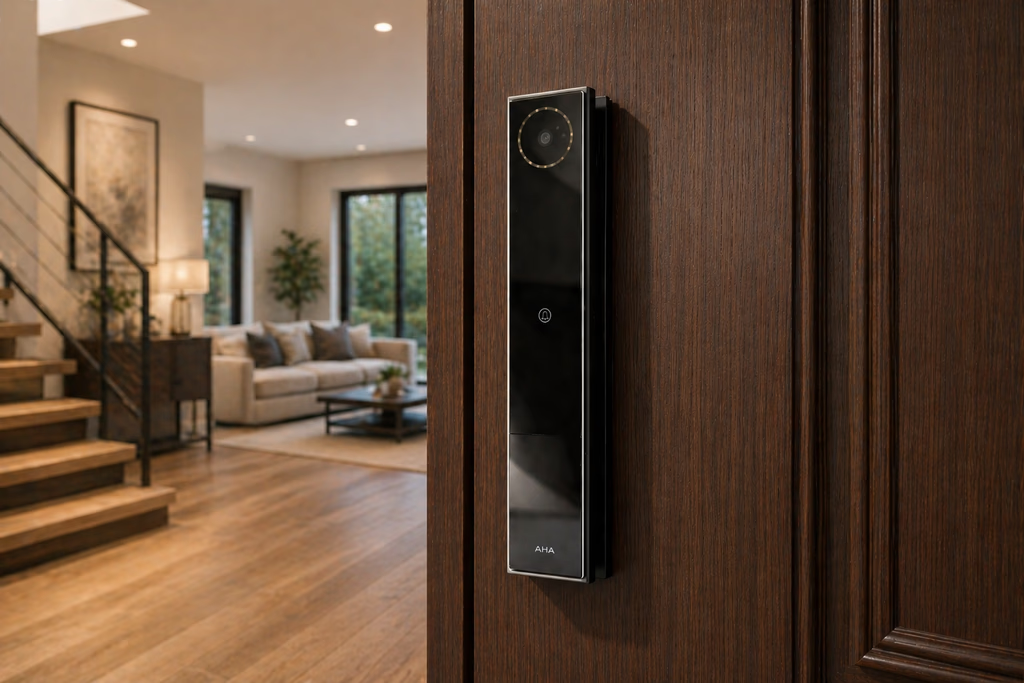
In an AHA home a driver sits inside each light fitting, so intensity and colour temperature are set per light rather than per circuit. The same room can sit at a neutral, daylight-leaning setting through the working day and move to something warm and low in the evening, with both stored as scenes on the hub. The wall is then judged twice, as it always was, but you chose both versions instead of inheriting one.
Two honest limits. First, a driver changes the light, not the fixture: you still choose your own fittings, and a poor quality lamp renders colour poorly whatever you do with it. Second, this is a reason to decide the lighting and the paint in the same conversation, not a reason to paint badly and fix it later. The full comparison of what warm and cool actually mean, in Kelvin and in practice, is in cool white or warm white, and mood lighting ideas covers the scenes themselves.
What will this not fix?
A room with too few places to put light. Colour temperature cannot invent a fitting. If the only light is one central point, the walls will always look flat at night.
A colour you dislike in daylight. If it is wrong at noon, it is wrong. Lighting rescues the evening, not the morning.
A wall that is not flat. That is a finish problem rather than a colour one, and grazing light will keep showing it. Matte, satin or gloss covers which finish forgives an uneven wall and which one exposes it.
What do people ask us next?
Why does my wall paint look different at night?
Because the light source changed. A colour has no appearance of its own; it only returns the light that falls on it. Daylight and an evening lamp contain different mixes of light, so the same wall hands back a different colour. India's lighting code calls this colour rendering: how surface colours appear under one source compared with their appearance under a reference source.
Which paint colours change the most under different lights?
Greys, greiges and other near-neutrals, because they hold small amounts of several pigments and a light source can lift any one of them. A grey can read blue under cool light and brown under warm light. Strong, saturated colours shift less in hue and more in depth, and off-whites simply take on the tint of whatever is lighting them.
How should you test a paint shade before buying it?
Paint a patch on the actual wall, large enough to read from across the room, on the wall that worries you most. Then look at it three times: in morning daylight, in the afternoon, and after dark under the lights you already own. A shade card held under showroom lighting tells you almost nothing about your bedroom at 9pm.
Should I match paint to warm light or cool light?
Match it to the light you will live with in that room at the hour you use the room most. India's lighting code sorts lamps into warm, intermediate and cold colour appearance groups, and notes the awkwardness of wanting a colour appearance compatible with daylight while still giving a white light at night. If your lighting can move between warm and cool, the colour has to survive the whole range.
Can changing the lighting fix a paint colour I dislike?
Often, yes. If the walls read cold in the evening, warmer light at that hour can rescue them without a drop of paint. With a driver in each fitting, intensity and colour temperature can be set per light and per scene, so the same room can be daylight-neutral at 11am and warm at 9pm.
Does the ceiling colour affect the wall colour?
Yes. Light bounces off the ceiling before it reaches the walls, so a strongly coloured ceiling tints everything below it. India's lighting code assumes a ceiling reflecting at least half the light that reaches it, which is one reason ceilings are usually the palest surface in the room.
Is a dark wall a bad idea in a Mumbai flat?
Not at all, as long as it is a lighting decision as well as a colour one. Dark walls absorb light rather than return it, so a room in a deep colour needs more light, or more places to put light, than the same room in a pale one. One deep feature wall is usually easy; four deep walls and a dark ceiling is a lighting plan.
The short version: you are not choosing a colour, you are choosing a colour and a light together. Test the shade on the wall, look at it after dark, and decide whether the paint needs to change or the light does.
You can see the same wall move from daylight-neutral to warm at either experience centre, in Santacruz West or Lower Parel, open 11am to 7pm (Santacruz West is closed on Tuesdays). Bring the shade card.
Book a free consultation →