Matte, Satin or Gloss: Which Finish Should Each Room Have?
Finish decides how light leaves the wall. Matte scatters it and forgives an uneven surface. Satin returns some of it and wipes clean. Gloss returns the most and hides nothing. Pick per room, and pick with the lighting plan in front of you.
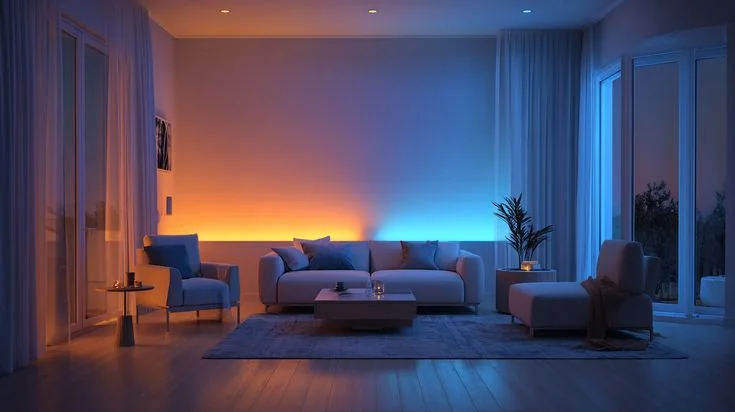
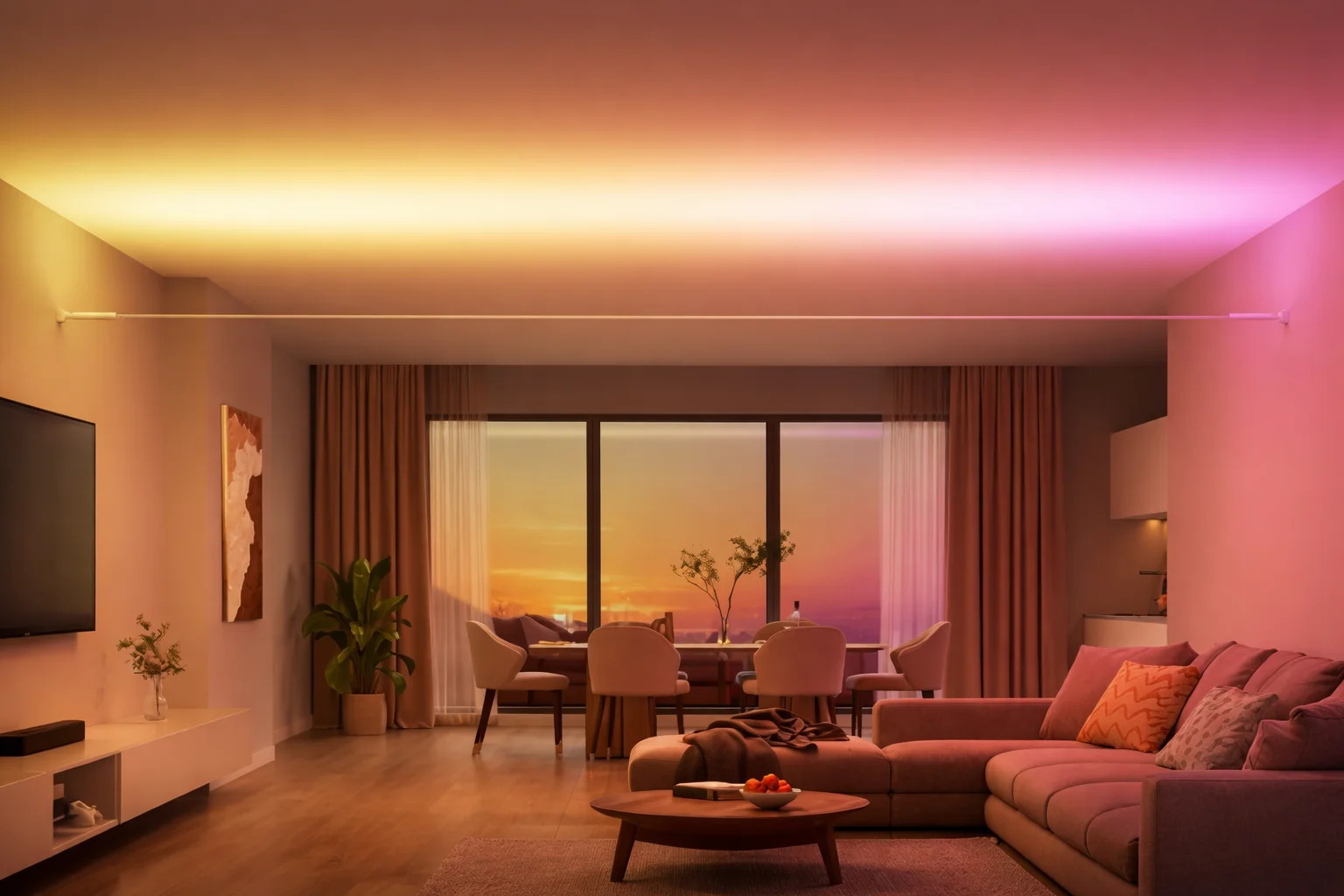
Finish is usually sold as a cleaning decision. It is at least as much a lighting one. Two walls in the same shade, one matte and one satin, are two different rooms once a cove or a downlight is switched on, because the sheen decides whether light comes back as a soft glow or as a highlight.
The shade gets weeks of deliberation. The finish gets decided at the counter, usually by whoever is quoting. It deserves better, because it is the harder one to live with.
What does a finish actually change?
Three things at once, and they pull against each other.
How light comes back. A flat surface scatters light in every direction, so you see an even glow. A smooth, sheened surface sends more of it back at a matching angle, so you see the light source in the wall, as a highlight or a reflection.
What it hides. Scatter hides. A matte finish blurs the small dips and ridges that every plastered wall has. Sheen sharpens them, because a highlight moving across an uneven surface bends and breaks.
What it survives. The harder, smoother films take wiping, steam and small hands. The flatter ones mark and burnish where they are touched and rubbed.
So the real question per room is: is this wall going to be washed, and how is it going to be lit?
Which finish suits which room?
The names vary between manufacturers, and the boundaries are not standardised, so judge by behaviour rather than by the word on the tin.
| Room | Finish | Why |
|---|---|---|
| Bedrooms | Matte or low sheen | Soft, often side-lit. Low wear. The finish that forgives the wall |
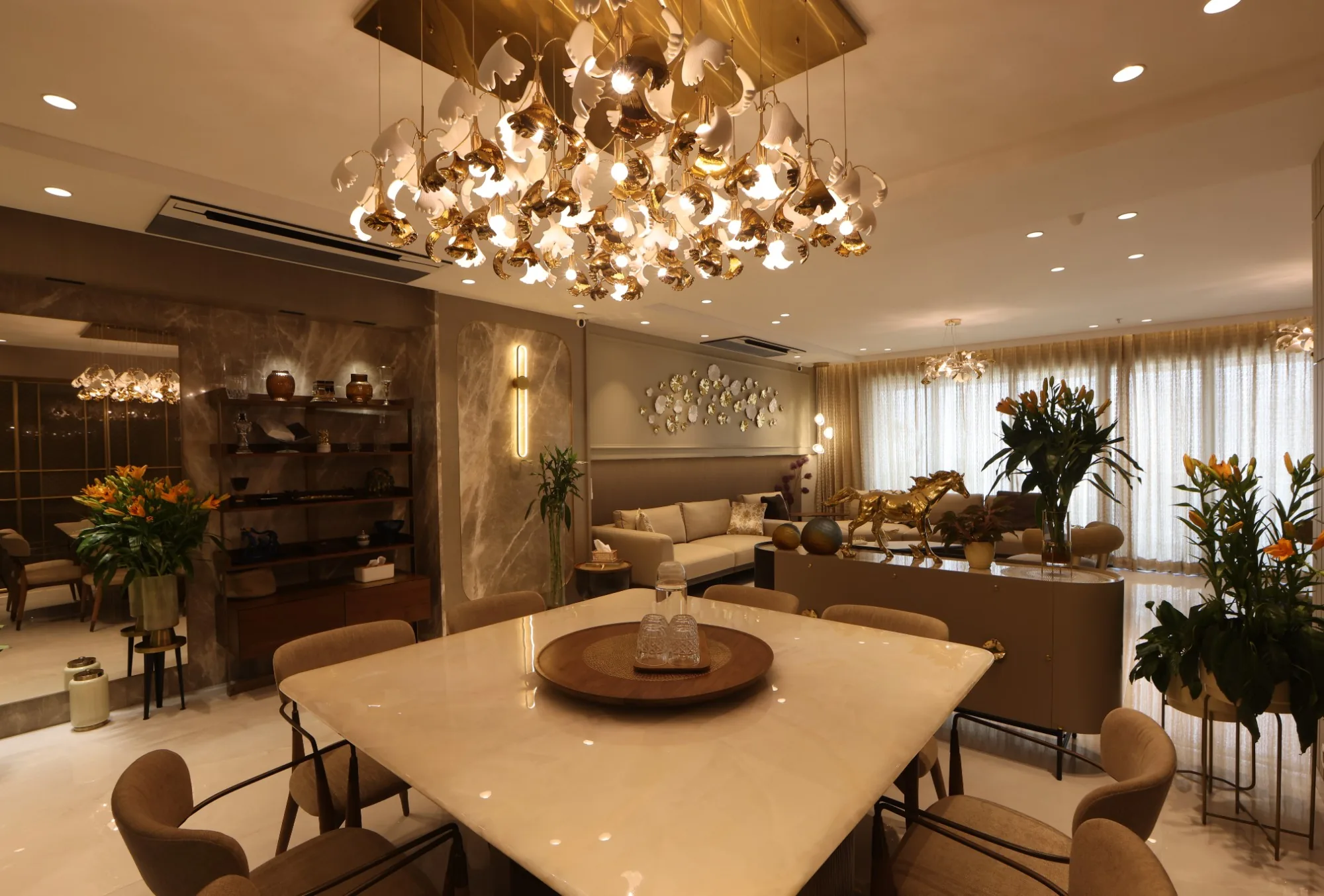
| Living and dining | Matte, sheen on high-touch walls | Usually the most carefully lit room, so scatter helps. Add wipeability only where hands land |
| Kitchen | Satin or semi-gloss | Grease, steam and repeated cleaning. Sheen survives; flat does not |
| Bathroom | Satin or semi-gloss | Moisture and wiping, in a small room where the walls are close to the light |
| Passages and stairs | Low sheen | The most touched walls in the house, and often lit from above at a steep angle |
| Kids' rooms | Wipeable low sheen | Cleaning wins over concealment, at least for the lower half of the wall |
| Ceilings | Flat, pale | The code expects the ceiling to reflect at least half the light that hits it, spread rather than mirrored |
| Doors, grills, joinery | Enamel | A different product from wall emulsion, chosen for hardness |
Why does a cove show every flaw in the wall?
Because of the angle. A ceiling light drops light onto a wall from in front, filling in the small hollows. A cove, a wall washer or a strip tucked behind a pelmet sends light along the wall, almost parallel to it, and anything standing proud of the surface casts a shadow the length of the wall.
This is the single most common surprise in a newly finished flat: the plaster passed inspection under the site bulb, and the cove exposed it on day one. There are only three honest answers, and you choose between them before the painter starts:
- Prepare the wall properly, which means the putty and sanding stage, not an extra coat of colour.
- Use a flatter finish on any wall that will be grazed, so the surface scatters instead of highlighting.
- Move the light off the wall, by turning a wall-grazing cove into one that throws light at the ceiling instead.
Our cove and false ceiling guide covers where each kind of cove belongs, and false ceiling lights, every type explained covers the fittings themselves.
Where does sheen turn into glare?
When a bright source is reflected back at eye level. IS 3646 (Part 1) : 1992, India's code of practice for interior illumination, treats this as a design problem rather than a taste one: it asks for glare to be avoided by limiting the luminance of luminaires and windows, and for the brightness of a task and its surroundings to stay in proportion, with the immediate surroundings preferably not less than a third of the task brightness and the wider field not less than a tenth. India also publishes a glare index alongside its illumination levels, in IS 3646 (Part 2) : 1966.
In a flat, the practical cases are few and predictable. A glossy wall facing a row of downlights. A sheened splashback opposite a window. A high-gloss wardrobe shutter beside a reading light. None of them is a disaster; all of them are easier to avoid on paper than to fix afterwards.
Does the finish still matter if the lights dim?
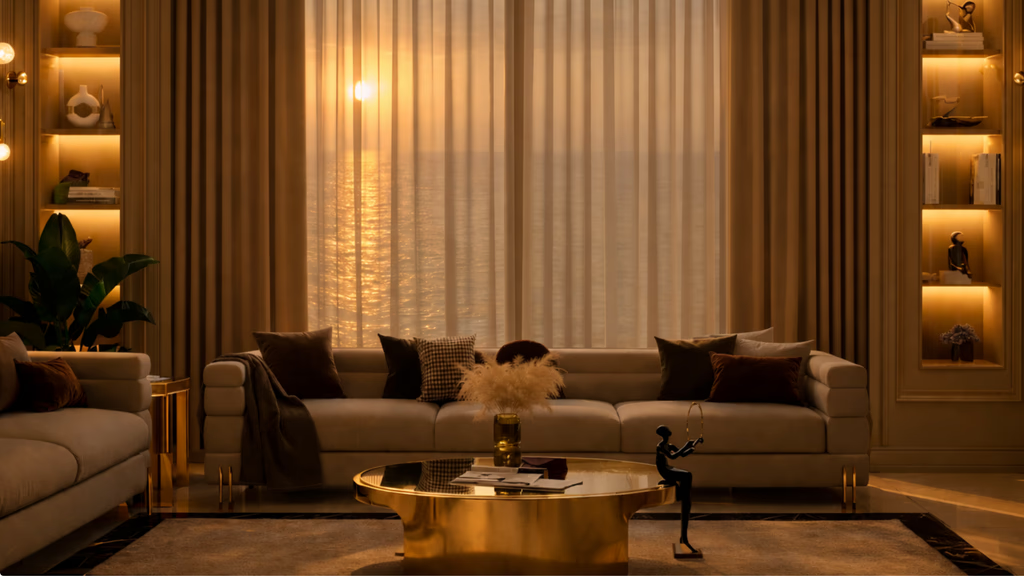
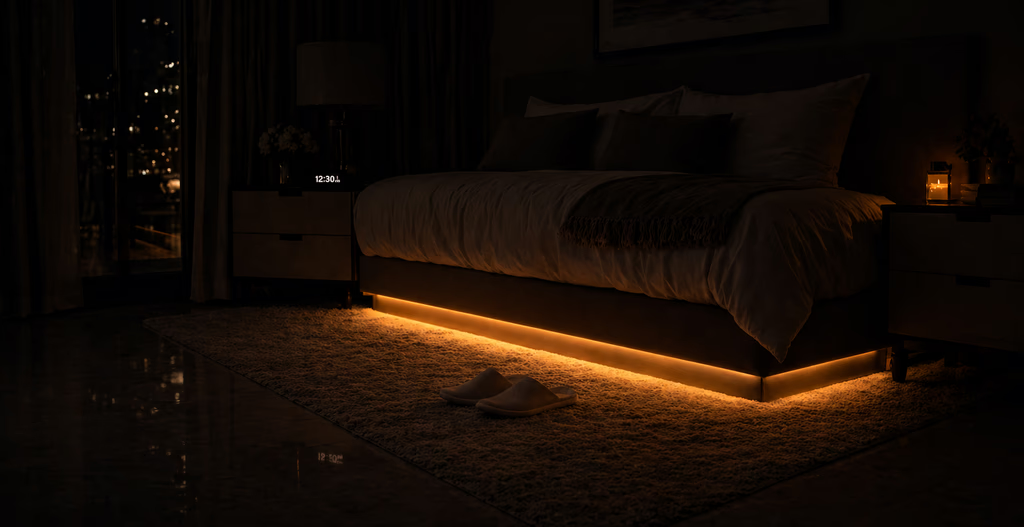
More, not less. Dimming lowers how much light arrives; it does not change the angle it arrives from. At a low evening setting the room falls away into shadow while a sheened wall still carries a bright highlight, which can be lovely or distracting depending on where it lands.
In an AHA home each fitting has its own driver, so a cove, a downlight and a lamp can sit at different levels in the same scene, and the same room can be set differently at 11am and at 9pm. That gives you a way to tune around a finish you have already chosen, which is useful, but it is not a substitute for choosing the finish with the lighting plan in front of you. Judge a sample wall at the settings you will really use, not at full brightness in an empty flat.
Part one of this series, what to decide before painting, covers the order of work, and part two, why wall colour looks different at night, covers the colour half of the same decision. The control layer itself is on our smart lighting page.
What will the right finish not fix?
A badly prepared wall. Matte hides small flaws, not bad plastering. Under a cove, nothing hides bad plastering.
Damp. No finish outlives seepage. Find the source, then paint.
A room with one light in the middle. Finish changes how light behaves once it arrives. It cannot add a place for light to come from.
What do people ask us next?
What is the difference between matte, satin and gloss paint?
How much light the surface returns as a reflection rather than a soft glow. A matte finish scatters light in all directions, so it hides an uneven wall but marks more easily. A satin or sheen finish returns some light as a highlight and wipes clean. Gloss returns the most, wears hardest, and shows every imperfection underneath it.
Which paint finish is best for a bedroom?
A matte or low-sheen finish, for two reasons. Bedrooms are usually lit softly and often from the side or from a cove, which is exactly the light that exposes surface flaws, and they take less wear than a passage or a kitchen. If there are small children, a wipeable low sheen on the wall they reach is a fair compromise.
Which finish should a kitchen or bathroom have?
Something with sheen. These rooms need surfaces that survive steam, splashes and repeated wiping, which is what a satin or semi-gloss does and a flat matte does not. The trade is that sheen shows the wall underneath, so surface preparation matters more in exactly the rooms where people skimp on it.
Why does cove lighting show every bump in the wall?
Because the light runs almost parallel to the surface. Grazing light turns a millimetre of unevenness into a visible shadow, which is why a wall that looked perfect under a central ceiling light can look poor once a cove or a wall washer is switched on. A flatter finish softens this; a sheen exaggerates it.
Does a glossy wall cause glare?
It can, when a bright source is reflected straight back at eye level. India's lighting code treats glare as something to design out by limiting the luminance of luminaires and windows and by keeping the brightness of a task and its surroundings in proportion. A glossy wall facing a row of downlights is an easy way to break that balance.
What finish should the ceiling be?
Flat and pale, in almost every case. The Indian lighting code assumes the ceiling reflects at least half the light reaching it, and a flat finish spreads that light rather than throwing back a bright patch. A glossy ceiling under downlights reflects the fittings themselves, which is rarely the intention.
Does the finish matter if the lights are dimmable?
More, not less. Dimming lowers the overall light but does not change the angle it arrives from, so at a low evening setting a sheen can still throw a distinct highlight while the rest of the wall falls away. It is worth seeing a sample wall at the settings you will actually use, not only at full brightness.
The short version: choose the finish per room, and choose it with the lighting plan open. Matte where light grazes and wear is low. Sheen where the wall gets washed. Flat and pale on the ceiling, always.
If you want to see what a cove does to a wall before you commit, both experience centres are real flats rather than showrooms, in Santacruz West and Lower Parel, open 11am to 7pm (Santacruz West is closed on Tuesdays).
Book a free consultation →