
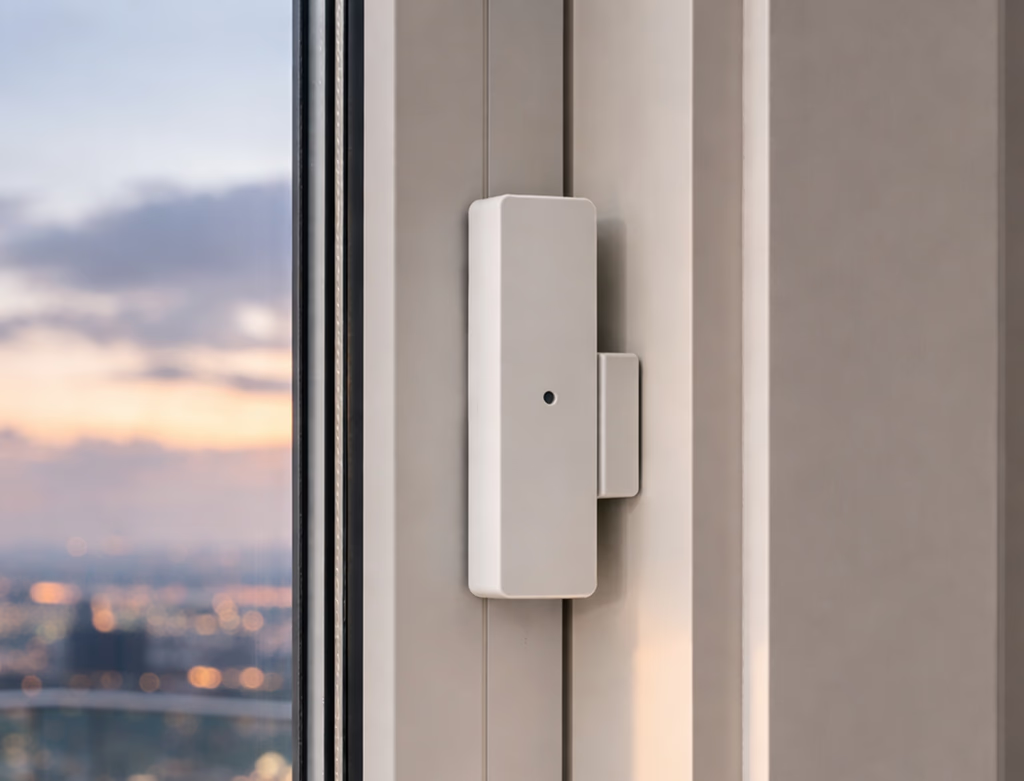
Two sensors, because stillness and movement are not the same thing
Two different sensor types, matched to the room, rather than one sensor trying to do both jobs.
- Reads stillness, not just movement
- Millimetre-wave radar detects the millimetre-scale rise and fall of breathing
- Two types, matched to the room
- Presence sensors where you sit still, motion sensors where you pass through
- Knows if a light is needed
- A built-in ambient light sensor decides before anything triggers
- Battery or wired
- Motion sensors run on battery with no wiring; presence sensors need phase and neutral
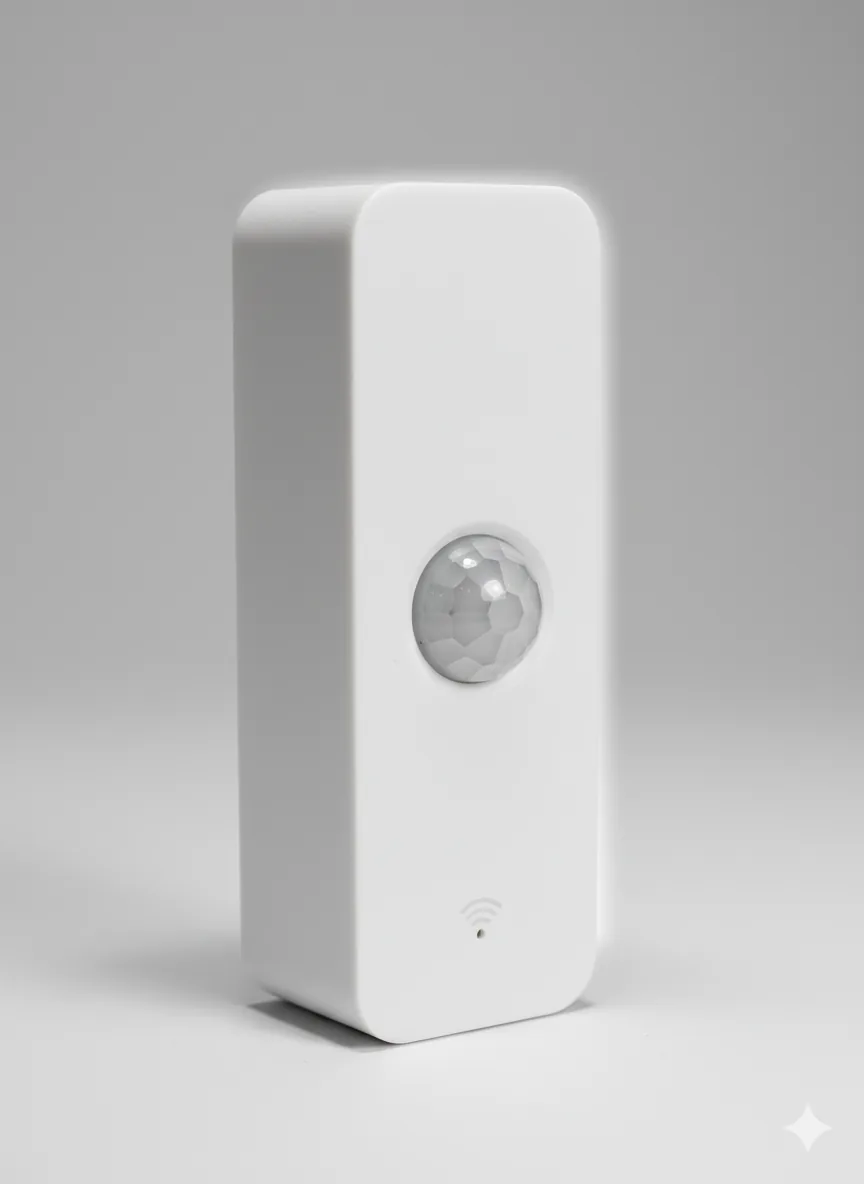
Two Kinds of Sensing, Not One
A single sensor can't do both jobs well. Something sensitive enough to catch every small movement would trigger constantly in a busy kitchen, and something built only for significant movement would switch the lights off on someone sitting still in the bath. AHA uses two different sensor types, matched to the room, so each one only reacts to what actually matters there.
Human Presence Sensors
Human presence sensors use high-precision millimetre-wave radar to detect true occupancy, down to the millimetre-scale rise and fall of your chest as you breathe. That's what makes them the right choice for bathrooms, walk-in wardrobes and study rooms, rooms where you can be still for minutes at a time, and a sensor built only for motion would read that stillness as an empty room.
With intelligent zone mapping and a built-in ambient light sensor, the same sensor also reads how bright the room already is, so it can decide whether a light is even needed before it triggers anything.
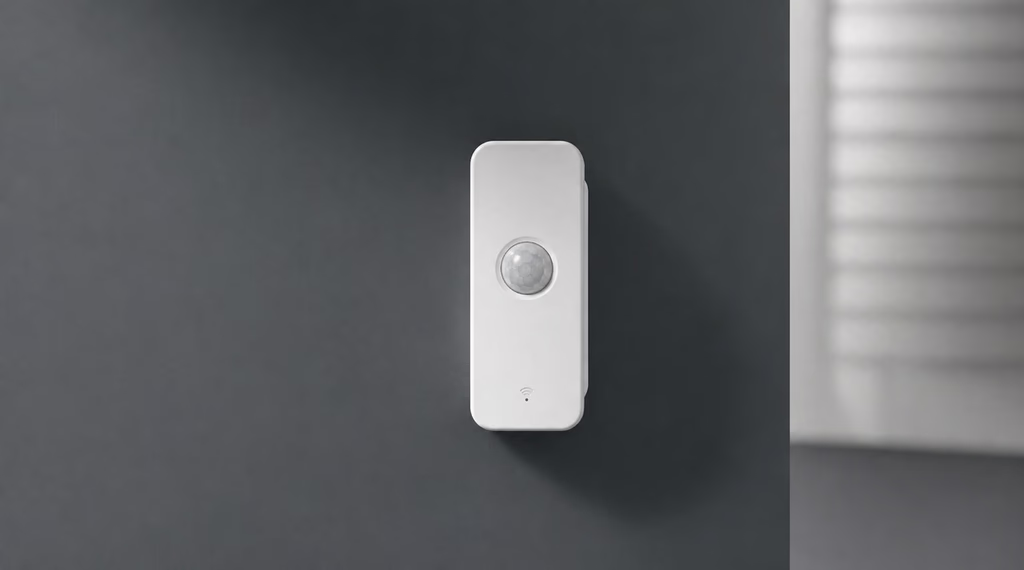
You'll also see these called occupancy sensors. Each one covers up to 9ft in diameter, and unlike the motion sensor, which runs on battery alone, it needs a phase and neutral connection to run.
Motion Sensors
Motion sensors are built for the opposite job, catching real, significant movement rather than stillness. They sit in passages, under the bed and in the kitchen, and only switch on when someone is actually walking through or past them.
Paired with your lighting, that's what powers moments like the under-bed motion sensor: step out of bed at night and it triggers soft pathway lighting, bright enough to navigate safely, dim enough not to wake whoever's still asleep beside you. The same idea works for a passage that only needs to light up after sunset, or a kitchen that only needs light when someone's actually in it. See it as part of a full routine in Midnight Walk.
It runs on battery alone, no phase or neutral wiring needed, and covers about 7ft with a 120-degree field of view. A triggered light stays on for up to 4 minutes before switching off on its own. In a passage, plan for two sensors, one at each end, so the whole stretch stays covered.
Smart Sensors in full
Every published figure, from the product documentation. Where a value is not listed it is because it has not been confirmed, not because it is unimportant.
Human presence sensors
- Also called
- Occupancy sensors
- Detection
- Millimetre-wave radar, detecting true stillness down to the rise and fall of breathing
- Range
- Up to 9ft in diameter
- Power
- Requires a phase and neutral connection
- Ambient light
- Built in, so the sensor decides whether a light is needed before triggering
- Mounting
- Ceiling mounted, sits flush
- Suited to
- Bathrooms, walk-in wardrobes and study rooms, where stillness should not read as empty
Motion sensors
- Detection
- Significant or passing movement, not stillness
- Power
- Battery operated, no phase or neutral wiring needed
- Range
- About 7ft, with a 120 degree field of view
- Hold time
- Triggered lights stay on up to 4 minutes before switching off
- Suited to
- Under-bed passages, corridors and kitchens; two sensors cover a full passage
- Runs
- The Midnight Walk experience, soft pathway lighting when you step out of bed
AHA designs, supplies, configures and commissions. Installation, mounting and wiring are carried out by your electrician. Download the full catalogue as a PDF.
What it runs with
One hub, one app, one consultant. Everything below is on the same system as the smart sensors, so a scene can move all of it at once.
Why it matters
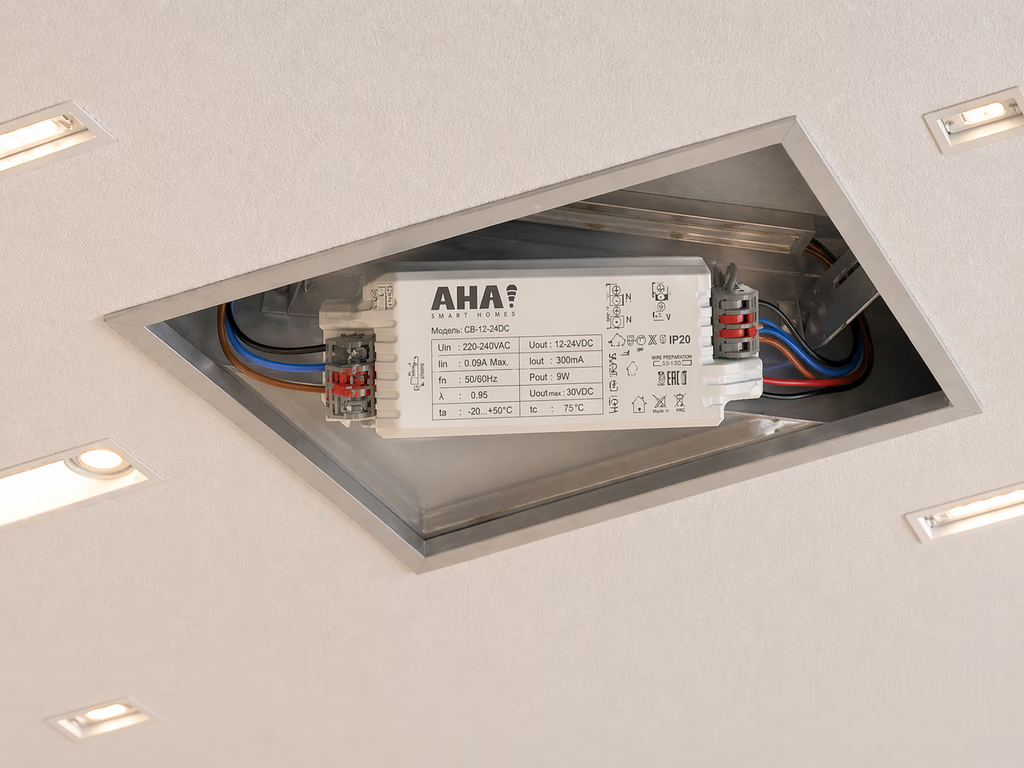
A home that responds on its own reduces the need for constant interaction. The right sensor for the right room means lights that stay on when you're genuinely there and off when you're not, without you ever touching a switch. Working alongside lighting, climate and access, sensors form the trigger layer of a complete whole home automation system, or a fully bespoke luxury home automation build for larger residences. AHA's home automation services cover the design, commissioning and ongoing support that keep every sensor calibrated correctly. For why a local wireless mesh is what makes sensors reliable, see our wired versus wireless comparison. Sensors are usually specified with lighting drivers to dim on approach, and the Smart Hub that processes the trigger locally.
AHA Products are
universally compatible
Integrate your lighting, climate, entertainment, access and routines with leading smart home ecosystems.
 Amazon Alexa
 Matter
 Apple Home
 Google Home
 Zigbee
 Smart Things
 Smart Assistant
 Sonos
Sonos
 Thread
 IFTTT
IFTTT
 AHA ecosystem
Together, we shape the
everyday seamless experiences
Interested in making a smart home?
Contact UsContact Us ↗↗
Visit our
experience
centre.
See lighting, climate, security and entertainment scenes come alive before you automate your home.
Contact us.
Takes under a minute
Experience a real smart home
In Mumbai
Interact with lighting, security, climate and many more experiences at our centres. You'll leave knowing exactly what a smart home costs and what your home would feel like.
Who have designed 1200+ smart homes
Carry your electrical plan, it helps us accurately design your home
Avg time to experience the demo
-
Talk to us +91 93214 77707
Call or WhatsApp for same-day slots
-
Santacruz Experience Center Get directions ↗
2 minutes from Linking road · Open daily 11am-7pm · Free parking
-
Lower Parel Experience Center Get directions ↗
In Raghuvanshi mills compound · Open daily 11am-7pm · Free parking