Does a Smart Home Work Without Internet?
Yes, almost all of it. What keeps running on its own, what genuinely needs a live connection, and why those are two different systems living in the same home.
Yes. A smart home built on a local hub keeps lighting, fans, air conditioning, curtains, locks and every saved scene working normally when the internet goes down, because the hub makes those decisions itself instead of asking a server. What actually stops: remote access from outside the home, camera viewing, and voice assistants like Alexa or Google Home, because those genuinely are cloud services. The rest of this answers the two questions that usually follow: why, and what about a power cut.
It is monsoon in Mumbai, raining the way it only rains here, and the little light on the router has gone from blue to nothing. Somewhere in the building the internet line has dropped, again, and it will probably be back in an hour. The real question in that moment is not when, it is what happens to the house right now.
For a lot of what people picture when they hear "smart home", that is a fair thing to worry about. Plenty of budget smart devices genuinely are cloud dependent: a command leaves the switch, goes to a server, sometimes outside India, and comes back before the light responds. Kill the link in the middle and the light stops answering, even though the switch, the bulb and the person pressing it are all in the same room.
That is not how a hub-based system works, and the distinction is worth understanding properly rather than taking on faith.
What is actually broken when "the internet is down"?
An internet outage, in the way most people mean it, is one specific link breaking: the one between your router and your internet service provider. Everything on your own local network, the devices in your own home talking to each other, is a separate conversation that was never routing through that link in the first place.
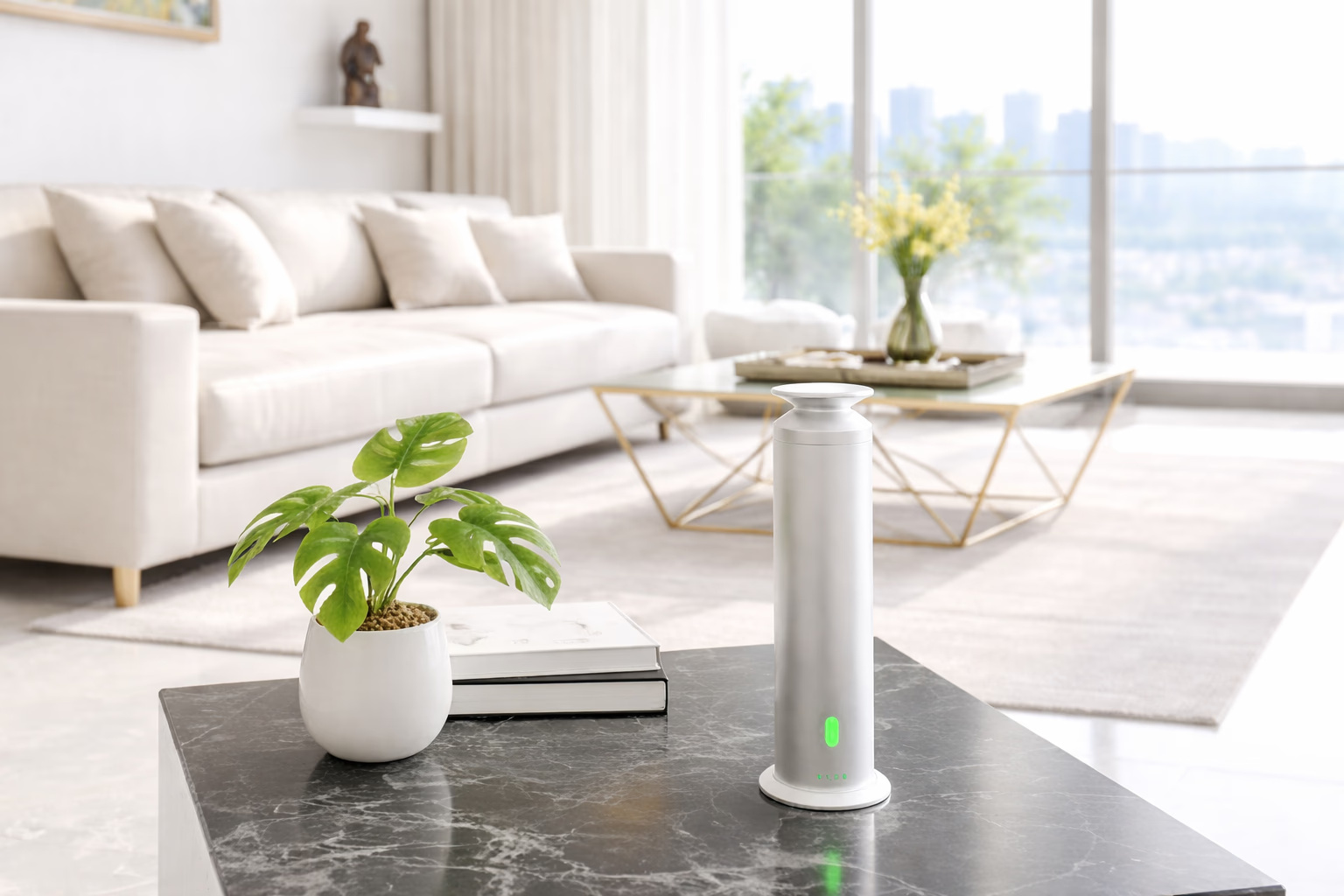
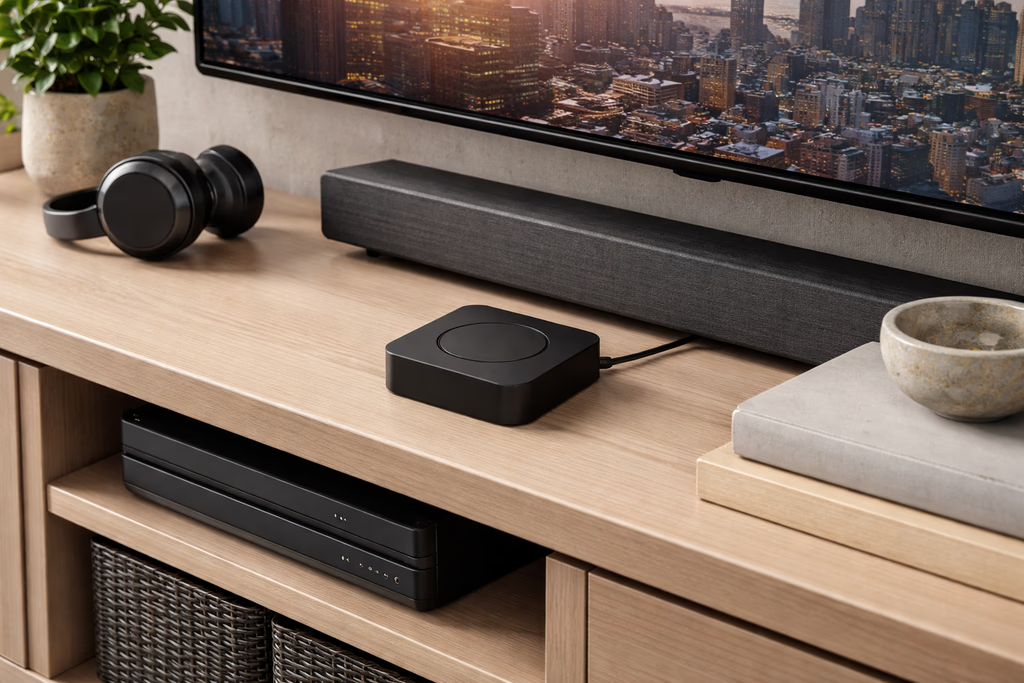
AHA's hub coordinates devices over ZigBee 3.0, with Matter and Thread certification, a dedicated local network that runs alongside your Wi-Fi but is not part of it. It does not borrow your internet bandwidth and does not slow your router down, and critically, it does not need your router's uplink to function at all. A light switching on because a keypad was pressed, or because a scene fired at sunset, is a conversation between devices standing a few metres apart. The ISP is not in that conversation, so the ISP going down does not end it.

What keeps working, and what actually needs a connection
Rather than a general claim, here is the honest split, because a few things genuinely do need the internet and pretending otherwise would not survive the first real outage.
| Keeps working offline | Needs a live connection |
|---|---|
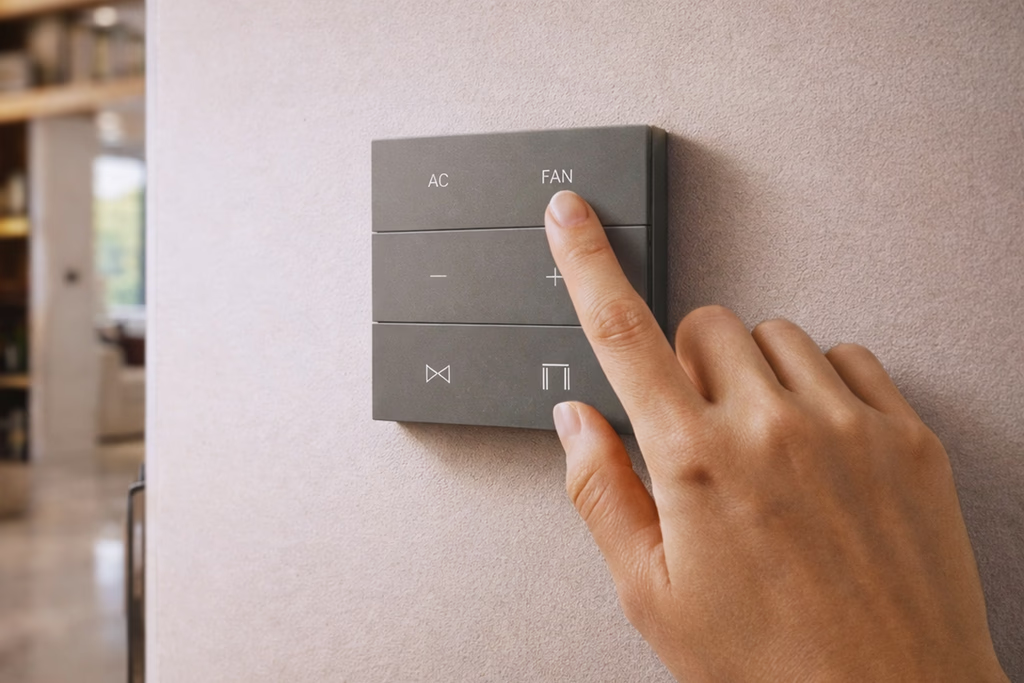
| Lights, fans, AC and TV (via IR/RF control) | Remote access from outside the home |
| Motorised curtains | Live camera viewing |
| Smart lock, day to day (fingerprint, face, PIN, card, scheduled password) | Voice assistants (Alexa, Google Home, Apple Home) |
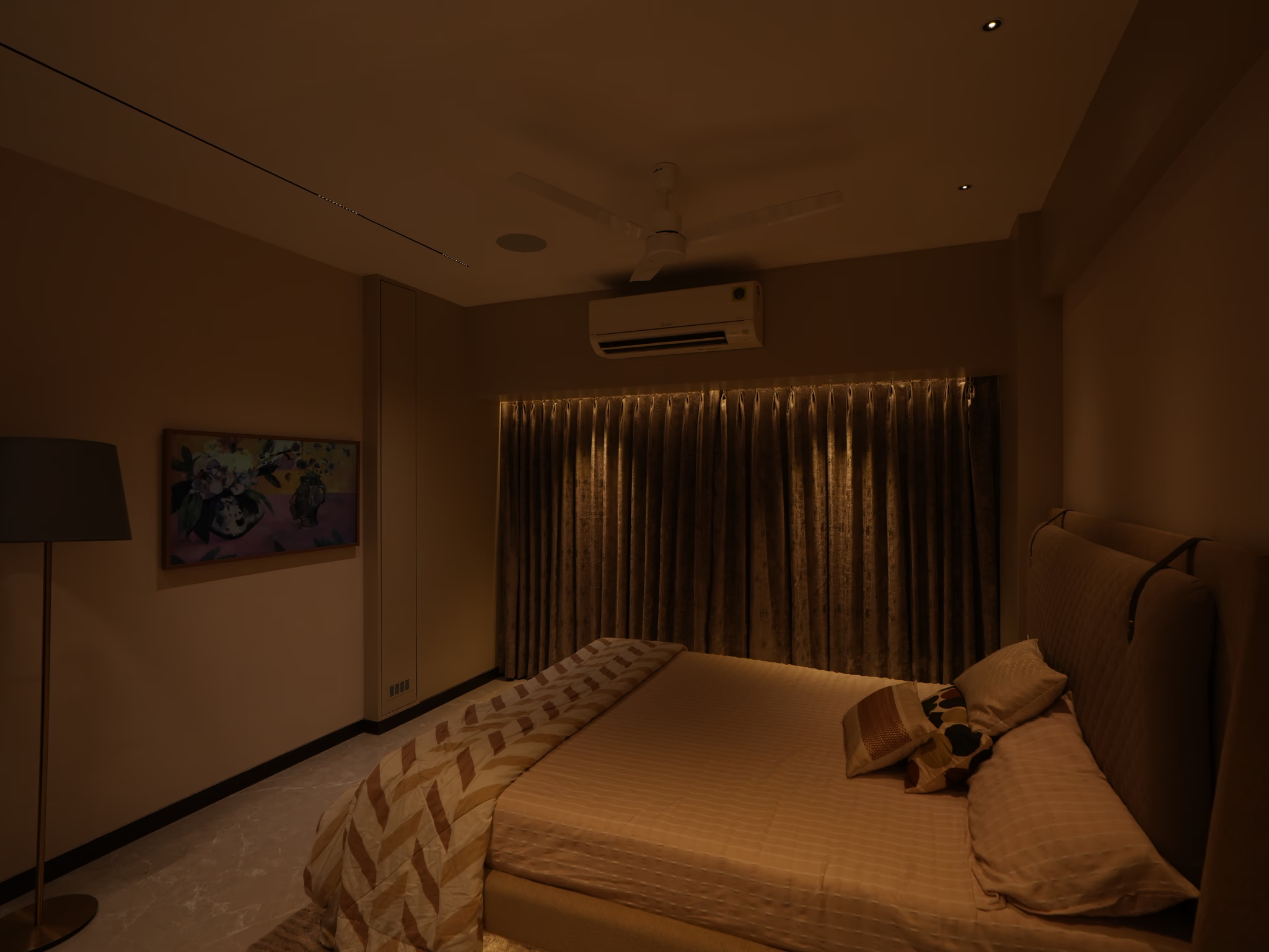
| Saved scenes (Grand Welcome, Cleaning Mode, keypad presets) | Opening the door remotely for someone from another city |
| Presence-sensor automations | App notifications and software updates |
Read down that left column and a pattern shows up: everything on it is a decision the hub can make by itself, inside the house. Read down the right column and the pattern is the opposite: everything there genuinely requires something outside the four walls, another server, another phone, another city.
Does the front door still work?
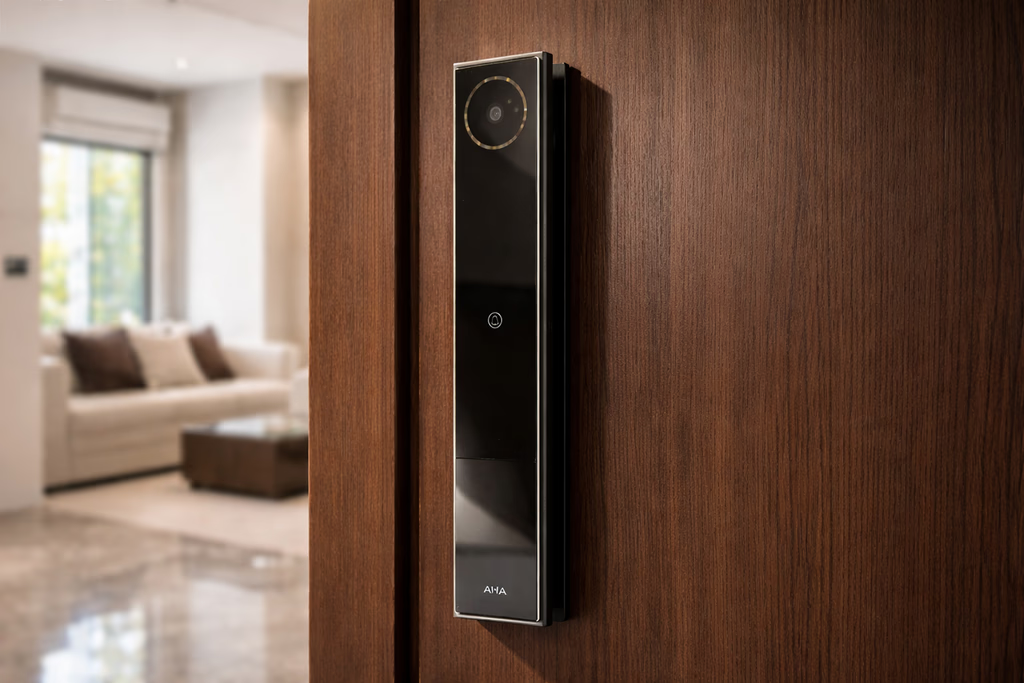
This is usually the real question underneath "does it work without internet", because a light staying off for an hour is an inconvenience and a door not working is not. The honest answer is that the lock's everyday use is entirely local.
A scheduled password for the cleaner, a fingerprint, a face, an NFC card, all of these unlock the door through the hub, on the same local network as everything else, whether or not the internet is up. The one thing that genuinely needs a live connection at both ends is a remote unlock, letting someone in from another city, because that request has to physically reach the house. Our comparison of smart locks against traditional ones goes through where that trade-off actually matters.
Worth adding: the lock itself runs on its own battery, independent of the home's mains power too, for roughly two to two and a half months on a charge. So an internet outage does not touch it, and neither does a short power cut.
Why the standard itself is built to work this way
This is not a workaround specific to AHA. ZigBee and Matter, the two standards AHA's hub runs, are built local-first by design, and both are governed by the same body: the Connectivity Standards Alliance.
ZigBee is, in the Alliance's own words, "a proven, self-healing mesh network that eliminates single points of failure". In practice, that means every mains-powered device on it, each light driver, each keypad, each curtain motor, also acts as a repeater, so the network gets stronger as a home fills up and re-routes around anything that stops responding, entirely on its own.
Matter, which AHA is also certified for, is even more explicit about it. The Alliance's own documentation states that Matter devices run locally and always allow local control, without requiring an internet connection or cloud service to operate. Cloud connectivity exists on top of that for things like software updates and remote access, it is additional, not load-bearing.
That is the whole answer in one line: the intelligence lives in your home, not the cloud. It is also why we are comfortable quoting a real number here rather than a general assurance: across roughly 200 components in an average AHA home, our own component failure rate sits under 0.5%, against an industry average nearer 2%, and about 95% of the issues that do come up are resolved remotely, over phone or WhatsApp, without anyone visiting the site.
An internet outage and a power cut are not the same problem, and it is worth being precise about which one you are actually asking about. The hub needs mains electricity to run, same as any other device in the house, so a power cut does stop it, unless the home's own inverter or UPS covers that circuit, which is a household setup, not something a smart home system supplies. An internet outage is different: the hub keeps running on the home's own power and its own local network, and never needed the ISP to begin with.
What genuinely needs the internet, then?
Three things, and only three. Remote access, controlling or checking the home from outside it, because that request has to travel from your phone to your house over the internet in both directions. Camera viewing, for the same reason. And voice assistants: Alexa, Google Home and Apple Home all process your voice on a server outside the home, so voice control stops during an outage even though every physical keypad in the house keeps working exactly as before.
Everything else, the actual living-in-the-house part of a smart home, was never depending on the internet to begin with. If you are deciding between a wired or wireless system partly on this question, wireless done this way does not lose to wired here: a wired bus is local for the same reason, it simply gets there with a cable instead of a mesh.
For the fuller picture of what a system like this actually costs and how it gets planned into a home, our whole-home automation page walks through the complete system, and our 3BHK Mumbai cost guide has the real numbers.
Questions people ask us next
Does a smart home work without internet?
Yes. A smart home built on a local hub keeps lighting, fans, air conditioning, curtains, locks and every saved scene working normally when the internet goes down, because the hub processes those commands itself instead of sending them to a server. What stops is anything that genuinely needs the outside world: remote access from outside the home, camera viewing, and voice assistants like Alexa or Google Home, because those are cloud services.
What is the difference between an internet outage and a power cut for a smart home?
They are different failures. An internet outage only breaks the link between your router and your ISP, so a hub-based system keeps running because its local network never depended on that link. A power cut is different: the hub itself needs mains electricity, so it stops like any other appliance, unless the home has its own inverter or UPS, which is a household setup rather than something the smart home system supplies. Battery-powered devices, like a smart lock, keep running through a power cut on their own charge either way.
Does a smart lock work without internet?
Yes, for the ways it gets used every day. A scheduled password, a fingerprint, a face or an NFC card all unlock the door through the hub, locally, with the internet down. What needs a live connection is only the remote case, opening the door for someone from another city, because that request has to physically reach the house. Everyday use at the door itself does not need it.
Can I still use voice assistants like Alexa without internet?
No, and this is the one honest exception. Alexa, Google Home and Apple Home are cloud services: your voice is processed on a server outside the home, so voice control stops when the internet is down. Every physical keypad still controls everything a voice command would have, so it is an inconvenience rather than a failure.
Does the smart home hub need Wi-Fi to control lights and curtains?
No. AHA's hub coordinates devices over ZigBee 3.0 with Matter and Thread certification, a dedicated local network that is separate from your Wi-Fi and does not use your internet bandwidth. Wi-Fi or a wired connection is only what lets the hub reach the outside world for remote access, not what lets it talk to the lights, curtains or locks inside the home.
What is the actual difference between a local smart home hub and a cloud-based system?
Where the decision gets made. A cloud-based system sends every command to a server, sometimes in another country, and waits for an answer before your light turns on, so it stops the moment that round trip breaks. A local hub makes the decision inside the house, on a network built for the job, so an internet outage never reaches the part of the system doing the work. Internet only re-enters the picture for remote access, camera viewing and voice assistants.
The honest version of this answer is also the more useful one: a smart home built the right way does not become a liability the moment the line drops, because the part of it that matters day to day was never waiting on that line. What you lose in an outage is convenience at a distance, not control of your own home.
The fastest way to see it for yourself is to watch a scene run at one of our experience centres, then ask us to switch off the Wi-Fi. Both are real, lived-in smart homes in Santacruz West and Lower Parel, open daily 11am to 7pm, walk-ins welcome, appointments preferred.
Book a free consultation →For what the local mesh actually enables day to day, Grand Welcome and Midnight Walk are two scenes built entirely on it responding instantly, connection or not.