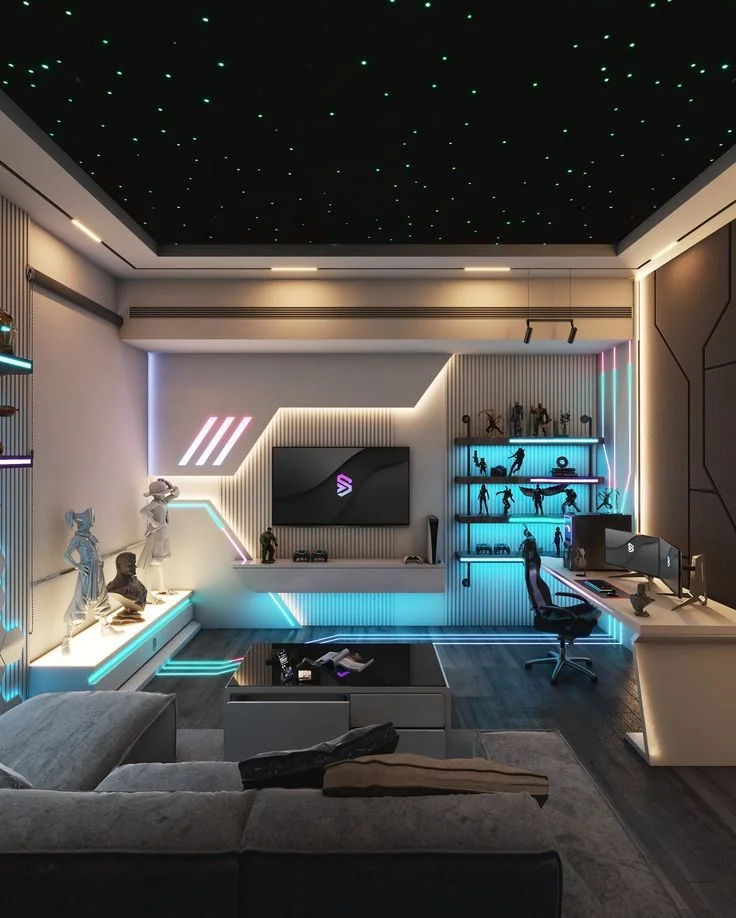
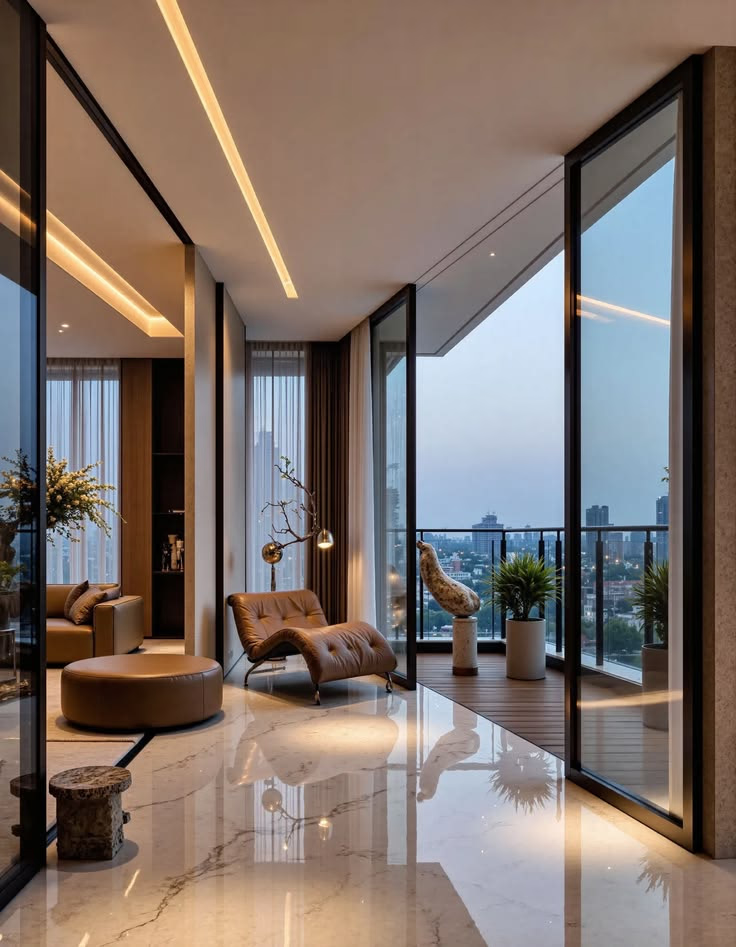
Mood Lighting Ideas: 15 Room by Room Scenes for Indian Homes
Mood lighting means several soft, warm, dimmable sources at different heights instead of one bright ceiling light. In most Indian flats it starts with lamps, strip or cove light and warmer bulbs for the evening, and ends with scenes that change the whole room on one press.
Mood lighting is soft, dim, usually warm light coming from three or four sources at once instead of one bright one overhead. That is the whole idea, and it is why the cheapest version of it works: a table lamp, a strip behind the bed and a switched off ceiling light will beat any single fixture you can buy.
The reason this needs saying in India is that the default here is a ceiling tubelight or a grid of downlights, all on one switch, all at full output, all at a colour temperature chosen by whoever wired the flat. It is a good light for finding a dropped earring and a poor one for every other hour of the day. Nothing about it can be turned down, and that single missing ability is what people are really describing when they say a room feels cold.
This guide covers what mood lighting actually is, the five rules that do most of the work, ideas room by room and mood by mood, what survives a Mumbai monsoon in a rented flat, and fifteen scene recipes with real colour temperature and brightness values you can copy onto whatever you already own.
What is mood lighting, and how is it different from ambient lighting?
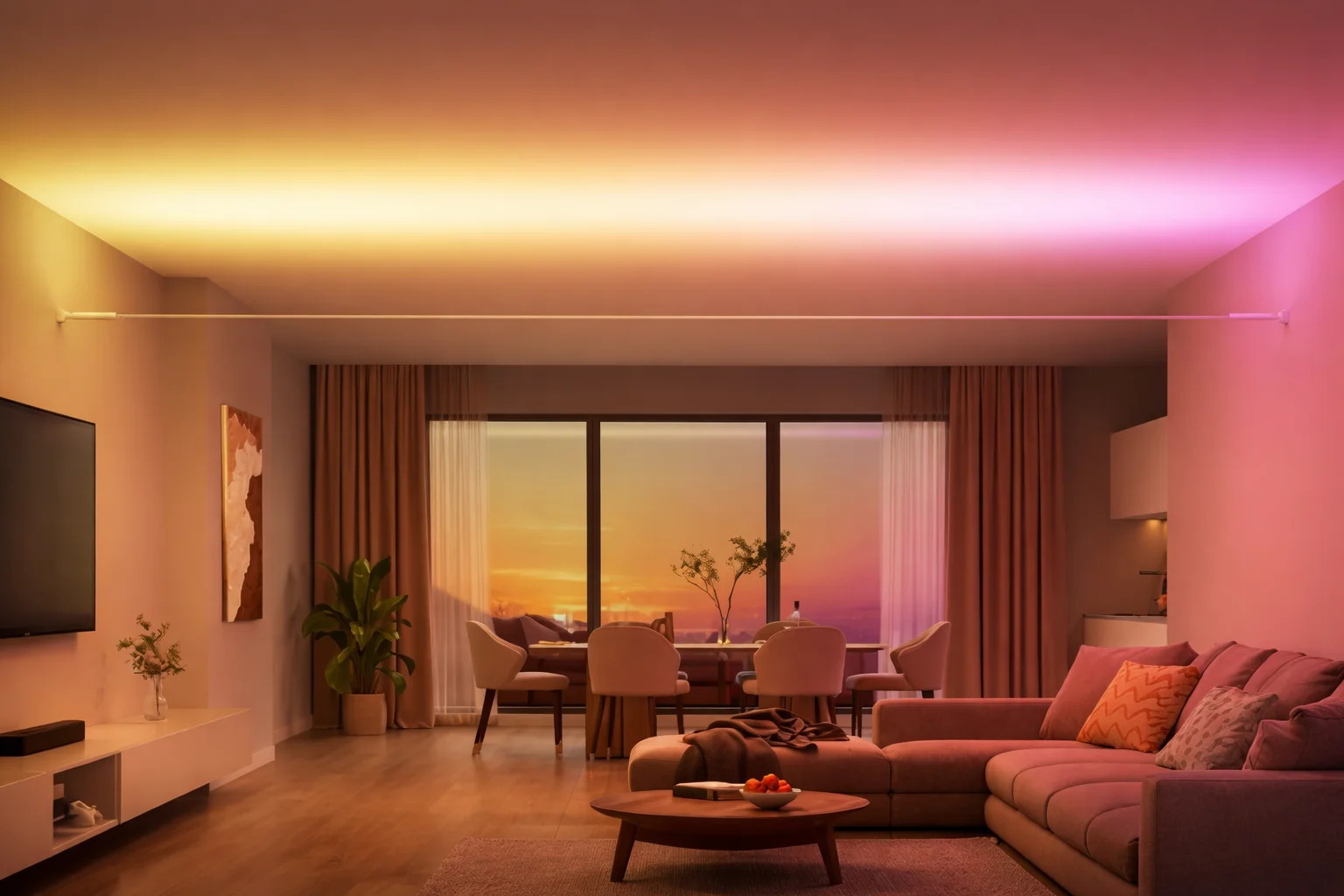
Mood lighting is the deliberate use of low level, layered light to make a room feel a particular way rather than to make it as visible as possible. Ambient lighting is one of the layers it uses. The two words get used interchangeably, and it is worth separating them once, because the rest of this page depends on it.
Lighting design has a standard three layer model, taught by bodies like the Illuminating Engineering Society:
- Ambient. The general fill that sets the level of the room. Cove lighting, a ceiling fixture, an uplighter.
- Task. Focused light for reading, cooking, shaving, homework. Under cabinet strips, a desk lamp, a mirror light.
- Accent. Light aimed at something specific. A painting, a plant, a textured wall, a shelf.
Mood lighting lives almost entirely in the ambient and accent layers, at low output. A room with only a task layer feels like an office. A room with only an ambient layer feels flat. A room with all three, separately controllable, can be four different rooms across one day, which is the actual goal.
The question is never "which light should I buy". It is "how many separate things in this room can I turn down".
What are the five rules that do most of the work?
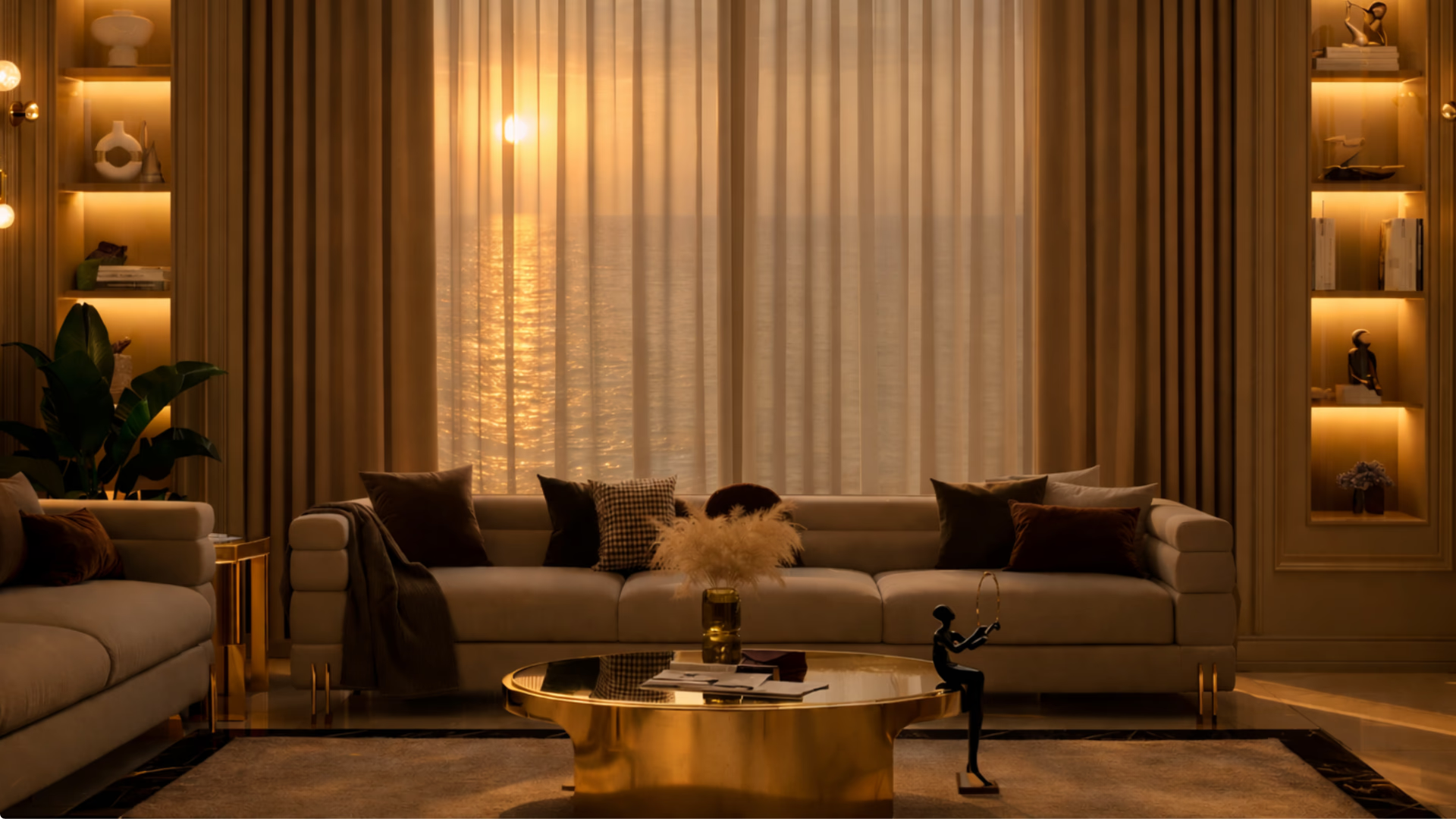
Everything else on this page is an application of these. If you read one section, read this one.
- Several dim sources beat one bright one. Three lamps at a third of their output light a room better than one fixture at full. This is the entire technique. Everything else is decoration.
- Get light below eye level. A room lit only from the ceiling feels institutional no matter how warm the bulbs are. A table lamp, a floor lamp or a strip near the skirting is what makes a space feel occupied rather than inspected.
- Aim for an odd number, spread out. Three or five sources placed as a triangle across the room, rather than a symmetrical pair. Symmetry flattens a room, asymmetry gives it depth.
- Warm and dim after sunset, cool and bright for work. Roughly 2200K to 3000K at low output for the evening, 4000K and up at high output for focus, cleaning and dark monsoon afternoons.
- Never let one source do two jobs. The light you read by and the light you watch a film by cannot be the same fixture at the same setting. If they are, one of the two will always be wrong.
Rule five is the one that quietly costs money later, because it is decided by the electrical drawing rather than by a purchase. It is also the one that separates a room you can put into a mood from a room you can only switch on.
What does colour temperature actually change?
Colour temperature is measured in Kelvin, and the scale runs opposite to how it sounds: lower numbers are warmer and more orange, higher numbers are cooler and more blue. A candle flame sits around 1800K. A traditional filament bulb is about 2700K. Most Indian tubelights and ceiling panels are 6000K to 6500K, which is why they feel like a clinic.
- 1800K to 2200K. Candlelight and amber. Night lights, romantic settings, the last hour before bed.
- 2700K to 3000K. Warm white. Living rooms, bedrooms, dining, almost every evening.
- 4000K. Neutral. Kitchens, study desks, bathrooms in the morning.
- 5000K to 6500K. Daylight and cool. Cleaning, detailed work, and grey monsoon afternoons when the flat needs to feel awake.
There is real science under the warm evening advice, and it is worth separating from the marketing. Specific cells in the retina respond most strongly to short wavelength blue light, and that response is what tells your body clock it is daytime. The US National Institute of General Medical Sciences puts it plainly: "Light and dark have the biggest influence on circadian rhythms." Harvard Health adds that blue light at night suppresses the sleep hormone melatonin more powerfully than other light, and the International Commission on Illumination maintains the standards that define how the effect is measured. Bright cool light late at night works against sleep. Dim warm light does not.
What is not well evidenced is the broader claim that particular colours produce particular emotions, that green heals or that purple signals luxury. Plenty of people find a soft green calming, and that is a perfectly good reason to use it. It is a preference, not a finding, and anyone selling you lighting on that basis is selling you a story.
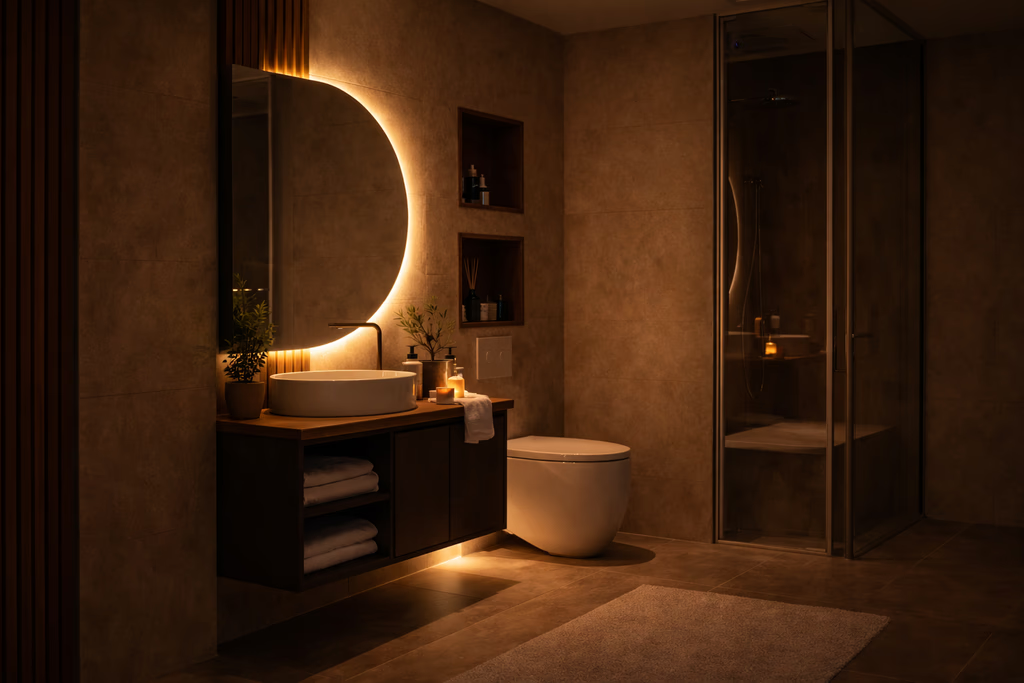
If you change one thing in your flat, change this. Replace the bulbs in the fittings you use after dark with 2700K warm white, and put anything you can on a dimmer. Colour temperature is a one time decision you live with every evening for years, and in most Indian homes it was never actually made by anyone. Cool white belongs on the kitchen counter, at the bathroom mirror and over the study desk, and almost nowhere else after sunset.
What mood lighting suits each room?
Bedroom
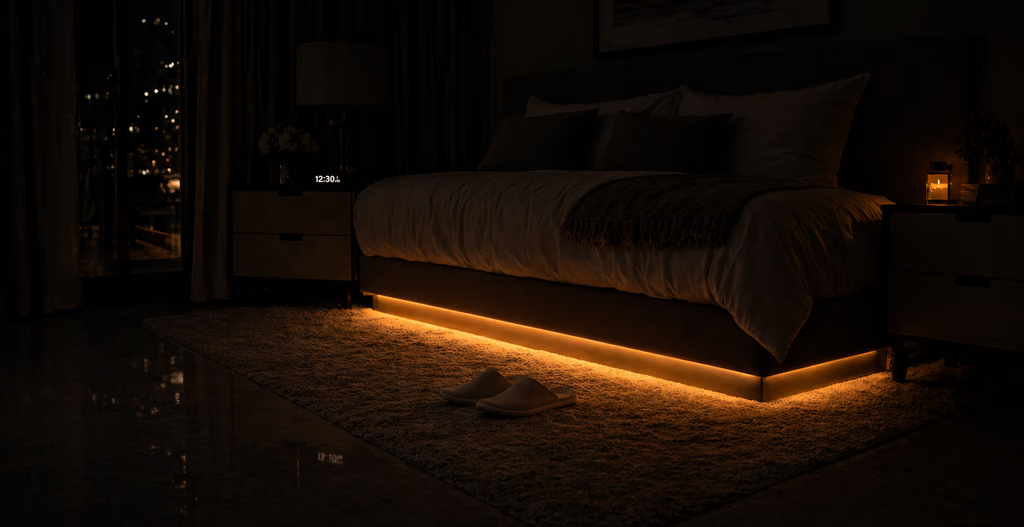
A matching pair of bedside lamps is the fastest way to make a bedroom look like a hotel room, because it puts warm light at eye level on both sides and lets the ceiling stay off. Add a strip behind the headboard or under the bed frame for a low glow, and if the ceiling light stays, put it on a dimmer and stop using it at night. A star projector on the ceiling does the same job for a room that wants something softer than a lamp.
Living room and hall
A floor lamp behind or beside the sofa, a strip behind the television to take the glare off the screen, and an accent light on whatever the room is actually about: a painting, a bookshelf, a plant. If the flat has a cove, that is your ambient layer and it should be dimmable. If it does not, an uplighter pointed at the ceiling gets you most of the way there without touching the ceiling at all.
Dining
One pendant over the table, on a dimmer, hung low enough to light the table rather than the room. Candles, real or LED, do the rest. A dining table lit at full brightness from a ceiling grid is a canteen.
Balcony
String lights along the railing or the ceiling edge, a lantern on the floor, and nothing at eye level that will glare back at you. This is the one place in a Mumbai flat where the fixture rating genuinely matters, covered further down.
Bathroom
A backlit mirror gives even, flattering light on a face, which a downlight directly overhead never will. Add a very low warm night light near the floor so a 3am visit does not involve the main light.
Study and home office
Cooler and brighter than the rest of the house during working hours, roughly 4000K, then warm and dim in the evening if the room doubles as anything else. This is the clearest case for a fitting that can change colour temperature rather than one that cannot.
Kids room
A colour changing night light the child controls themselves, and a ceiling projection for wind down. Colour is genuinely useful here in a way it is not elsewhere in the house, because the point is play rather than atmosphere. This is exactly what Kids Mode is built around.
Kitchen
Under cabinet strips are the highest value lighting upgrade in an Indian kitchen, because the person working at the counter is standing between the ceiling light and the chopping board. They are a task light that doubles as a very good late night mood light on their own.
Entryway
One small warm light that is already on when you walk in. Small change, disproportionate effect, and the reason arrival scenes like Grand Welcome exist at all.
Puja room or mandir
Warm light around 2700K, which flatters brass and gold in a way cool white actively ruins, plus the diyas themselves. Steady and warm, never colour changing. Pooja Mode is the version of this that runs itself in the morning.
What lighting suits each mood and occasion?
The same room, at different hours, wants genuinely different light. This is the list the scene recipes further down are built from.
- Unwinding. Warm, low, lamps only, ceiling off. The everyday default and the one people set most often.
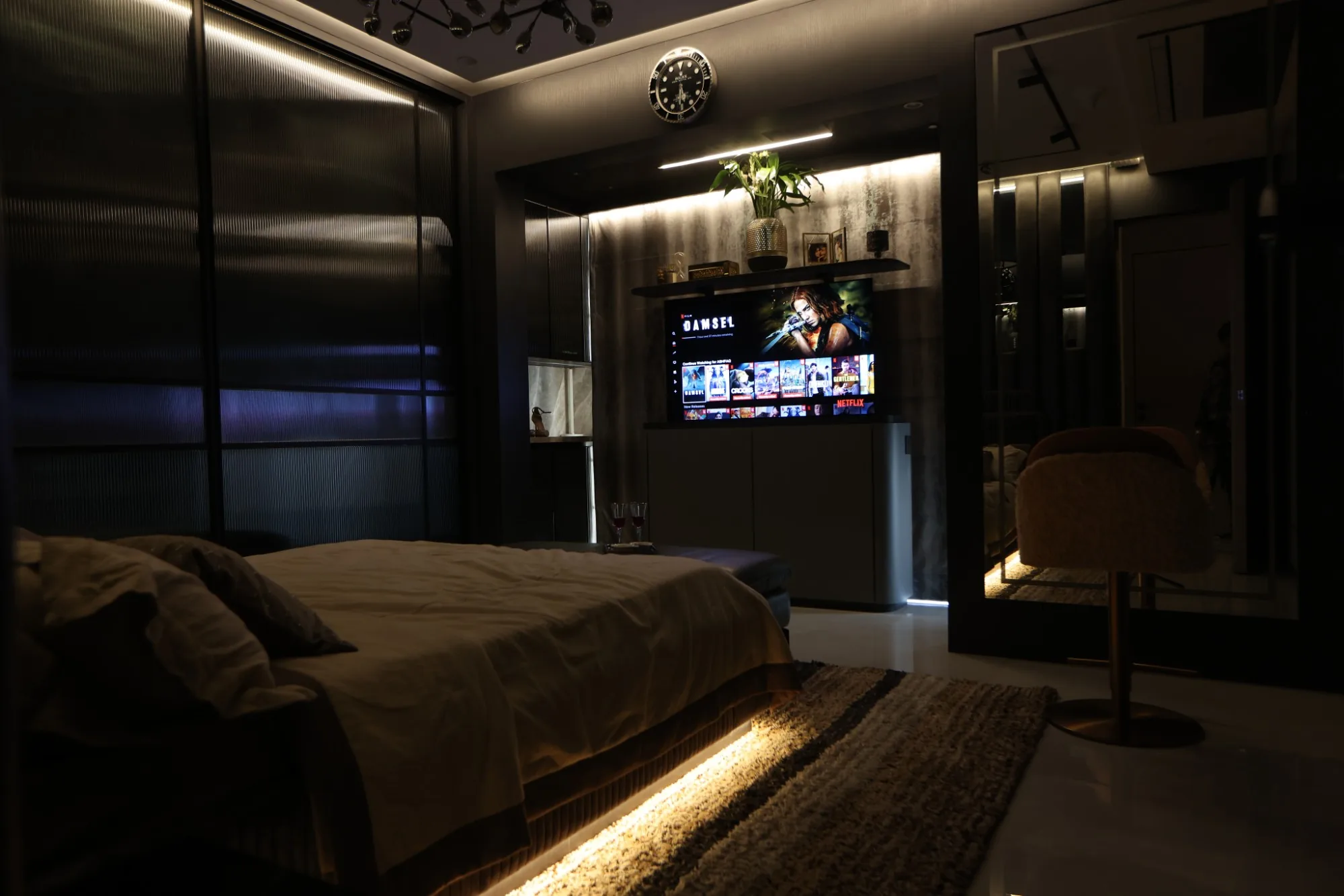
- Film night. Everything off except a very low warm glow behind the screen. Total darkness is harder on the eyes than a dim room.
- Hosting. Warm, but bright enough to read a face across the room, with accents on the things you want noticed. Uneven beats uniform.
- Focus. Cool, bright, task light directly on the work. Daytime only.
- Waking up. A slow ramp from very dim and warm to bright and cool over twenty minutes, which is far gentler than a light switch at 6am.
- Winding down. The same ramp in reverse, in the evening, running on its own.
- A grey monsoon afternoon. Cool and bright, everything on. A Mumbai flat at 3pm in July is genuinely dark, and this is the one time of year a living room wants office lighting.
- The 3am walk. An amber glow at almost nothing, near the floor, on a sensor. Bright enough to see, dim enough not to wake you properly.
- Festivals. Bright, warm and gold for puja, colour for Diwali and Navratri, back to normal afterwards without rewiring anything.
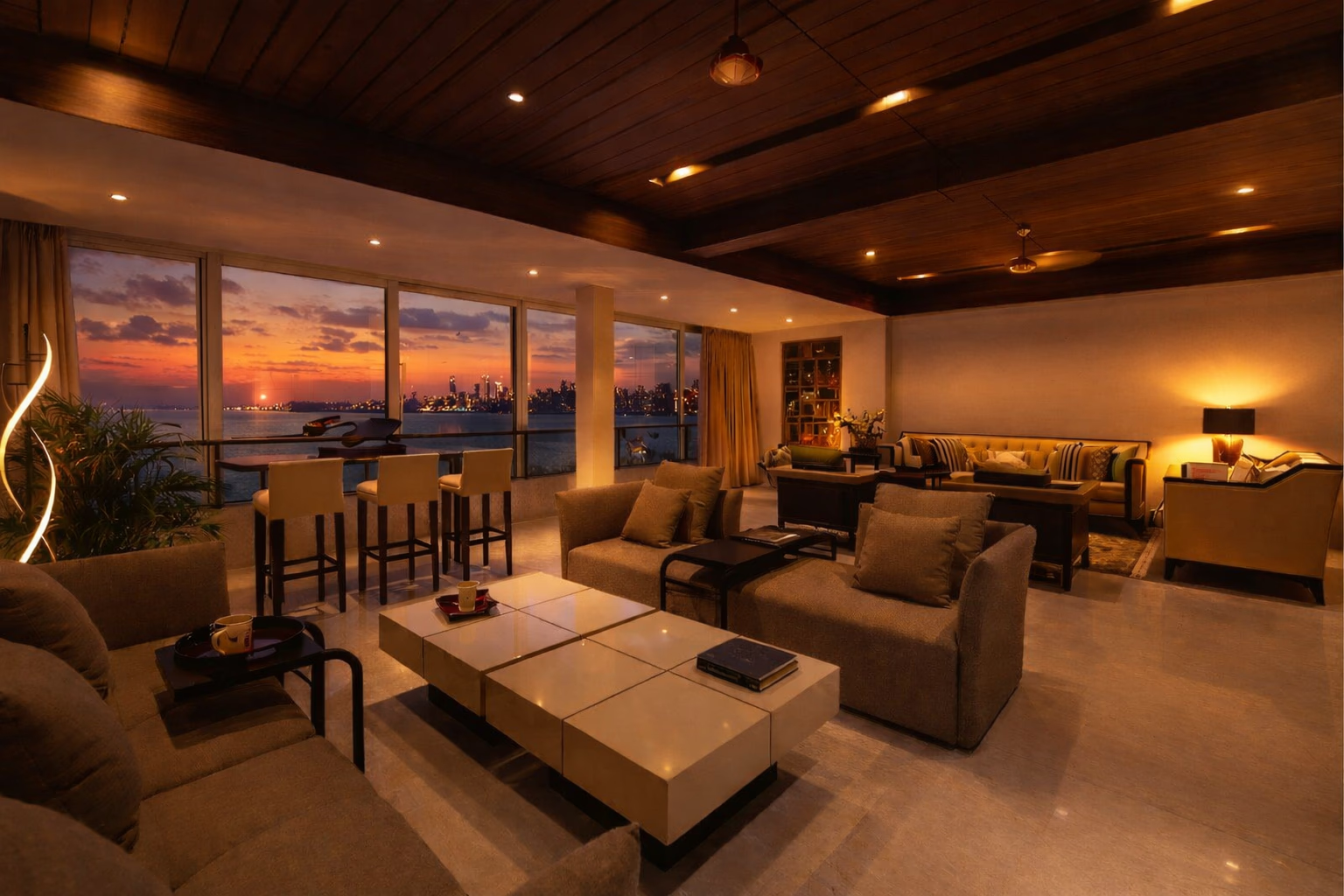
What if you already know the look you want?
| Style | What the lighting does | The one thing that makes it work |
|---|---|---|
| Warm Indian traditional | Brass and terracotta fittings, diyas, 2700K throughout, no cool light anywhere | Warm light on warm metal. Cool white on brass reads as grey |
| Minimalist | Hidden strips and one sculptural lamp. Almost no visible sources | Concealment. If you can see the LED, the effect is gone |
| Cosy and layered | Many small warm pools of light, fabric shades, candles | Quantity. Five sources, none of them bright |
| Moody and dark | Deliberate pools of light with real darkness between them, picture lights on art | Contrast. Resist the urge to fill in the gaps |
| Boho | Cane and rattan shades that throw patterns, fairy lights, a salt lamp | Texture in the shade, so the light itself carries a pattern |
| Retro and neon | Filament style LED bulbs left visible, one neon sign as the accent | One neon piece, not three. It is a full stop, not a sentence |
| Hotel | Matched bedside pairs, cove lighting, every circuit dimmable | Dimming on everything. That is the whole difference |
Note how often the answer is dimming rather than a purchase. Six of those seven work better on hardware you already own, once the hardware can be turned down.
How do you do mood lighting in a rented Mumbai flat?
Most of the ideas above assume you can drill, and a large share of the people searching for them cannot. Mumbai rentals come with few sockets, low ceilings, a deposit you want back and a landlord who did not agree to holes in the wall. Everything here is reversible.
- Plug in lamps do the heavy lifting. Table and floor lamps are the entire strategy. They put light at eye level, they need nobody's permission, and they move with you.
- Battery and USB fairy lights. No socket needed, which matters more in a Mumbai flat than almost anywhere else, because the sockets are the real constraint.
- Adhesive hooks for anything hanging. With the humidity caveat in the next section, which is the part nobody warns renters about.
- A portable projector lamp. Sits on a shelf, throws colour across a wall, needs nothing structural.
- A surge protected extension board, used sensibly. One board feeding two lamps is fine. Three boards daisy chained behind a sofa is a fire, and Mumbai's supply gives surge protection a real job.
- Several small lamps, not one big one. A cramped room feels larger lit from several points at different heights than it does under one bright fixture. This is the rare case where the cheaper approach is also the better looking one.
If you own the flat and a fit out is coming, the calculation changes and the decisions worth making are structural rather than decorative. That is a different article: our guide to false ceiling and cove lighting covers recess depth, driver positions and the dimming decision that has to be made before the ceiling closes.
Does LED tape survive the Mumbai monsoon?
The light does. The glue usually does not. This is the most common and least discussed failure in Indian mood lighting, and it deserves its own section because every listicle recommending LED strips skips it.
The back of most LED tape is a strip of double sided adhesive, and adhesive of that grade loses its bond in sustained heat and high humidity. That is a fair description of a Mumbai flat from June to September, and of a kitchen or bathroom year round. The failure is not sudden. The tape sags in one corner, then peels a foot at a time, and eventually the run is hanging off the furniture it was stuck to.
Four things fix it, and none of them are expensive:
- Clean the surface with isopropyl alcohol first, not a damp cloth. Adhesive fails on residue far more often than on the wrong surface.
- Press the full length down firmly and leave it to cure before switching it on or moving anything. Most tape gets applied by pressing the ends and skimming the middle.
- Mount it in an aluminium channel or on clips. This is the real answer. The channel is fixed in place, the tape sits inside it, and the adhesive is no longer the thing holding it up. A channel with a diffuser also turns a visible line of dots into one clean line of light.
- Keep indoor tape indoors. Bathrooms, kitchen splashbacks and open balconies need a sealed product, not an indoor one moved outside.
Coastal air adds a second problem that has nothing to do with water: salt corrodes the contacts, connectors and cut ends on inexpensive fixtures. On a sea facing balcony this happens to hardware that never gets rained on at all. Seal every cut end and connector, and prefer fixtures whose housing is specified as corrosion resistant rather than just weather resistant.
What IP rating does balcony lighting need?
IP stands for Ingress Protection, defined by the International Electrotechnical Commission in standard IEC 60529. The two digits are read separately: the first is solids and dust, the second is water.
| Rating | What it protects against | Where to use it |
|---|---|---|
| IP20 | Nothing meaningful. Indoor only | Dry rooms, away from bathrooms and kitchens |
| IP54 | Limited dust, splashing water from any direction | Bathrooms away from the shower, sheltered damp spots |
| IP65 | Fully dust tight, water jets from any direction. Not immersion | The minimum for a covered Mumbai balcony |
| IP67 | Fully dust tight, temporary immersion | Anywhere the rain genuinely reaches, and ground level fittings |
The caveat that matters: an IP rating says nothing about corrosion. A fitting can be perfectly sealed against water and still have its contacts eaten by salt air over two monsoons. On a Mumbai balcony, specify IP65 or better and ask what the housing is made of. The rating and the material are two separate questions, and only one of them is printed on the box.
Does mood lighting cost much to run?
No, and it is worth saying plainly because it is the question that stops people. Decorative LED lighting is a very small load next to an air conditioner, a geyser or a refrigerator, and mood lighting by definition spends most of its life dimmed, which draws less again. A room full of warm lamps run every evening is not what moves a Mumbai electricity bill.
Two things are worth knowing more than a number is. The first is that most of the saving in any lighting scheme comes from being able to run fixtures below full output, which is a dimming benefit rather than a hardware one, and it never appears on a spec sheet. The second is that lighting products sold in India carry efficiency ratings published by the Bureau of Energy Efficiency, which is the right way to compare two fixtures on their own merits rather than trusting the packaging.
What does cost money is buying the same lamp twice. Unbranded drivers and the cheapest strip lights fail early, dim badly and are the usual culprits behind a light that hums. Look for BIS certification on anything that plugs into a wall.
How do you do festive mood lighting safely?
Diwali, Ganesh Chaturthi and Navratri are when most Indian homes buy lighting, and also when most of it goes wrong. The ideas are the easy part: warm string lights along the balcony railing, diyas at the entrance, a gold wash on the mandir, colour on the walls for the evening and back to normal a week later.
The part worth being careful about:
- Keep string lights away from fabric and paper decor. LED sets run cool, older filament sets do not, and torans and drapes are exactly what they get hung against.
- Do not overload a socket. The festive failure mode is four sets and an extension board on one point behind a curtain.
- Never leave diyas or candles unattended, especially near curtains or under a ceiling fan drawing air across them.
- Buy certified. Festive lighting is among the most heavily counterfeited electrical categories in India, and it is the one you leave running for a week.
The other approach is to make the lighting you already own do the festive work. A house whose lighting can change colour and brightness needs no new string lights at all: the walls, the cove and the accent circuits become the decoration, and they revert the following week. That is what Party Time does with the lighting already in the room. For the temporary decor around it, kandils, diyas, rangoli and where to buy them in Mumbai, see our Diwali lights and decor guide.
Why do dimmable bulbs flicker at the bottom of the range?
Because a cheap dimmable LED and an old wall dimmer are a bad pairing, and most Indian flats already have the second one in the wall.
Wall dimmers were designed for filament bulbs, which draw a lot of current. They work by chopping part of each mains cycle, and they need a certain amount of current flowing through them to behave predictably. An LED draws a small fraction of what a filament bulb did, so near the bottom of the dial the dimmer no longer has enough to work with and turns erratic. That shows up as flicker, as shimmer, as a buzz, or as the light simply cutting out somewhere around a fifth of full brightness, which is precisely the range mood lighting lives in.
There are two ways out. One is a dimmer and driver specified to work together, which is what a lighting designer will call for on a cove. The other is to let the light dim itself: a fitting that receives an instruction over the network and sets its own output never involves the wall plate in the dimming at all, which is why it can hold a clean five per cent. That is a genuinely good technical reason to prefer controlled lighting over a wall dimmer, quite separate from the convenience argument.
Questions worth asking before you buy anything dimmable: how low does it dim before it stutters, is the dimming smooth or stepped, and is every unit on the same circuit identical. Mixed units on one circuit will not track together, and the mismatch is worst at low output.
What is a lighting scene, and why does it change everything?
A scene is a saved combination of brightness and colour temperature across several lights at once, recalled with one press. That is the whole definition, and it is the payoff for everything above.
Here is why it matters. Every idea on this page asks you to run more light sources than you did before, at different levels. That is exactly what makes a room look good, and it is also exactly what makes it annoying. Four lamps set individually every evening is a chore, and a chore is something people stop doing by the third week. The scheme quietly reverts to one bright ceiling light, because that is the one that takes no effort.
A scene removes the effort. You decide once what "evening" means in your living room, and after that it is one button. The lighting gets more sophisticated and simpler to use at the same time, which is unusual.
Scenes can be triggered by a keypad on the wall, by voice, by a schedule or by a sensor. AHA systems work with Amazon Alexa, Google Home, Apple Home and SmartThings, run on Zigbee 3.0 with Matter and Thread certification, and carry no subscriptions or monthly fees. Most usefully, the logic sits on a hub inside the home rather than on a server elsewhere, so the scenes keep working when the internet does not. Internet is only needed for remote access from outside, camera viewing and voice assistants.
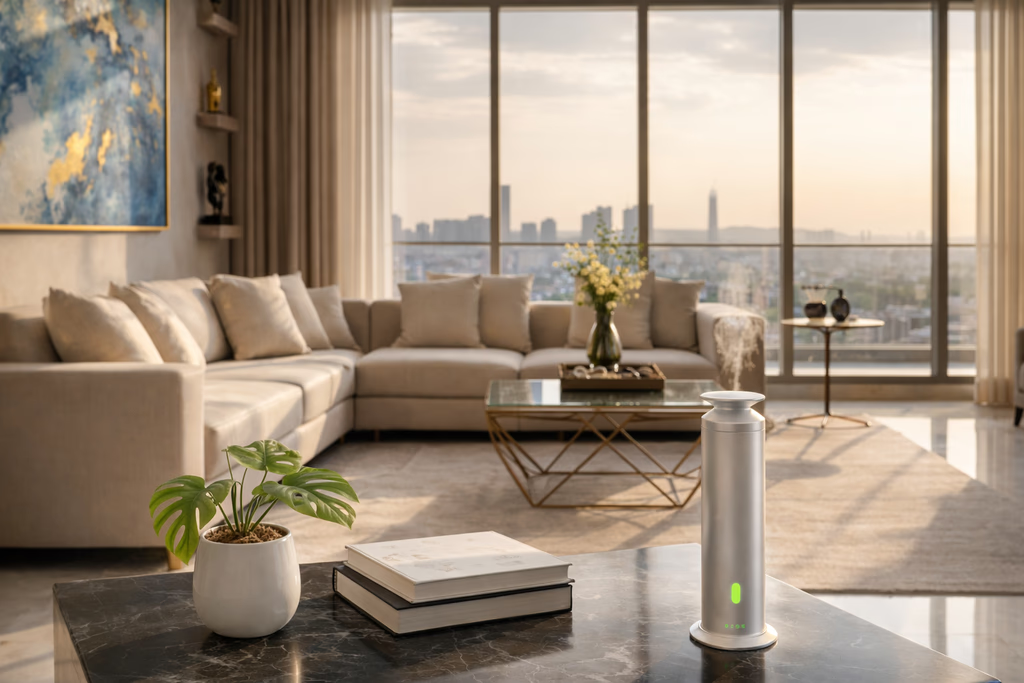
Which fifteen scene recipes can you copy?
These are settings, not products. They work on whatever you have that can be dimmed or tuned, whether that is a single lamp or a whole flat. Colour temperature first, brightness second, and the second number matters more than the first.
| Scene | Colour | Brightness | What is on |
|---|---|---|---|
| Unwind | 2200K to 2700K warm | 40% | Lamps and strips. Ceiling off. Your everyday evening default |
| Film | 2200K warm | 10 to 15% | Only the glow behind the screen. Everything else off |
| Dinner | 2700K warm | 55% | Pendant over the table plus accents. Not the ceiling grid |
| Romantic | 2000K to 2200K amber | 20% | Bedside lamps, one accent, candles |
| Focus | 4000K to 4500K neutral | 100% | Desk task light and ceiling. Daytime only |
| Wake up | 2700K rising to 5000K | 1% rising to 80% over 20 minutes | Bedroom only, on a schedule tied to your alarm |
| Wind down | 4000K falling to 2200K | 60% falling to 20% | Living room and bedroom, running on its own each evening |
| Reading | 2700K to 3000K warm | 70 to 80% | One task light on the page, ambient low behind it |
| Meditation | 2200K warm, or a soft colour | 15 to 25% | Accent only. Nothing in the line of sight |
| Puja | 2700K warm gold | 60% | Mandir accent plus diyas. Steady, never colour changing |
| Festive | Colour, over a warm base | 80 to 100% | Strips, accents and strings. The one time to use full colour |
| Monsoon boost | 4500K to 5000K cool | 100% | Everything, for a July afternoon that never got light |
| Guests | 3000K warm neutral | 80% | Ambient and accent. Warm, but bright enough to read a face |
| Night walk | 1800K to 2200K amber | 1 to 5% | Floor level light on a motion sensor. Nothing overhead |
| Cleaning | 5000K daylight | 100% | Every light in the house, so you can see every corner |
Keep five to eight of these, not fifteen. The most common mistake with scenes is building twenty of them, naming three of them "Scene 1", and then using none. Name them after moments rather than settings, leave one obvious default, and make sure a guest can still press the light switch and get light.
What does it look like when the whole house does it?
Every recipe above is a single room reacting to a button. The next step is the same idea running without the button, and it is worth being concrete, because "smart lighting" as a phrase promises everything and describes nothing.
- Midnight Walk. The night walk recipe, automatic. A motion sensor beside the bed brings under bed lighting up the moment your feet touch the floor, and a presence sensor in the bathroom holds a low steady level even when you stop moving, which is exactly where an ordinary motion sensor switches off on you.
- Theatre Mode. The film recipe, plus the curtains closing and the air conditioning settling, on one press.
- Hosting Mode. The guests recipe, with the lighting deliberately uneven across the room rather than flat, so the space has depth instead of being evenly flooded.
- Goodmorning Mode. The wake up recipe done with daylight instead of bulbs, opening the curtains ten per cent every five minutes.
- Spotlight Mode. The reading recipe, tightened. Light isolated on one person rather than spread across the room, which is also the light you want when you are judging an outfit.
- Cleaning Mode. One button that gives your house help bright white light with the fan off, and a double press that brings the fan back.
All of it runs from a keypad on the wall, so nobody in the house needs an app to turn a light on. Our smart lighting page covers what the control layer looks like in more detail, and the full set of AHA experiences is where the rest of these live.
What are the seven most common mood lighting mistakes?
- One ceiling light doing every job. The original mistake, and the one every other item here is a variation of.
- Cool white everywhere. 6500K is right for a kitchen counter and wrong for a bedroom, a living room, a dining table and a mandir.
- No dimming at all. A warm bulb at full output is still a working light. Dimness does more for mood than warmth does.
- Mixed colour temperatures in one room. A 3000K lamp beside a 5000K downlight reads as a fault, even to people who cannot name what is wrong.
- Visible LED tape. If you can see the dots, the effect is gone. Conceal it, or put it in a channel with a diffuser.
- Colour used as the main event. Saturated colour is a party trick and a festival tool. Ninety per cent of good mood lighting is warm white at different brightnesses.
- Buying bulbs before deciding circuits. Ten smart bulbs on a wall switch that someone turns off at night are ten bulbs you cannot control. The circuit decision comes first.
Where does AHA fit, and where does it not?
Worth being explicit, because this industry blurs it. AHA does not install. AHA designs the lighting control system, supplies the drivers and controls, configures them and commissions the scenes in your home. Your own electrician installs, mounts and wires the hardware itself.
Two more things decide whether any of this is relevant to you. The system is wireless, so a driver sits inside each existing light fitting and keypads replace existing switch plates, each with a neutral at its switch box. The lights need no rewiring and no wall breaking, which is why it retrofits into a finished flat rather than needing a fit out. And AHA is deliberately not a lighting company: you choose your own fixtures from any vendor, and the smart driver goes behind them.
On budget, the honest anchor for a scene controlled lighting layer is around ₹45,000 for a bedroom and ₹65,000 for a living room, covering every light point in the room made dimmable and scene controlled. Those are scope estimates rather than quotes, and they move with the number of light points. Our room by room cost breakdown puts them in the context of a whole flat.
And if that is not where you are yet, the first half of this page still works on its own. A pair of warm bedside lamps and a switched off ceiling light costs very little and fixes most of the problem.
What do people ask us next?
What is mood lighting?
Soft, low level, usually warm light coming from several sources at once, used to make a room feel a certain way rather than to make it as bright as possible. In lighting design terms it lives in the ambient and accent layers, not the task layer. The practical version is simple: two or three dim warm sources beat one bright ceiling light.
What colour light is best for relaxing?
Warm white, roughly 2200K to 3000K, dimmed to somewhere around 20 to 40 per cent. The warmth matters less than the dimness. A warm bulb at full output still reads as a working light, and a cool bulb dimmed low still reads as cold.
Which colour temperature is best for a bedroom in India?
2700K to 3000K on a dimmer for the evening, with the option of something cooler for mornings, cleaning and gloomy monsoon afternoons. A single fixed 6500K tubelight is the most common bedroom lighting mistake in Indian flats, because it is the one setting that suits neither sleep nor a grey July afternoon.
How do I do mood lighting in a rented flat without drilling?
Plug in table and floor lamps, battery or USB fairy lights, a portable projector lamp, and LED tape held by aluminium clips or channels rather than trusting its own adhesive. Everything stays portable, nothing touches the paint, and the whole scheme moves with you at the end of the lease.
Do LED strip lights survive the Mumbai monsoon?
The light does. The adhesive usually does not. The double sided tape on the back of most LED tape loses its grip in sustained heat and humidity, which is exactly what a Mumbai flat gives it from June onwards. Clean the surface with isopropyl alcohol first, then mount the tape in an aluminium channel or on clips so the tape is not the only thing holding it up.
What IP rating do I need for balcony lighting in Mumbai?
IP65 as a minimum on a covered balcony, and IP67 anywhere the rain actually reaches. The first digit is dust and the second is water, under the IEC 60529 standard. One thing an IP rating does not cover is corrosion, which matters more than the rating itself on a sea facing balcony, so ask about the housing material as well as the number.
Does mood lighting increase the electricity bill?
Barely. Decorative LED lighting is a very small load next to an air conditioner, a geyser or a refrigerator, and it is usually run dim, which draws less again. The larger saving in a lighting scheme comes from being able to run fixtures below full output rather than from the fixtures themselves, which is a dimming benefit rather than a hardware one.
Why do my dimmable bulbs flicker at low brightness?
Because an inexpensive dimmable LED and an old wall dimmer are a poor match. Wall dimmers were designed for filament bulbs and need a certain amount of current flowing to stay stable. An LED draws so little that the dimmer becomes erratic near the bottom of its range, which shows up as flicker, shimmer or a sudden cut out. Bulbs and drivers that dim themselves, rather than being dimmed by the wall plate, avoid the problem.
What is a lighting scene?
A saved combination of brightness and colour temperature across several lights at once, recalled with one press. Instead of setting four lamps every evening, one button puts the whole room into the state you already decided on. It is the difference between owning smart bulbs and having a smart home.
Do lighting scenes stop working when the internet goes down?
They should not. An AHA system runs its scenes on a hub inside the home, so lighting, curtains, locks and scenes keep working during an internet outage. Internet is only needed for remote access from outside the home, camera viewing and voice assistants.
Can mood lighting be added to a flat that is already finished?
Yes. The system is wireless, so a driver sits inside each existing light fitting and keypads replace existing switch plates, each with a neutral at its switch box. The lights need no rewiring and no wall breaking, which is why it retrofits into finished homes rather than needing a fit out.
Does AHA install the lighting?
No. AHA designs the lighting control system, supplies the drivers and controls, configures them and commissions the scenes. Your own electrician installs, mounts and wires the hardware itself.
Almost nobody dislikes their lighting. They dislike having only one version of it. Every idea on this page, from a pair of bedside lamps to a house that changes character on a schedule, is the same move made at a different budget: give the room more than one setting, and put the settings within reach.
If you want to see the difference between a room you switch on and a room you can set, both experience centres are laid out as real flats rather than showrooms. Santacruz West and Lower Parel, open 11am to 7pm (Santacruz West is closed on Tuesdays).
Book a free consultation →For the permanent, built in version of all this, read our guide to false ceiling and cove lighting, and the AHA smart lighting page for how the control layer works. If you are starting a room from scratch rather than improving one, living room lighting design covers where each fixture goes and how to split the circuits.