Diwali Lights and Decor Ideas 2026 for Mumbai Homes
Fairy lights, water-sensor diyas, akash kandils and where to buy them in the city, from Lohar Chawl to Kandil Galli. And the one thing worth knowing before you buy anything: what a home that already has smart lighting needs none of.
Diwali (Lakshmi Puja) is on Sunday 8 November 2026, Dhanteras is Friday 6 November. For most Mumbai flats, fairy lights or curtain lights on the balcony grille, an akash kandil at the entrance and a few water-sensor diyas around the house covers it, all buyable at Lohar Chawl, Kandil Galli or online. If your lighting already changes colour, you may not need to buy anything for the permanent layer at all.
Every year around Diwali, Mumbai's skyline changes shape. Balcony grilles in Dadar chawls and thirtieth-floor windows in Powai light up alike, kandils sway outside flats all along the Western line, and every housing society WhatsApp group develops strong opinions about rangoli.
Whether you are decorating a 1BHK in Borivali or a sea-facing flat in Bandra, this covers the popular Diwali lights and decor, what each is for, roughly what it costs, and where in the city to find it. Prices below are indicative and move with the market, the shop and how well you bargain, so treat them as a starting point, not a quote.
Which Diwali lights should you actually buy?
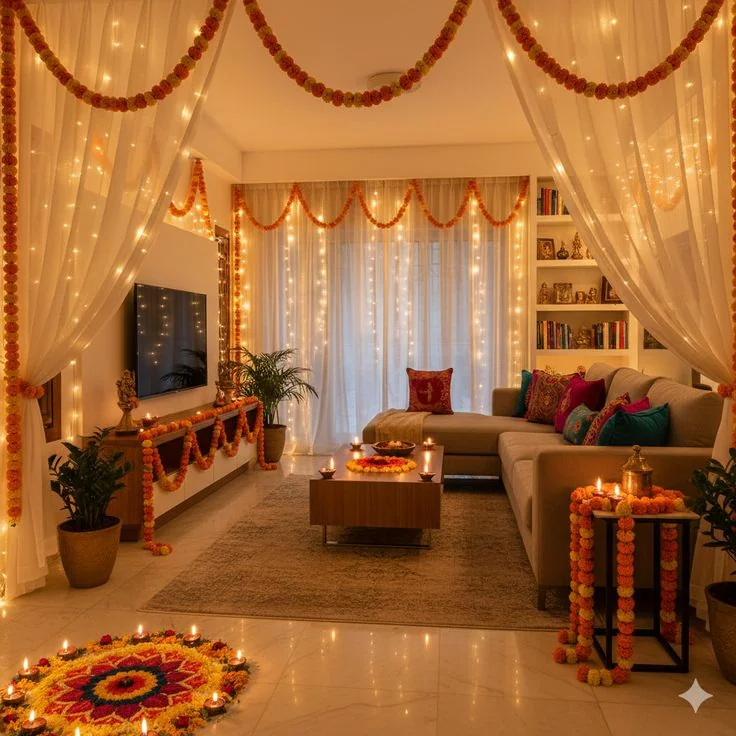
Eight types cover almost every Mumbai home. The right one depends less on taste than on where it is going and whether there is a plug point nearby.
| Type | What it is | Best for |
|---|---|---|
| Fairy lights (jhaalar) | Strands of tiny LED bulbs, steady or twinkling, warm white or multicolour | Balcony grilles, window frames, headboards, plants |
| Curtain lights | Vertical strands dropping from one top wire, a waterfall of light | Balcony openings, large windows, a backdrop for puja photos |
| LED rope lights | LEDs sealed in a flexible plastic tube, bendable into outlines | Terrace railings, compound walls, society gates |
| Electric diya strings | LED garlands shaped like clay diyas, no oil or open flame | Pooja rooms, entrance frames, homes with children or pets |
| Water-sensor diyas | Battery LEDs that light up when water is poured in, off when poured out | Rangoli borders, floating in urlis, society lobbies |
| Solar lights | Charge in daylight, glow after dark, no wiring or electricity cost | Open or west-facing balconies, terrace gardens |
| Copper wire and dewdrop lights | Micro-LEDs on thin bendable wire, the wire almost disappears | Jars, bottles, dried branches, a DIY photo corner |
| Statement lamps | Moroccan, laser-cut metal or Edison filament lamps for one striking corner | One feature spot rather than everywhere, for a luxe look |
A ninth option, plain candles and tealights, still does the most with the least: glass holders on a dining table, floating in a bowl, or grouped on a tray. Keep them away from curtains, torans and paper kandils, more on that below.
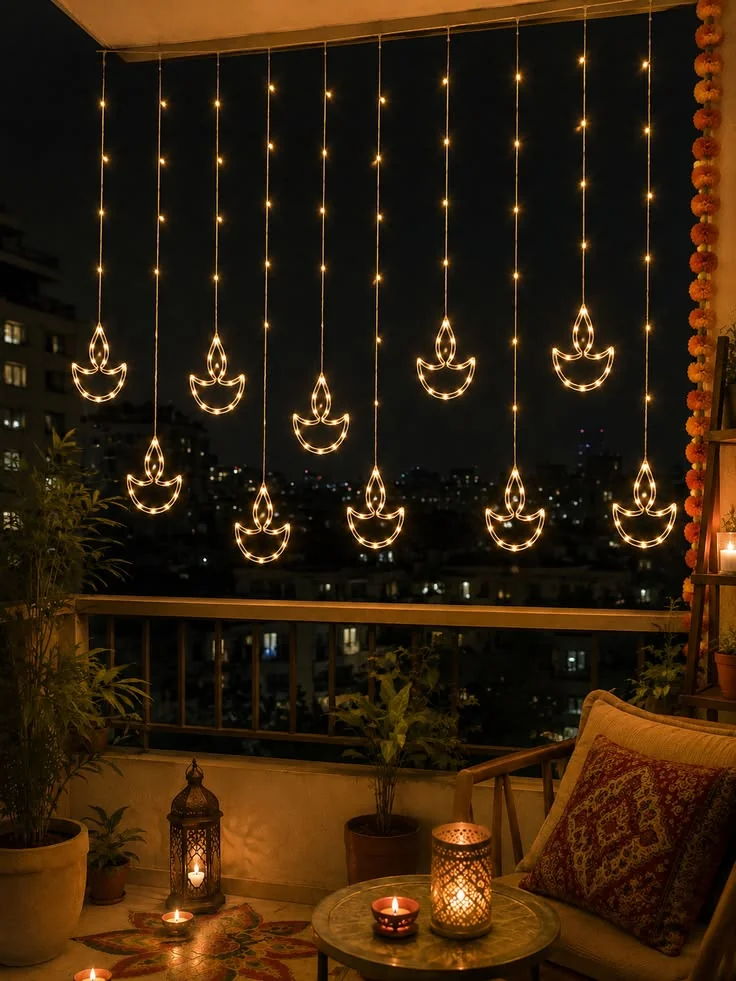
What is an electric diya string, and is it worth it over clay?
Electric diya strings are garlands of LED lights shaped like clay lamps. You get the traditional row-of-diyas look without a flame, an oil top-up, or the risk of one tipping over near a curtain, and you can reuse the same string next year.
Most homes do not choose one over the other, they run both: clay diyas for the actual puja, since that is what the ritual calls for, and electric strings for the balcony, the entrance frame and anywhere a flame would be a genuine hazard, such as near young children, pets, or a breeze off the sea in a high floor flat.
Where does each light actually work in a Mumbai flat?
| Spot | Best light options | Why |
|---|---|---|
| Balcony grille | Fairy lights, curtain lights | Ties on easily, no floor space used |
| Large windows | Curtain lights | One set covers the whole window |
| Terrace or compound wall | Outdoor-rated rope lights, solar lights | Weatherproof, covers long stretches |
| Pooja room | Clay diyas, electric diya strings | Traditional look, flameless backup |
| Homes with kids or pets | Water-sensor diyas, LED diyas | No open flame anywhere in reach |
| Rented flat | Battery fairy lights, removable hooks | No drilling, nothing to undo when you move |
| Coffee or dining table | Tealights, copper wire lights in jars | Soft, close glow rather than overhead light |
What decor goes with the lights, and where does it come from in Mumbai?
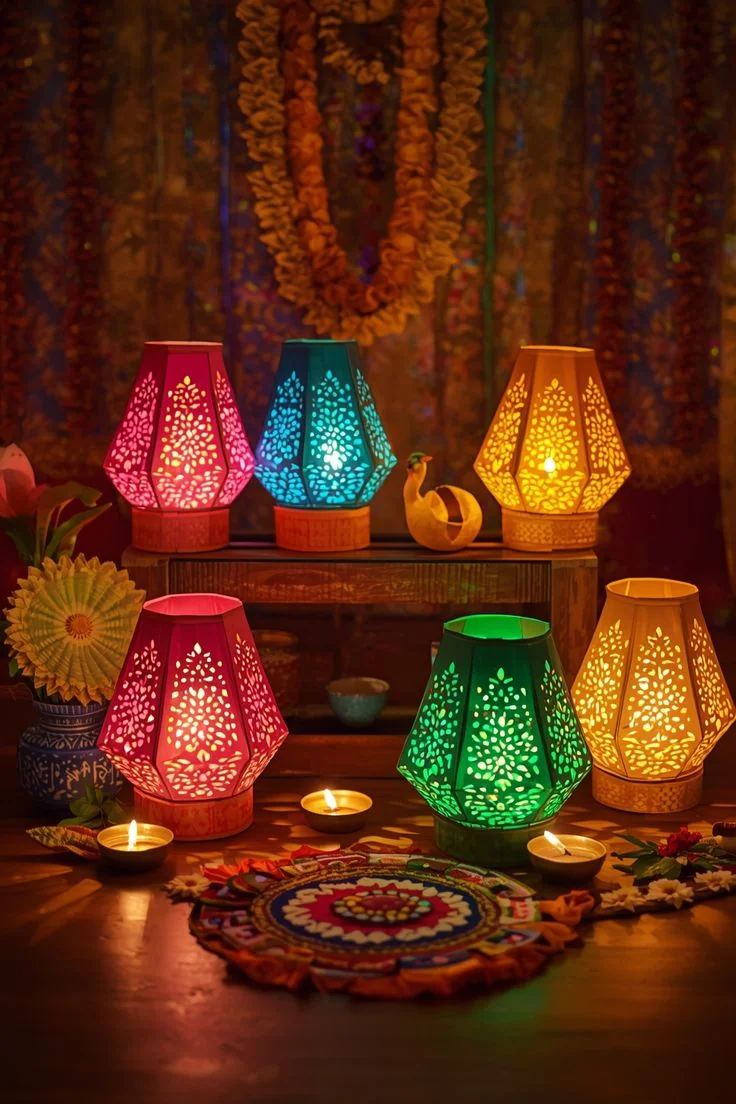
The akash kandil, the hanging lantern outside almost every Maharashtrian home before Diwali, is the decoration most associated with the festival here. It comes in paper and bamboo star shapes, foldable velvet and fabric versions, palm-leaf and dried-flower designs, and plastic or LED versions that need no separate bulb.
The city's own kandil market is Kandil Galli, the lane off LJ Road between Mahim and Matunga near Citylight Cinema, a lantern-making tradition that goes back to artisans who originally made Eid lanterns in the same lane and later grew it into a Diwali destination. Matunga Road and Mahim are the nearest stations.
For clay diyas, Mumbai has its own diya-making district: Kumbharwada in Dharavi, a potters' colony settled nearly a century ago by families from Saurashtra, spread over more than 12 acres on 90 Feet Road. In the weeks before Diwali its potters work long hours supplying diyas across the city, plain terracotta through to hand-painted and mirror-embellished pieces. A popular idea is to buy plain diyas and paint them at home, geometric patterns, ombre shades, a metallic rim, which turns an evening into a family activity and leaves every diya slightly different. Soak new clay diyas in water for a few hours before use, so they absorb less oil and burn longer.
Beyond the two, a working shortlist:
- Rangoli, in five easy variants: classic powder, flower petals (marigold and rose, genuinely eco-friendly), bead and mirror work you can reuse yearly, stencils for a fast, symmetrical result, and removable stickers, the practical choice for a narrow society corridor with heavy foot traffic.
- Torans for the door, fresh mango leaves with marigold is the traditional choice, alongside reusable beaded or fabric versions in brocade or mirror work.
- Urlis, a wide brass, copper or ceramic bowl filled with water, floating petals and a few floating candles or water-sensor diyas, an instant centrepiece for an entrance table.
- Fresh flowers, marigold garlands on doors and windows, jasmine or rose strings in the pooja room. The flower market near Dadar station (West) is the usual source for bulk marigolds.
Are sky lanterns allowed in Mumbai during Diwali?
A hanging akash kandil and a flying sky lantern are two different things, and only one is a problem. A sky lantern is a paper balloon lifted by an open flame, and Mumbai Police has banned the sale, storage and flying of sky lanterns around Diwali before, a month-long order in force from 23 October to 21 November in 2024, citing the danger to lives and public property. That risk is not hypothetical: a flying lantern was blamed for a fire at a 36-storey under-construction tower in Malad East in 2015. Check the current year's police order before buying one, and when in doubt, a kandil does the same job without the risk.
If your lighting already changes colour, what do you actually still need to buy?
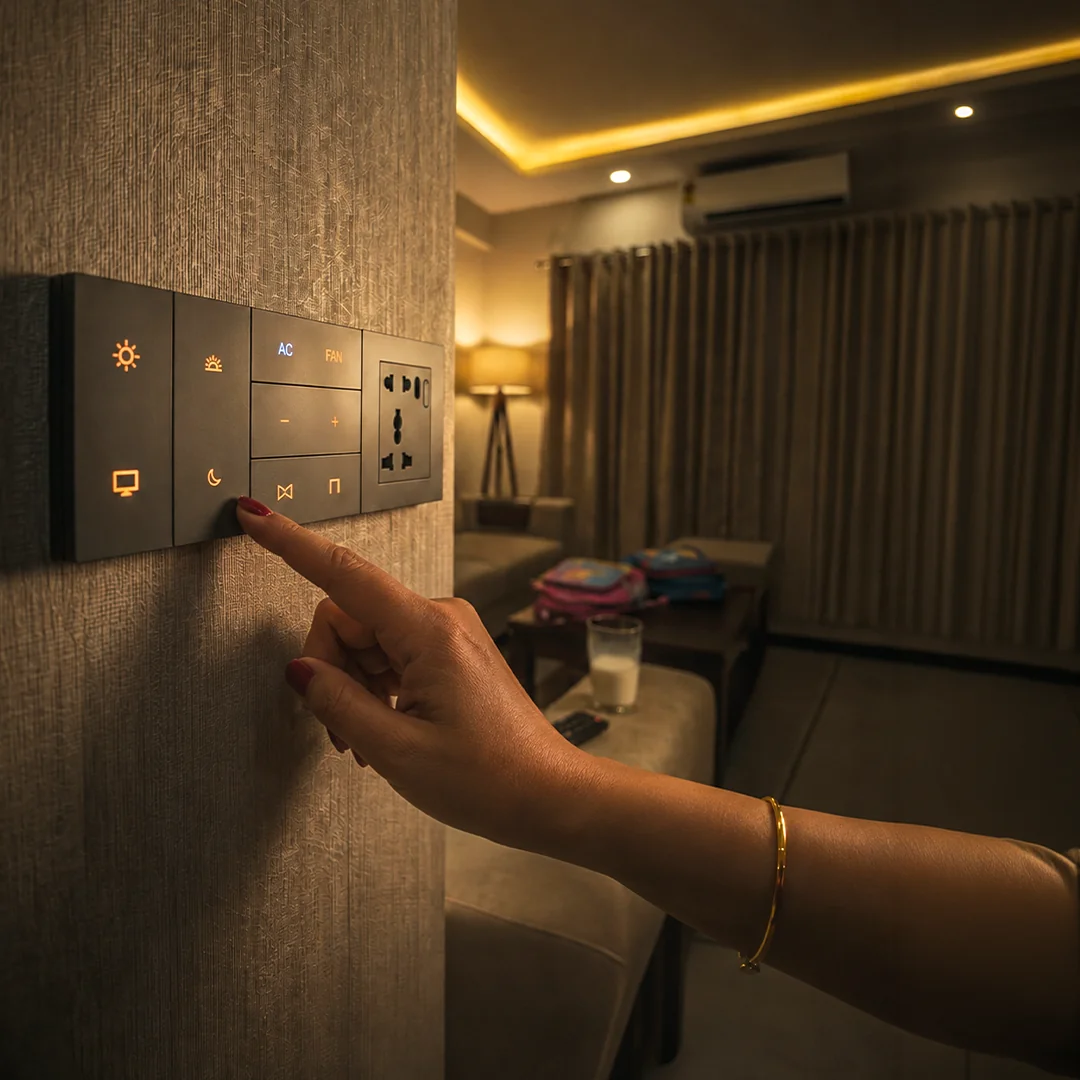
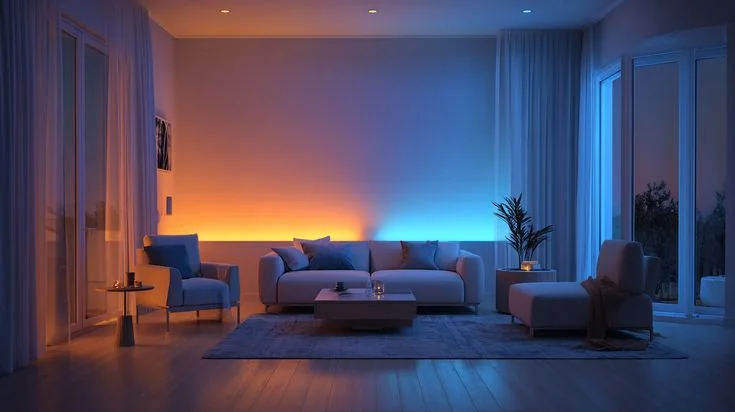
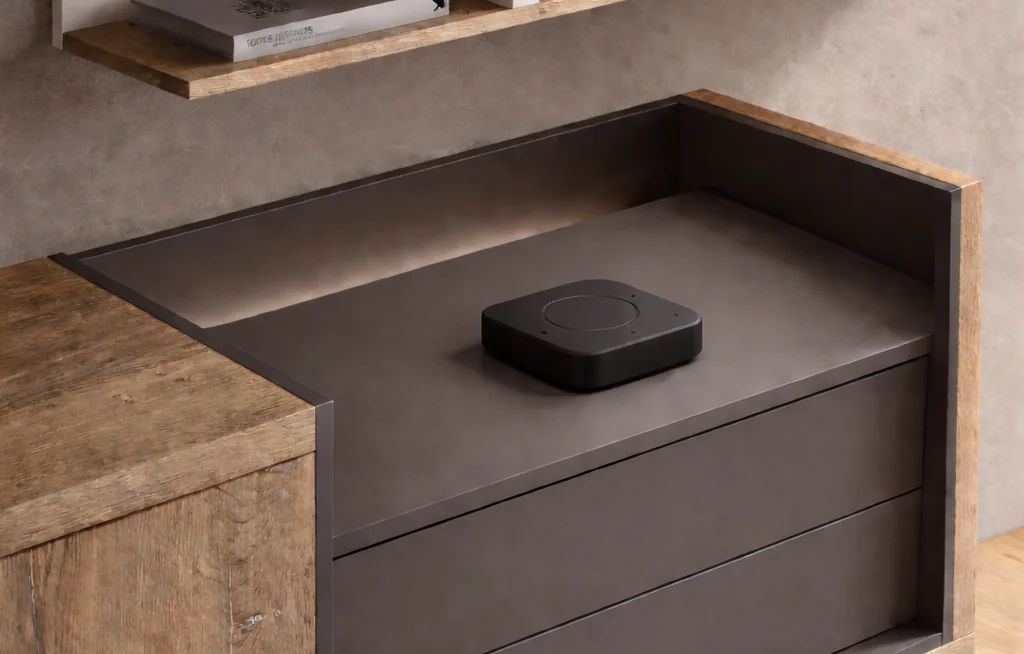
Less than the list above suggests. AHA's cove and accent circuits run on a per-fitting Smart Driver rather than one dimmer per room, controlled from the wall keypad or the app, which means a warm gold or festive colour wash is a scene change, not a purchase. Two of AHA's existing experiences already do exactly this on a schedule: Pooja Mode brings the mandir lighting on by itself through the Smart Driver each morning, and Party Time runs full-colour RGB lighting synced over Bluetooth, the same mechanism a Diwali evening scene would use. Run it for the festival week, then switch back, with nothing left over to take down.
If the lighting is not smart yet and you are weighing it up, the useful number is the whole room rather than the festival: on AHA projects, a living room's lighting alone, cove, spot and decorative circuits together, typically comes to about ₹65,000, as a scope estimate rather than a quote. Our smart lighting page breaks down what it includes.
This is not a claim that temporary decor becomes unnecessary. A kandil at the door, a rangoli by the threshold and diyas for the actual puja are their own thing, and a lighting system was never meant to replace them. What it removes is the part of the list that is really about your permanent lighting doing a festive job for one week: string lights on the cove, colour on an accent wall, a warm wash instead of the everyday white. If that layer can already change colour and brightness from a keypad, buying a second set of lights to do the same job twice is the one item on this list actually worth skipping.
For anything you do buy fresh this year, the safety principle in the next section still applies. Our mood lighting guide covers the reverse case in more depth, exactly how to turn existing accent and cove circuits into a festive scene, room by room, and the specific safety checks worth running on fabric decor and open flames near it.
How do you keep Diwali lighting safe in a flat?
- Inspect last year's lights before plugging them in. A frayed or exposed wire on a string that has sat in a box for a year is the most common cause of a Diwali electrical fault, not a new one.
- Do not daisy-chain extension boards. One board plugged into another, feeding several light sets off a single socket, is a repeated failure pattern every Diwali season.
- Use outdoor-rated lights on an open balcony or terrace. Late-season showers and salty, humid sea air are hard on wiring that was only ever built for an indoor shelf.
- Fix lights to a metal grille with plastic cable ties or tape, never metal wire, which can wear through insulation against the grille over the length of the season.
- Switch decorative lights off when you leave or sleep, or put them on a timer or a smart plug so it happens without anyone remembering.
For what to keep flammable decor away from, and the specific case of diyas and candles near curtains, see the safety section in our mood lighting guide, which covers that ground in detail rather than repeating it here.
Where do you actually buy this in Mumbai?
- Lohar Chawl, Kalbadevi. The city's wholesale market for fairy lights, rope lights, curtain lights and statement lamps, a short walk from Crawford Market, CSMT the nearest major station. Bargaining is normal and expected.
- Kandil Galli, Mahim to Matunga. Rows of akash kandils in every size, material and price range, near Citylight Cinema.
- Kumbharwada, Dharavi. Clay diyas and pottery straight from the potters who make them.
- Crawford Market. Lights, lanterns and puja items in one trip.
- Dadar West. Kandils, lights and rangoli colours around Ranade Road, plus the flower market for marigolds.
- Hill Road and Linking Road, Bandra. Torans and festive home accessories.
Visit on a weekday morning if you can. These markets get genuinely crowded in the final week before Diwali, especially on weekends.
Buying Indian-made has become the norm rather than the exception: in the trade body CAIT's own report on Diwali 2025, drawn from a survey across 60 distribution centres, 87% of consumers preferred Indian-made goods, in a season that saw record festive trade of Rs 6.05 lakh crore nationally. Checking the country of origin on packaging, and buying diyas and kandils directly from Mumbai's own artisans at Kumbharwada and Kandil Galli, is both the local option and the one most shoppers are already choosing.
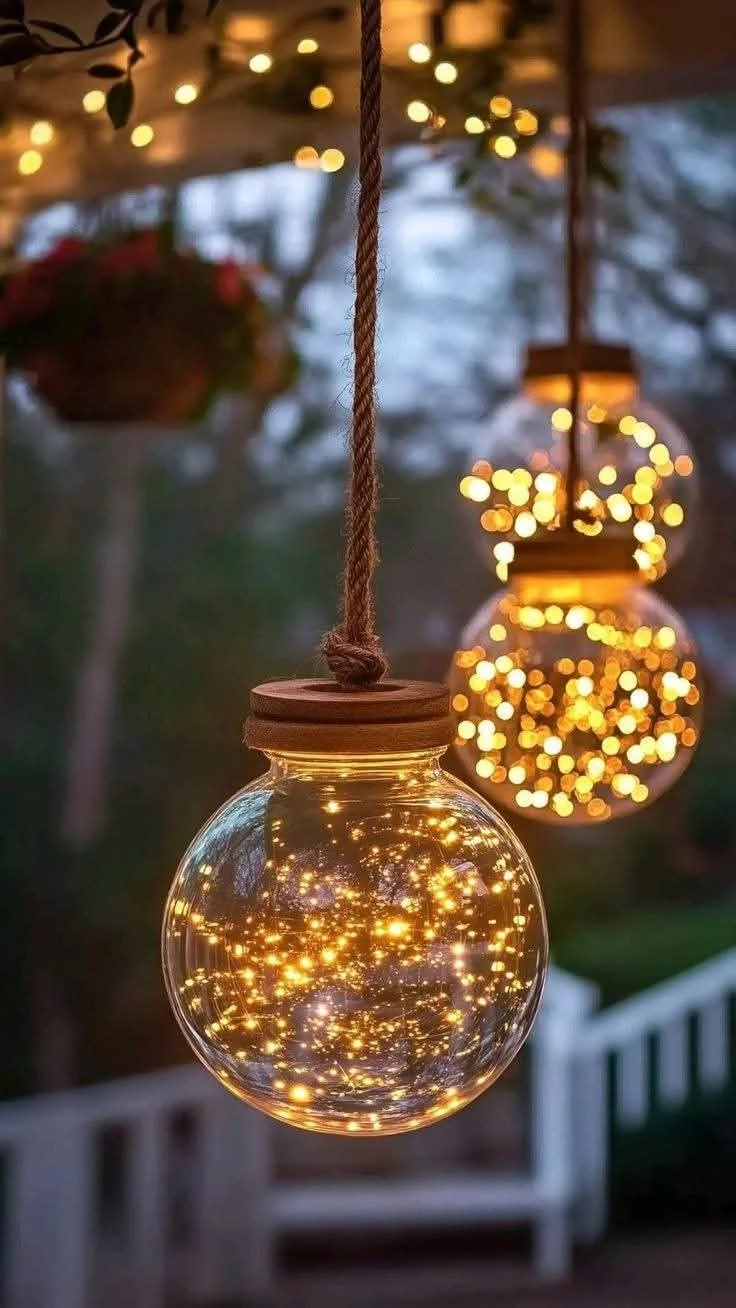
What is a Diwali decoration idea that costs almost nothing?
Jar lanterns are the simplest: an old jam or pickle jar, a length of copper wire or dewdrop lights coiled inside, and a lid you can hang from a hook or set on a window sill. A few, hung at different heights along a balcony rail, do more than a single expensive lamp.
Two more worth trying: a lantern ladder, an old wooden ladder leaned against a balcony wall with a small lantern hung from each rung, and a Diwali photo wall, fairy lights strung across one wall with family photos from past Diwalis clipped on. Neither needs a shop, just what most homes already have in a storeroom.
What do people ask us next?
What are the best Diwali lights for a small balcony?
Fairy lights and curtain lights work best. They tie onto a grille in minutes, take up no floor space, and a battery-powered set needs no plug point out there at all.
Are LED diyas better than clay diyas?
Each has its place. Clay diyas are traditional and are what most homes still use for the actual puja. LED and water-sensor diyas are flameless and reusable, which makes them the safer choice around children, pets and curtains, so many homes run both at once.
Are sky lanterns allowed in Mumbai during Diwali?
Mumbai Police has banned the sale, storage and flying of sky lanterns around Diwali before, citing fire risk to buildings, and the concern is not hypothetical: a flying lantern was blamed for a fire at an under-construction tower in Malad East. Check the current year's order before buying one. A hanging akash kandil is a different thing and is not affected.
Where can I buy akash kandils in Mumbai?
Kandil Galli, the lane between Mahim and Matunga near Citylight Cinema, is the best known kandil market in the city, with stalls in paper, bamboo, fabric and LED versions. Dadar West's market streets and online stores also carry a wide range.
Where can I buy Diwali lights at wholesale prices in Mumbai?
Lohar Chawl in Kalbadevi, a short walk from Crawford Market, is Mumbai's best known wholesale market for fairy lights, rope lights, curtain lights and statement lamps. Bargaining is normal and expected.
Do I need to buy new lights every year if my home already has smart lighting?
For the permanent layer, no. A cove or accent circuit that can already change colour and brightness can run a warm gold or festive scene for the week and revert afterwards, no new string lights involved. Temporary decor, kandils, diyas, torans and rangoli, is a separate, cheerful layer on top that a lighting system was never meant to replace.
None of this needs a big budget. A string of warm fairy lights on the grille, a kandil from Kandil Galli, and a row of Kumbharwada diyas on the sill does the job in most Mumbai homes, and if your cove lighting already runs in colour, it may already be halfway done. Shubh Deepavali.
To see what a Mumbai home with a scheduled festive lighting scene actually looks like, both experience centres run real hardware. Santacruz West and Lower Parel, open daily 11am to 7pm.
Book a free consultation →