Can You Take Your Smart Home With You When You Move?
The question that stops a lot of people buying, and it has a specific answer rather than a reassuring one. The equipment moves. The installation does not. Knowing which is which before you commit is the whole thing.
Yes, most of it. Drivers and keypads can be shifted to a new home, and so can the hub, the sensors and the controllers. What stays behind is not the equipment but the installation: the wiring in the walls, the curtain track cut to the old window, and anything built into the ceiling.
Mumbai moves. People shift for a bigger flat, for a redevelopment, for a school, for work. So the question comes up early and it deserves a straight answer rather than a hopeful one.
What actually decides whether something moves?
One rule covers almost every item: if it was fitted to the flat, it stays. If it was fitted to a fitting, it comes with you.
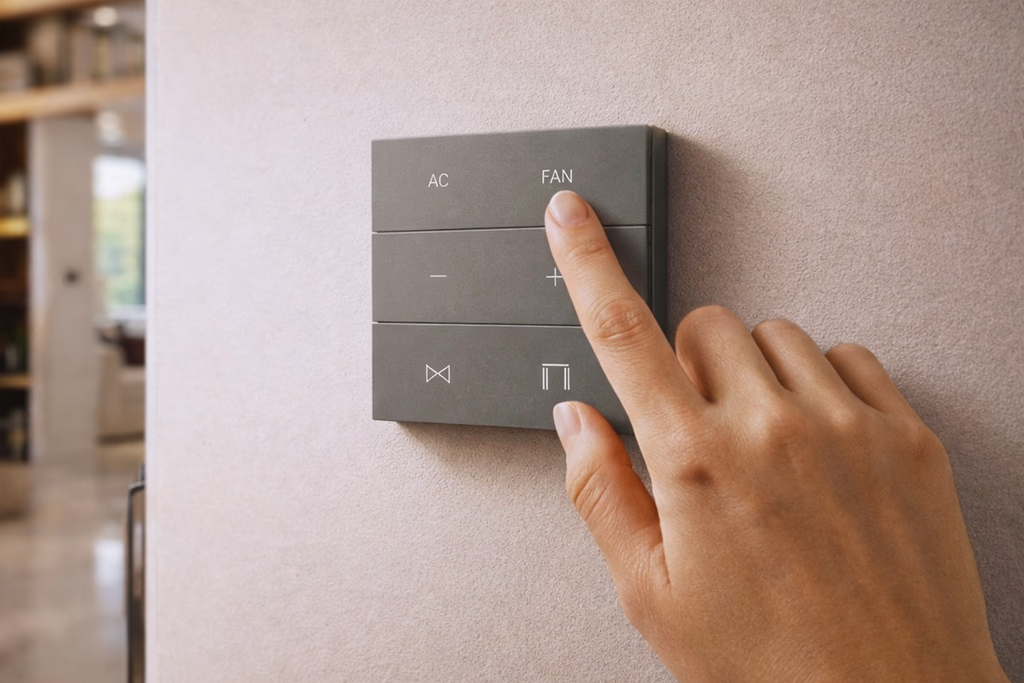
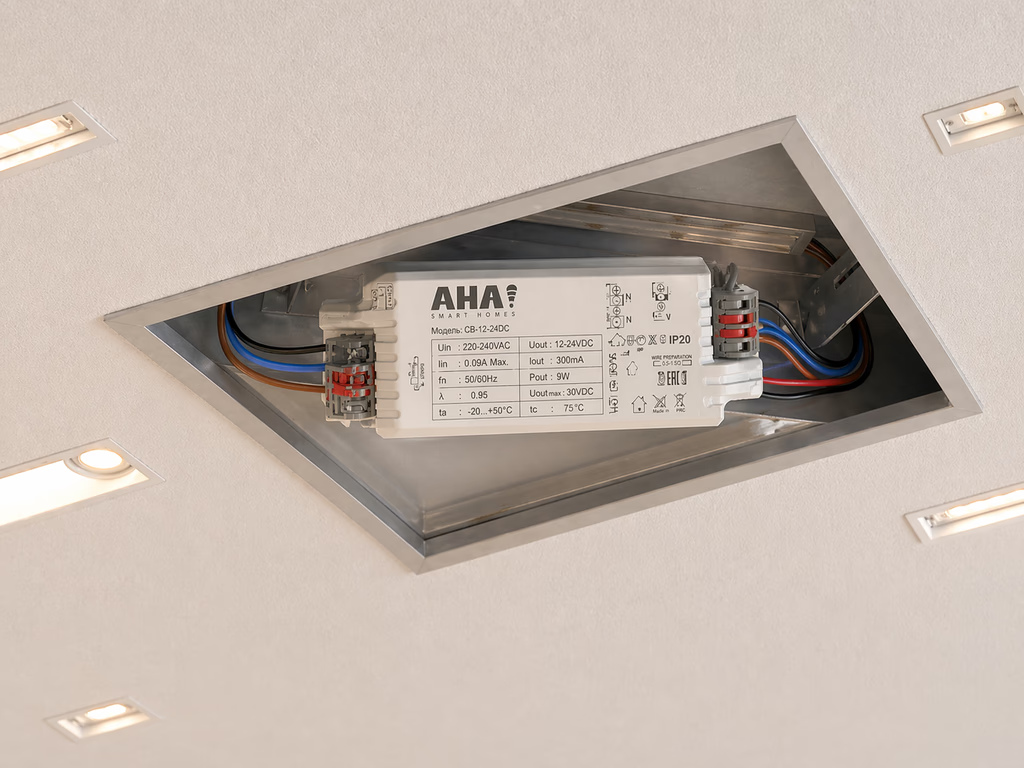
A lighting driver sits inside the light fitting, not in the wall, so it leaves with the fitting. A keypad screws onto a switch box and unscrews from it. The hub sits on a shelf. None of those are part of the building. Wiring buried in a chase, a curtain track cut to the width of a particular window, a cove built into a false ceiling: those were made for that flat and they end their life there.
It is worth being clear that this is a question about hardware, not about licences or accounts. Nothing in an AHA system stops working because it changed address, because the automations are processed on a hub inside the home rather than in somebody's cloud. That is the same property that keeps it running during an internet outage, covered in does a smart home work without internet.
What moves, and what stays, item by item?
The same list we would go through on a site visit, before anything is unscrewed.
| Item | Moves? | What decides it |
|---|---|---|
| The hub | Yes | One per home, and it holds the logic. The scenes are rebuilt against the new rooms |
| Keypads | Yes | The new switch boxes need a neutral. How many you use changes with the room count |
| Lighting drivers | Yes | They sit in the fitting. The question is whether the new fittings have room, not whether they work |
| Sensors | Yes | Nothing fixed. Position is re-chosen for the new rooms |
| Infrared controllers | Yes | They need line of sight to the AC or fan in the new room |
| Curtain motors | The motor, yes | The track is cut to the old window. New windows almost always mean new track |
| Smart lock | Usually | Door thickness, which way it opens, and whether a safety door leaves enough gap |
| Wiring in the walls | No | It belonged to the flat rather than to you |
| Cove, profile and ceiling work | No | Built into the ceiling, and sized to that room |
Read the right-hand column rather than the middle one. Almost nothing in this list is a flat yes or no about the hardware. It is a question about the next flat, which is why it gets answered by a visit rather than by a brochure.
Why are curtains the awkward one?
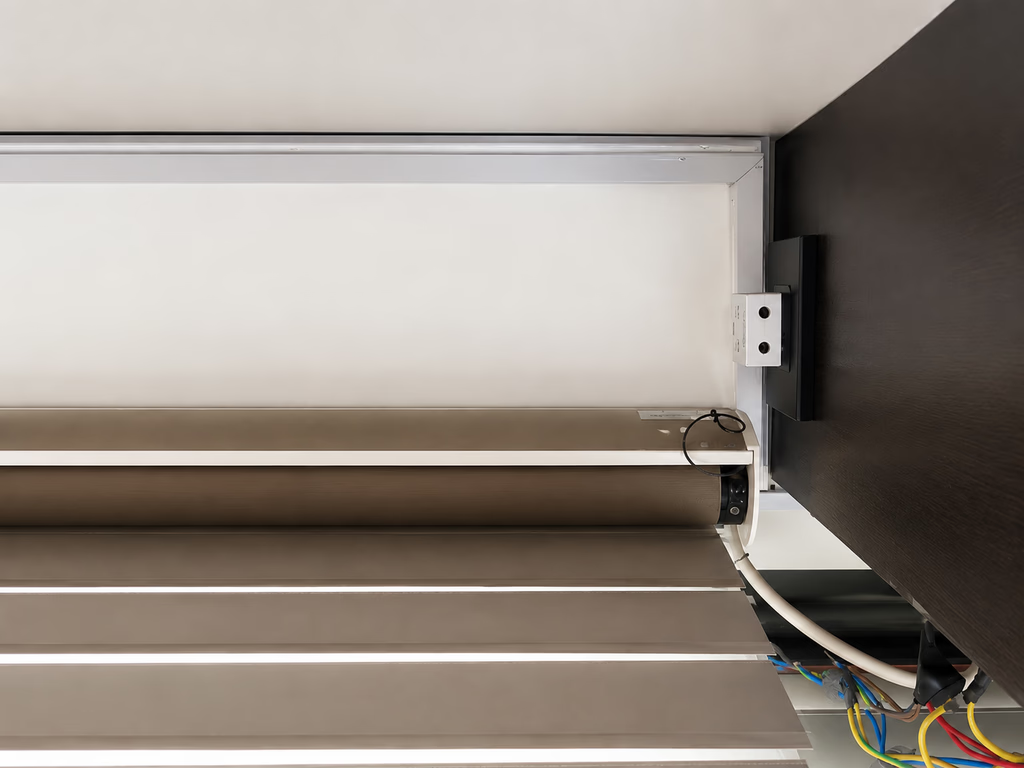
Because a curtain system is two things that people think of as one. The motor is a product. The track is a made to measure part, cut to the width of a particular window, and windows are the thing that differs most between two flats.
So the honest expectation is: the motor comes with you, the track probably does not, and you budget for new track in the new home. If by luck a window is the same width, the track moves too, and that is worth measuring rather than guessing.
One thing that does follow the motor is its warranty. AHA curtain motors carry five years from the date of invoice, which is the longest term on any line we sell, and it runs on the equipment rather than on the address. Moving does not restart it and does not end it. The same applies across the system: two years on automation parts from the date of invoice, three on the AHA wardrobe lock, and on a claim the replacement timeline is communicated within seven days.
If you are choosing curtains now and a move is somewhere on the horizon, motorised versus manual curtains goes through what the motor is actually buying you.
What changes if the new flat is a different size?
The system is adjusted rather than replaced. If the new home is a different size, products are added or removed to fit it, which is the ordinary case rather than an exception, because almost nobody moves into a flat with the same number of rooms and the same number of circuits.
Three things shift in practice:
- The keypad count follows the rooms. A 2BHK moving to a 3BHK needs more keypads and more drivers. The reverse direction leaves you with spares, which are worth keeping rather than selling, because a spare keypad is the fastest fix if one ever fails.
- The hub does not multiply. It is one per home, not one per room, so a larger flat does not mean a second hub. This is the item people most often assume they will have to buy again.
- The scenes get rewritten, not copied. A scene is a set of instructions about specific rooms. Moving it unchanged to a flat with a different layout produces something that technically runs and does not fit. Expect to sit down and redo them, and treat that as a chance to drop the ones you never used.
If the new place is a fresh handover rather than a resale, the sequencing matters more than the equipment list does, and the order to do things in is set out in home automation before or after interiors.
What does moving a system actually involve?
Four stages, and the division of labour is the same as it was the first time. AHA designs, supplies, configures and commissions. Your electrician does the wiring and the mounting. Nobody should be telling you that an automation company will rewire your flat.
- A survey of the new flat, before anything is removed. Which switch boxes have a neutral, what the light fittings are, window widths, the front door. This is the step that gets skipped and it is the one that causes the second visit.
- Removal from the old home. Keypads come off, drivers come out with the fittings, the lock comes off the door. What is left behind is conventional switches, which your electrician refits so the flat is handed over working.
- Electrical work in the new home. Bringing a neutral down to the switch boxes where a keypad is going, if the loop does not already have one. Many older Mumbai switch loops do not, and that is explained in do smart switches need a neutral wire. Wiring is governed by the Bureau of Indian Standards code of practice and enforced through the Central Electricity Authority safety regulations, which is your electrician's job to work to.
- Commissioning. Devices joined to the hub, rooms named, scenes rebuilt for the new layout, and the household shown how it works. This is the stage people underestimate, and it is the one that decides whether the system feels like yours again or like someone else's settings.
One permission to sort out early. In a co-operative housing society that has adopted the Maharashtra model bye-laws, bye-law 45(a) says no member may make additions or alterations to a flat without the Committee's previous written permission. Electrical work in a new flat normally sits inside a fit-out window, so it is far easier to include it in that one application than to come back to the committee two months later. The full picture is in drilling and rewiring rules in a Mumbai flat.

Is it worth moving the system, or starting again?
Usually worth moving, and the reason is simple: the hub, keypads, drivers and sensors are the larger part of what you paid for, and nothing about being used for three years consumes them. What you pay for a second time is the labour and the made to measure parts, which is the smaller share.
What should actually tip the decision:
- How similar the two flats are in room count. Similar means most of the kit lands straight back in use. Very different means a long list of additions, at which point the conversation is closer to a fresh design that reuses what you have.
- Whether the new flat is a bare handover or already finished. A bare flat is the cheap moment to do electrical work, because the fit-out is happening anyway. A finished flat means opening things that were just closed.
- Whether you liked it. The least technical question and the most useful. If the system earned its place, move it. If you are moving it because it cost money rather than because you use it, that is worth noticing before you spend more, and is home automation worth it is the honest version of that conversation.
One thing we will not tell you is that an automated flat sells for more. We have no data for that claim, so we do not make it. What we can say is that the equipment is not abandoned in the walls when you leave, which is the part people are usually really asking about.
What should you do before moving day?
A short list, in the order it actually matters.
- Six weeks outSurvey the new flat: neutrals at switch boxes, light fittings, window widths, front door
- Same timeApply to the society for the fit-out permission, with the electrical work included
- Four weeks outDecide what is added or removed for the new room count, so nothing is ordered on the day
- Before removalPhotograph the old scenes and keypad labels, so the rebuild starts from what you had
- Removal dayConventional switches go back in the old flat so it is handed over working
- New flatElectrical first, then devices, then commissioning, then show the household
The one that saves the most trouble is the first. Almost every unpleasant surprise in a move is a switch box without a neutral, a light fitting with no room for a driver, or a window three inches narrower than the old one. All three are visible on a survey and invisible on moving day.
What do people ask us next?
Can you take a home automation system with you when you move?
Mostly yes. Drivers and keypads can be shifted to a new home, and so can the hub, the sensors, the infrared controllers and in most cases the smart lock. What does not come with you is the installation rather than the equipment: the wiring inside the walls, the curtain tracks cut to the old windows, and anything built into the false ceiling. If the new home is a different size, products are added or removed to fit it.
Do smart light drivers move to a new flat?
Yes. A driver sits inside the light fitting rather than in the wall, so it is removed with the fitting and refitted in the new home. The question worth asking before the move is not whether the driver works, it is whether the new flat's light fittings have room for one, which is checked on a site visit rather than assumed.
Do curtain motors move to a new home?
The motor moves. The track usually does not, because a curtain track is cut to the width of a specific window and the new windows are rarely the same size. Treat the motor as the thing you own and the track as part of the old flat, and budget for new track in the new home. AHA curtain motors carry a five year warranty from the date of invoice, which runs on the equipment and is not restarted by a move.
Does a smart lock fit a different front door?
Usually, but it is the one item that needs checking rather than assuming. Door thickness, which way the door opens, and whether a safety door in front leaves enough clearance all decide it. The clearance question is settled by measuring on site, not from a photograph, so have it checked before the move rather than on the day.
Does the warranty continue after you move the system?
The warranty runs from the date of invoice on the equipment, so moving does not restart it and does not end it. AHA automation parts carry two years from the date of invoice, the AHA wardrobe lock three years, and curtain motors five years. On a warranty claim, the replacement timeline is communicated within seven days.
Is it worth moving a smart home system, or starting again?
It is usually worth moving the equipment, because the hub, keypads, drivers and sensors are the larger part of what was paid for and they are not consumed by being used. The parts of the job you pay for a second time are the labour and the fittings: removing, transporting, mounting, wiring and commissioning again, plus any new curtain track. The deciding factor is how similar the new flat is in room count, not how old the equipment is.
The short version: you are buying equipment, not a renovation. The hub, the keypads, the drivers and the sensors are yours and they come with you. The wiring, the track and the ceiling belonged to the flat. Survey the new place before anything is unscrewed and almost nothing about a move goes wrong.
If a move is on the horizon and you want to know what your own system would carry across, bring the new flat's plan to either centre. Both are laid out as real homes, in Santacruz West and Lower Parel, open 11am to 7pm, Santacruz West closed on Tuesdays. The full scope for an apartment is on AHA design and commissioning services.
Book a free consultation →