An honest buyer's guide

How to Choose the Best Home Automation Company in India

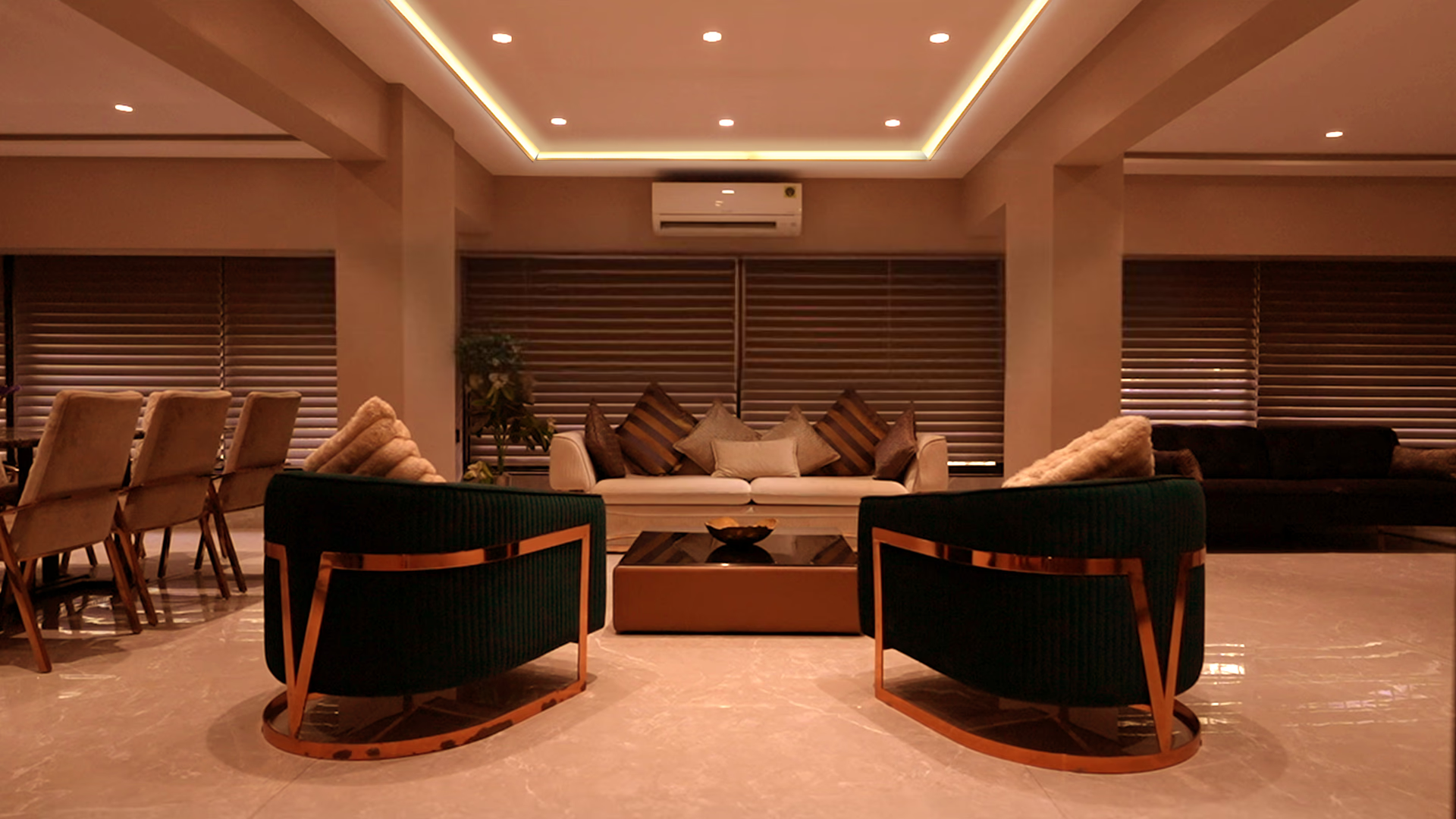
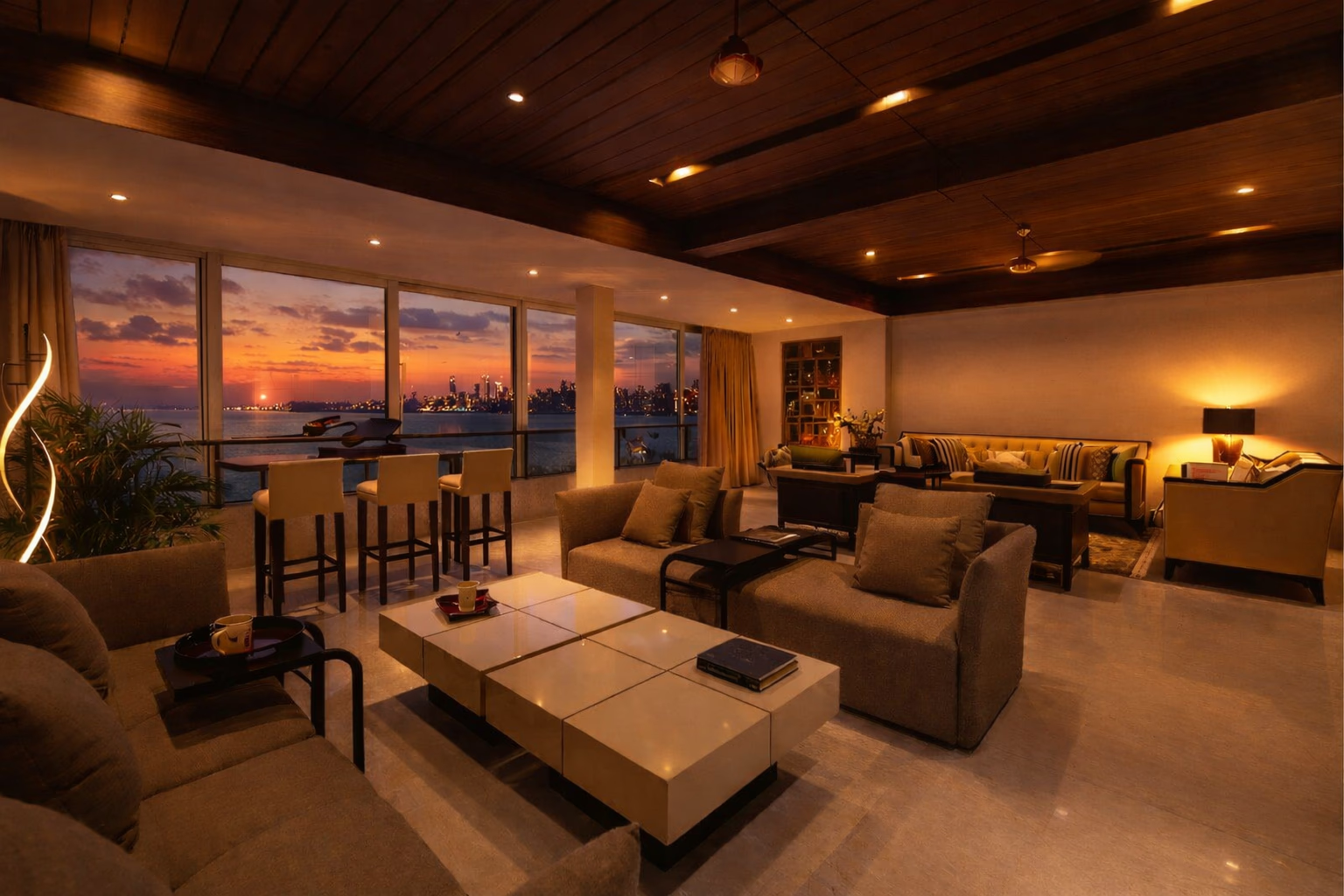
A Mumbai living room in the evening, lit by warm cove and accent lighting

Get a room-by-room estimate

Tell us about your home and your city. We will come back with what it would take, and whether it is worth doing yet.

Step 1 of 2

The best home automation company for your home is the one that passes five checks: it builds on an open standard, runs your home without the internet, employs its own technicians, stands behind its own hardware, and still picks up the phone in year three. This guide shows you how to test each one in a single call.

Best Home Automation Award winner, 3 years running · 1,200+ Mumbai homes

First, work out what kind of company you are talking to

Most companies selling home automation in India fall into one of four groups. None of them is wrong, they suit different homes, and knowing which one is in front of you tells you what to ask next.

First, work out what kind of company you are talking to
Type What they do Best for Watch out for
Full-stack automation company Designs, supplies, configures, commissions and supports one system. One point of accountability. A whole home, or one room now and the rest later. How much is genuinely in-house, and how much is resold under one invoice.
Single-product brand Sells one category well, such as locks, curtains or switches, each with its own app. One specific upgrade and nothing more. Three brands means three apps and no shared scenes.
Wired system integrator Specifies and programs a cabled system, decided at the electrical stage. Villas and commercial builds planned before construction. In a finished flat: chased walls, rewiring and repainting.
Electrician adding smart parts Fits smart switches or bulbs alongside regular wiring work. A low-cost trial in one or two rooms. Nobody owns the system, the scenes or the support afterwards.

For scale, published Indian integrator ranges put wired systems at ₹800 to ₹1,500 per sq ft and wireless systems at ₹200 to ₹600. These are market figures, not AHA's pricing.

Eight questions to ask any home automation company

Ask these on the first call. A good company answers each one in a sentence. Tap any card to see how we answer it ourselves.

Is it built on an open standard?

Good answer: Zigbee 3.0, Matter or Thread, named plainly.
Red flag: “our own protocol”.

How AHA answers: Zigbee 3.0, with Matter and Thread certification. Because the standard is open, any Zigbee-capable company could service your home, even in our absence. Our wired versus wireless comparison explains why this matters more than any single feature.

Does it work without the internet?

Good answer: scenes run on a hub inside your home.
Red flag: everything goes through a cloud app.

How AHA answers: every scene is programmed on the hub, so lights, curtains, locks and keypads keep running when the connection drops. Voice assistants pause, because they are cloud services. Here is what keeps running and what does not.

Who will actually work in my home?

Good answer: the company's own trained staff.
Red flag: nobody can tell you who, or how they were trained.

How AHA answers: 80+ in-house technicians, factory trained and background verified, employed by AHA rather than hired per job.

Who made the parts, and who answers for them?

Good answer: the company itself, or one accountable supplier.
Red flag: parts from several importers, and nobody owns a fault.

How AHA answers: our light drivers are manufactured at our own BIS certified plant in India, so a fault has one owner, and the same in-house team that commissions the system supports it afterwards.

Who installs, and who commissions?

Good answer: a clear split, in writing.
Red flag: one vague line item called “installation”.

How AHA answers: your own electrician mounts and wires the hardware to our specification. Our technicians then pair every device, configure the hub, program the scenes, test everything and hand over. A single room takes about a day, a full apartment three to five.

What happens when something breaks in year three?

Good answer: most fixes are remote and fast.
Red flag: every issue needs a site visit.

How AHA answers: about 95 per cent of issues are resolved remotely in under 30 minutes, on phone or WhatsApp. The first year of support is complimentary, and an annual plan covers remote diagnostics, updates and priority service after that.

Can I see it working in a real home?

Good answer: yes, and you can try it yourself.
Red flag: a wall of products and a brochure.

How AHA answers: both experience centres, in Santacruz West and Lower Parel, are laid out as sample flats. Walk in any day from 11am to 7pm, and ask us to switch the internet off while you are there.

Can I start with one room and add more later?

Good answer: yes, on the same system.
Red flag: expanding means rewiring or a second app.

How AHA answers: yes. Automate one room now, and every later addition joins the same system with no rework. Existing ACs, fans, lights and curtains are retrofitted rather than replaced.
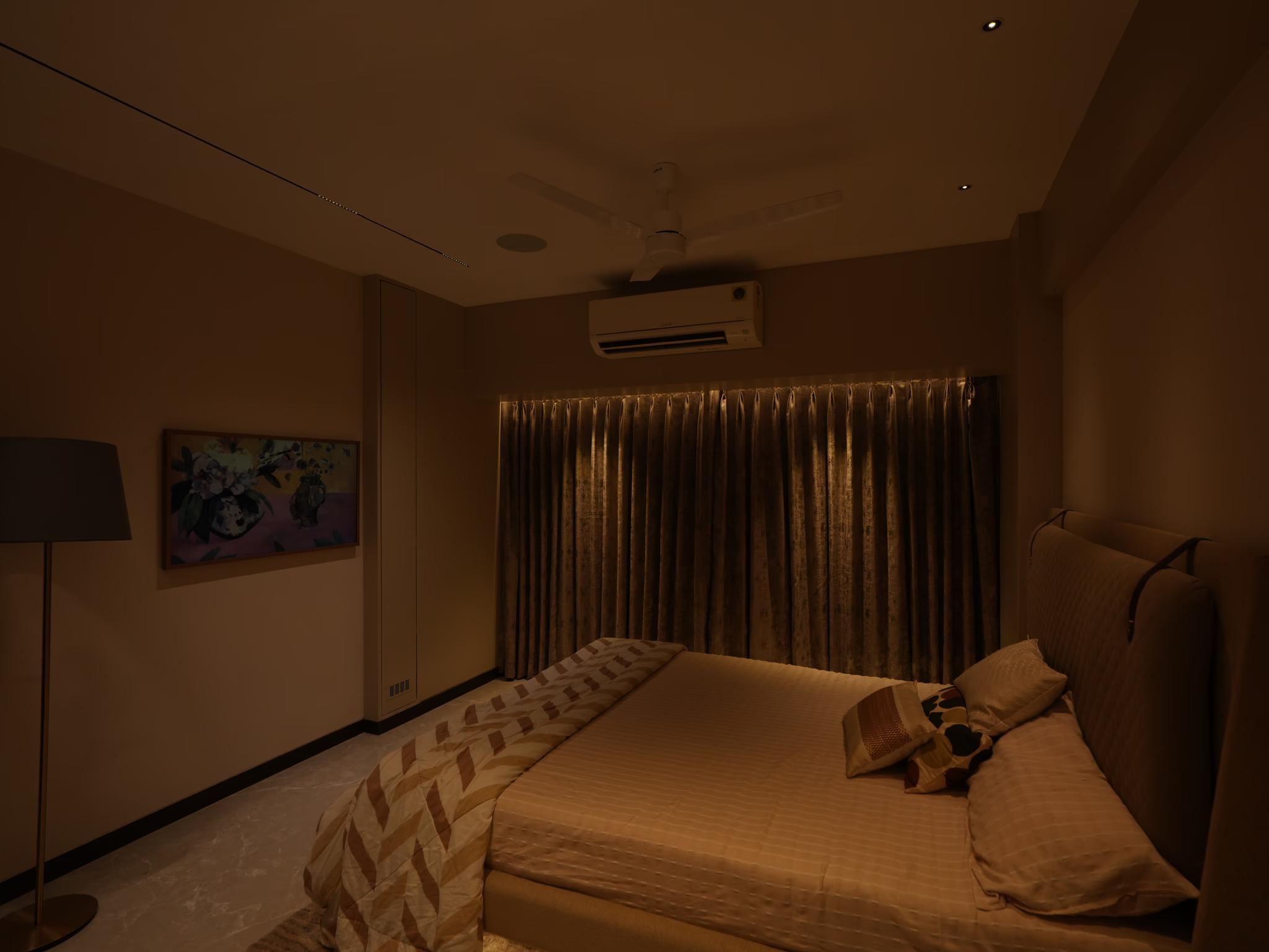
A bedroom at night with the curtains closed and the lights dimmed to a low evening scene

Outside Mumbai

Does the company need to be in your city?

Less than you might think. Most of the value is in the design and the commissioning, and both can be done well from a distance. What has to be local is someone to mount and wire the hardware, and a support team that can reach you quickly.

  • AHA consults remotely and delivers through a partner network across India.
  • About 95 per cent of support issues are fixed remotely, in under 30 minutes.
  • The two experience centres are in Mumbai. Everywhere else, consultations happen remotely.
  • “Everything responds instantly and feels extremely reliable.” Nitish Mitesrain, Nazara Technologies Limited, Pune

What it should cost, before anyone quotes you

Typical spend on real AHA projects, so you can tell a fair quote from an inflated one. Your own number depends on how many rooms and which systems you include.

Bedroom, lighting only

  • 1 cove driver, up to 15 ft
  • 4 to 6 spot and COB drivers
  • 2 decorative lights
  • Under-bed LED and a motion sensor
Typical spend

₹45,000

Master bedroom

  • Smart switch and hub
  • 6 light drivers
  • AC and fan control
  • 1 motorised curtain set
Typical spend

₹85,000

Living room

  • 3 smart switches and a hub
  • 10 light drivers
  • AC and fan control
  • 1 motorised curtain set
Typical spend

₹1,20,000

Full 3BHK apartment

  • Every room on one system
  • Lighting, curtains and climate
  • One app and wall keypads
  • Configured and commissioned by AHA
Typical spend

₹3 to 5 lakh

*Scope estimates from AHA projects, not product prices. For the full breakdown, read what home automation should cost.

What our clients say

Architects, founders and families who chose AHA. The current rating and every review live on our Google listing.

Riddhi Shah
Riddhi ShahPrincipal Architect @ ADL Group
★★★★★

"Managing different vendors during construction can get complicated, but AHA made it feel simple. Their coordination with our electrician and contractor was seamless, and everything was delivered exactly as planned. It gave us a lot of confidence throughout the build."

Harshil Salot
Harshil SalotCo-founder of The Sleep Company
★★★★★

"AHA really understood how we wanted to live in our home and translated that into the smallest details. Each room feels intentional and tailored to our routines. The team was also very hands-on and supportive throughout, which made the whole process feel collaborative rather than transactional."

Prashant Parulekar
Prashant ParulekarFounder & CEO of Infoglobals
★★★★★

"Everything feels intuitive, responsive, and thoughtfully designed around how we live."

Salim Merchant
Salim MerchantSinger, Composer & Music Producer
★★★★★

"AHA made our home simpler, smarter, and effortless to live in. Every detail was thoughtfully designed around our lifestyle."

Judge it in a working home, not a showroom

Both AHA experience centres are laid out as real sample flats rather than product walls. Walk in without an appointment, or book one if you would rather. Ask us to unplug the internet while you are there and watch what keeps running.

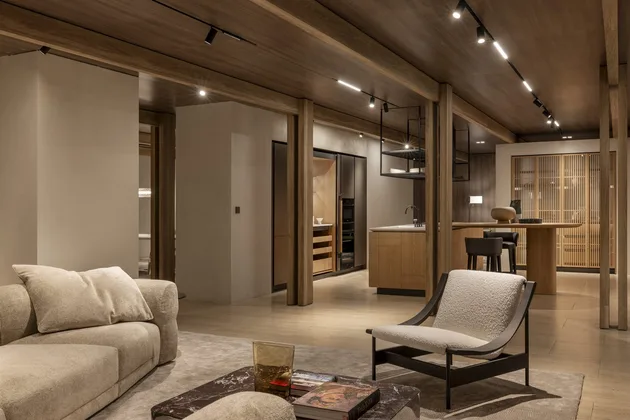
AHA Santacruz Experience Centre interior laid out as a sample flat

Santacruz West

Vrindavan 101, Meera Bagh Road, RBI Staff Quarters, Potohar Nagar, Santacruz West, Mumbai 400054. Two minutes from Linking Road.

Open daily · 11am - 7pm · Free parking

Get Directions
AHA Lower Parel Experience Centre interior laid out as a sample flat

Lower Parel

Level 1, Ginger House, Raghuvanshi Mills, Senapati Bapat Marg, above BoConcept, Gandhi Nagar, Upper Worli, Lower Parel, Mumbai 400013.

Open daily · 11am - 7pm · Free parking

Get Directions

Questions buyers ask at this stage

Which is the best home automation company in India?

There is no single answer, because the right company depends on your home and your timing. The tests do not change, though: an open standard rather than a private protocol, scenes processed on a hub inside the home, technicians the company actually employs, hardware it stands behind itself, and a written split between who installs the hardware and who commissions it. Any company that answers all five cleanly deserves a place on your shortlist.

How much does home automation cost in India?

As scope estimates rather than product prices, a bedroom typically runs ₹80,000 to ₹1,00,000, a living room around ₹1,20,000, and a full 3BHK apartment roughly ₹3 to ₹5 lakh. Lighting alone costs far less, around ₹45,000 for a bedroom. For a market check, published Indian ranges are ₹800 to ₹1,500 per sq ft for wired systems and ₹200 to ₹600 for wireless.

What is the difference between a home automation company and a smart home dealer?

A dealer sells devices. A home automation company designs a system: what talks to what, where the hub sits, what each keypad does and what happens in a power cut, and then commissions it so it behaves that way. The practical test is whether one company is accountable for the whole house afterwards, or whether you end up with four apps and four support numbers.

Do home automation companies work outside their own city?

Good ones do, because design and configuration are not physical work. AHA consults remotely and delivers through a partner network across India, while both experience centres are in Mumbai. Before you hire anyone at a distance, ask who does the mounting and wiring in your city, and what share of support is resolved without a site visit.

Can devices from different brands work together?

Only if they share an open standard. Devices certified on Zigbee 3.0, Matter or Thread can generally be brought onto one hub and used in the same scenes. Devices on a manufacturer's private protocol usually cannot, whatever the box says, which is why the standard matters more than any single product.

Does home automation stop working when the internet goes down?

Not if the intelligence sits in a hub inside the home. Lighting, curtains, locks, sensors and scenes keep running on the local network. Voice assistants are the exception, since they are cloud services, so the wall keypads carry the house until the connection returns.

Do I have to break walls to automate a finished flat?

Not for the lights, with a wireless system. The driver goes inside the existing light fitting and the keypad replaces your switch plate, so the lights need no chasing, rewiring or repainting. The one wiring check is a neutral at each keypad's switch box, which your electrician runs if it is missing. That is the biggest practical difference between wired and wireless once a home is finished.
Put us through the same eight questions

Book a consultation and ask us everything on this page. You get a room-by-room estimate, and a straight answer on whether it is worth doing yet.

Book a Free Consultation

Visit us in Santacruz West or Lower Parel