The Night Route Lights Itself
A motion sensor at the bedside fires the moment feet touch the floor, bringing up an under-bed LED or a low ceiling light. Bright enough to see the way, dim enough not to wake the house or shock the eyes.
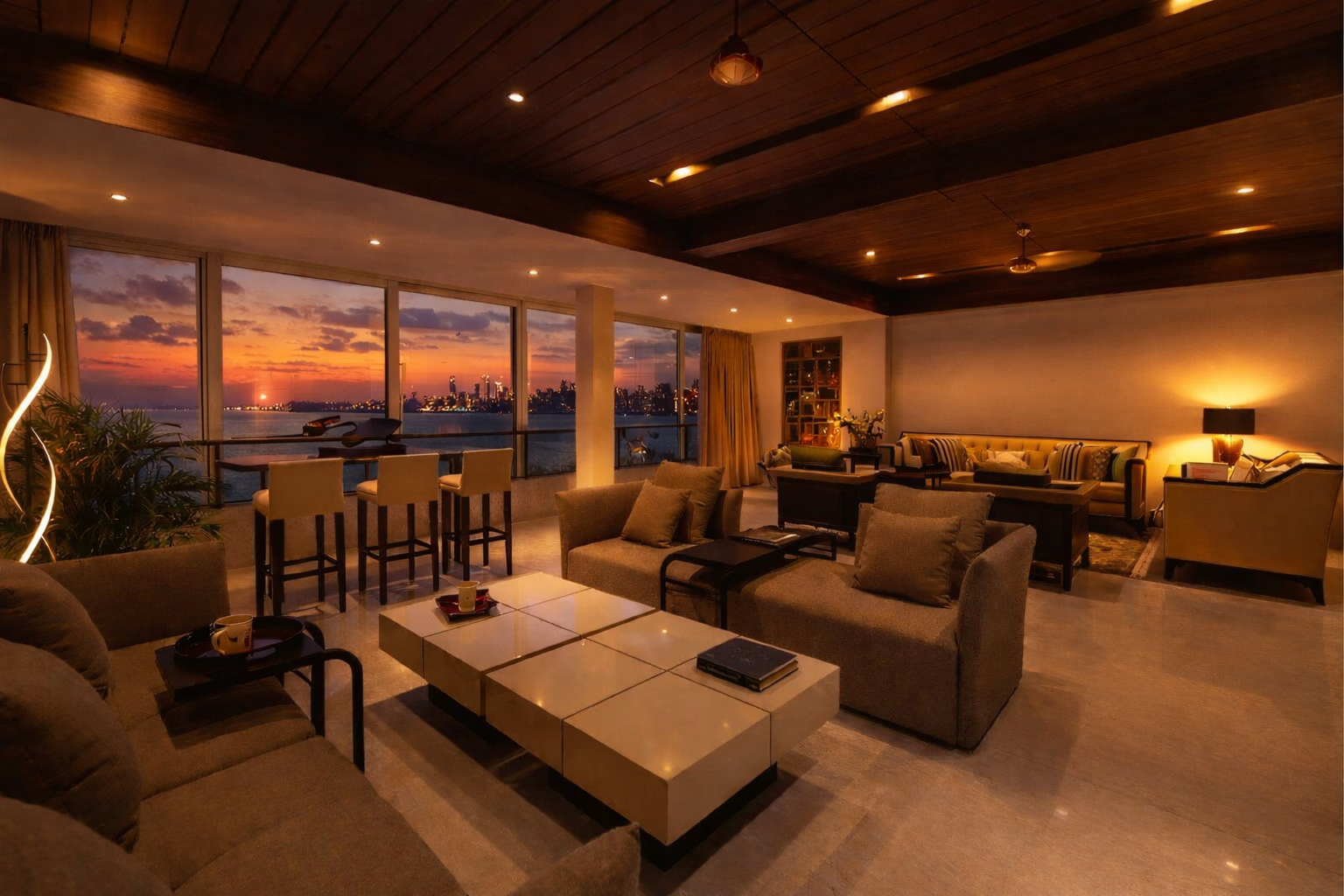
A home designed around the person living in it, not the person buying the system. The light on the way to the bathroom comes on by itself at 2am. Every switch still clicks and still works without a phone. The door opens without a key, and you can let the help in from another city. Nothing your parents already use is taken away.
5.0 on Google · Trusted by 1200+ Mumbai homes
The design principle
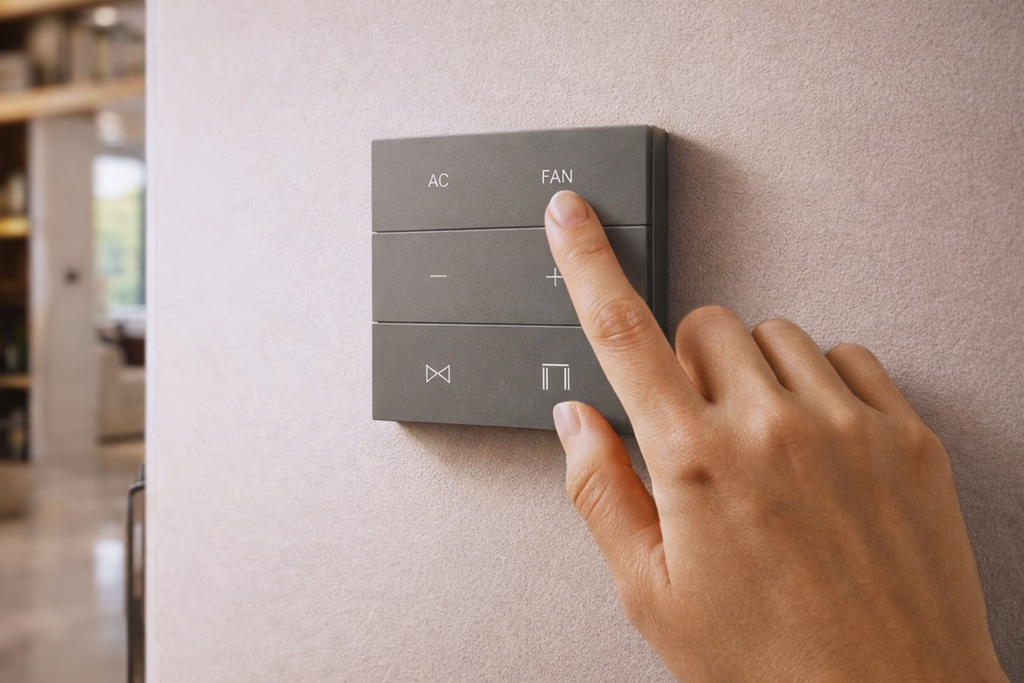
A system designed by a son or daughter who is comfortable with apps, for a parent who is not, gets abandoned within a month. So we design it the other way round. Every automation attaches to something your parents already do at a time they already do it, which means nobody has to remember to use it. Every control stays on the wall where it has always been, with a button that gives a real physical click, so it can be found by feel in the dark. The app exists for you, to check on things and let people in from wherever you are. It is never the only way to work the house.
Six changes that make a daily difference in a parent's home, in roughly the order we would build them. Our family guide to automating a parent's home walks through the reasoning behind each one.
A motion sensor at the bedside fires the moment feet touch the floor, bringing up an under-bed LED or a low ceiling light. Bright enough to see the way, dim enough not to wake the house or shock the eyes.
An ordinary motion sensor switches off on someone standing still at the basin. A human presence sensor reads occupancy down to breathing, so the light holds steady until they leave the room.
Haptic buttons with a genuine physical press, not a flat touch panel, fitted in place of the existing switch plate, with a neutral at that switch box. Found by feel, confirmed by touch, no screen to read.
Face recognition, fingerprint, palm or a keypad code opens the front door, with two physical keys kept as a fallback. No searching a bag one handed in a corridor.
A ring activates the door camera and blinks the lights, so a sound that is easy to miss becomes something you can see. It is the difference between answering the door and not knowing anyone came.
An IR controller brings the existing air conditioner and television onto the system, and a separate RF controller handles BLDC fans. Everything runs to a schedule, and the old remotes still work as a backup.
The measure of a system built for an older parent is not how much it can do. It is how little it asks of them.
The parts are worth little on their own. What matters is what they do together at the moment it is needed, with no decision from anyone.
Feet touch the floor, the path lights at low brightness, and the bathroom holds its light until they leave.
The door unlocks and the entrance and living room come up to a comfortable level, so nobody walks into a dark flat.
Bright and neutral through the day, warmer through the evening, low from around 9pm. Nobody sets it. It is simply what the house does.
Curtains ease open in stages rather than one heavy pull, so daylight arrives gradually and nobody has to reach up.
The mandir lighting comes up at the usual hour with the diffuser and, if wanted, the day's bhajans. The routine is ready rather than arranged.
The cook, the cleaner or the physiotherapist gets a code that works only at their hours, revocable from your phone with nothing to hand back.
Not mockups. Each of these runs live at both Mumbai experience centres, and you are welcome to bring your parents to walk through them before deciding anything.
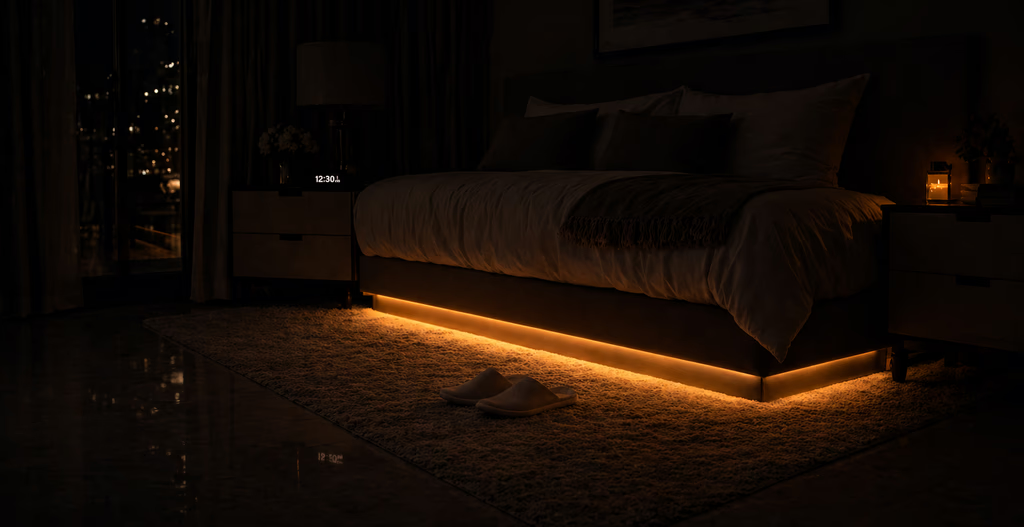
The one to build first. Bedside motion sensors light the route the moment feet touch the floor, and a presence sensor holds the bathroom light steady even when nobody is moving.
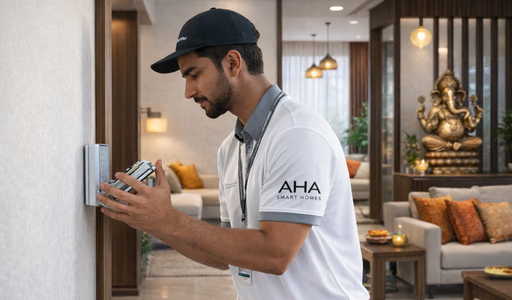
The mandir lights come on at the usual hour through the smart driver, the aroma diffuser releases fragrance, and a preset scene can start the day's bhajans. The ritual is untouched, only the setting up is gone.
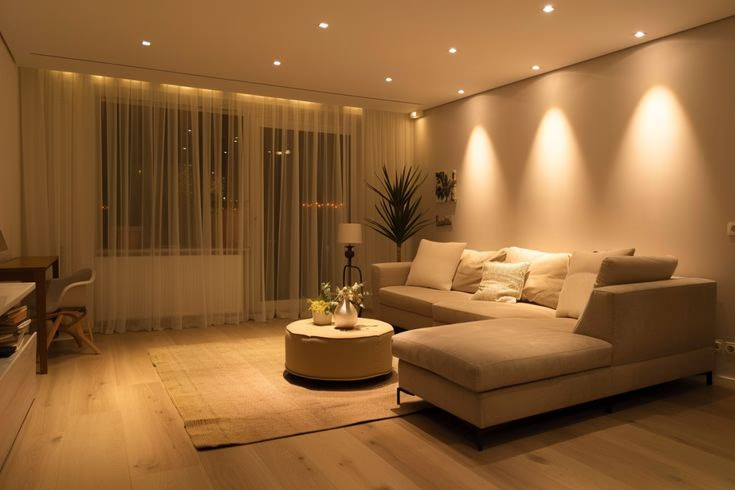
The door recognises them and opens, and the entrance and living room lights come up to a comfortable level as they walk in. No key, no fumbling at the lock, no dark flat.
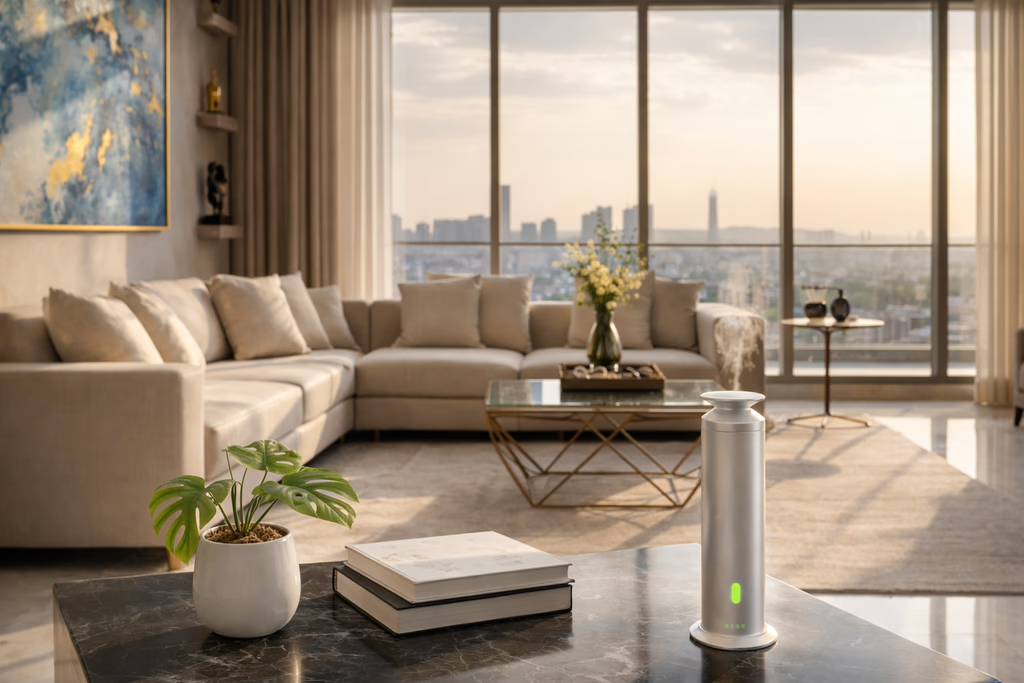
One dedicated button gives the house help bright working light with the fan or air conditioner off, and a double click brings it back. They never need to learn the rest of the system.
Worth being direct about, because the emotional weight of this decision makes it easy to hear more than is being offered. If your family needs any of the following, it is a different category of product and should be bought as one.
No sensor in this system detects a fall or a person on the floor. The presence sensor reads occupancy so it can hold a light on, nothing more.
Nothing here monitors vital signs, tracks sleep or calls an ambulance. It is not a substitute for a medical alert pendant or for care.
Cameras belong at the front door, not inside the rooms. We do not recommend indoor cameras in a parent's home unless that parent has asked for them.
The lock sounds a local alarm and alerts your phone if someone tampers with the door. It is not monitored by a control room and nobody is dispatched.
This removes a set of specific daily frictions. It does not make anybody less alone, and it is not a way of being more present from another city.
When the home belongs to somebody you are not there to help, who does the work and what happens afterwards matter more than the specification.
Automations run on a hub inside the home.
Around 95 per cent, in under 30 minutes.
80+ in-house technicians, background verified employees.
No wall breaking for the lights. Keypads need a neutral at the switch box.
Start with the bedroom and bathroom. Add later, or never.
Practical questions about arranging this for a parent's home. The design and day-to-day questions are answered in our family guide.
Yes, and a good share of these projects are arranged that way. The consultation can happen over a call with you and your parents together, and it helps to share the flat's electrical plan if there is one. Your parents need to be at home for the electrician's work and for AHA's commissioning visit, but you do not need to be in Mumbai for either. You stay the point of contact throughout if that is what the family prefers.
Yes. The system is wireless, so there is no wall breaking for the lights. The one wiring check is a neutral at each keypad's switch box, which your electrician runs if it is missing. Smart drivers go inside the existing light fittings, keypads go on the existing switch plates with a neutral at each box, and sensors and controllers are added to the room. Older buildings are usually straightforward. The one thing worth checking early is the wiring at the points where a human presence sensor is wanted, since those need a phase and neutral connection.
Hardware placement by your electrician and AHA's on-site commissioning together typically run one to three days depending on scope, plus programming. A single room can be done in a day. Because this is usually built room by room in a parent's home, the disruption is limited to one room at a time rather than the whole flat, and the house is livable each evening.
Two groups. Your own electrician mounts and wires the hardware to AHA's specification, since AHA does not do the physical placement itself. AHA's own technicians then visit to pair the devices, configure the hub, program the scenes and test everything with your parents present. Those technicians are factory-trained, background-verified employees of AHA, not freelance contractors.
Around 95 per cent of issues are resolved remotely in under 30 minutes over a call or WhatsApp, with no site visit, which matters when the person at home cannot troubleshoot and you are not in the city. The first year of support is complimentary, and an annual plan with remote diagnostics, updates and priority service is available afterwards.
We would encourage it. Both experience centres, in Santacruz West and Lower Parel, are laid out as real sample flats rather than showrooms, and the night-time lighting, the door lock and the wall keypads can all be tried by hand. Open from 11am to 7pm (Santacruz West is closed on Tuesdays) with free parking, walk-ins welcome and appointments also available. Watching a parent try the switch themselves settles most of the conversation.
Yes. The two experience centres are in Mumbai, but systems are deployed across India through remote consultation and a partner network, so parents living in another city can be looked after. Where your parents are located changes the coordination, not what the system does.
Rated 5★ on Google by homeowners across Mumbai who chose AHA for their homes and their families' homes.

"Everything feels intuitive, responsive, and thoughtfully designed around how we live."

"AHA really understood how we wanted to live in our home and translated that into the smallest details. Each room feels intentional and tailored to our routines. The team was also very hands-on and supportive throughout, which made the whole process feel collaborative rather than transactional."

"Managing different vendors during construction can get complicated, but AHA made it feel simple. Their coordination with our electrician and contractor was seamless, and everything was delivered exactly as planned. It gave us a lot of confidence throughout the build."

"AHA made our home simpler, smarter, and effortless to live in. Every detail was thoughtfully designed around our lifestyle."
Both centres are laid out as real sample flats, not showrooms. The night lighting, the lock and the keypads can all be tried by hand before anything is decided.
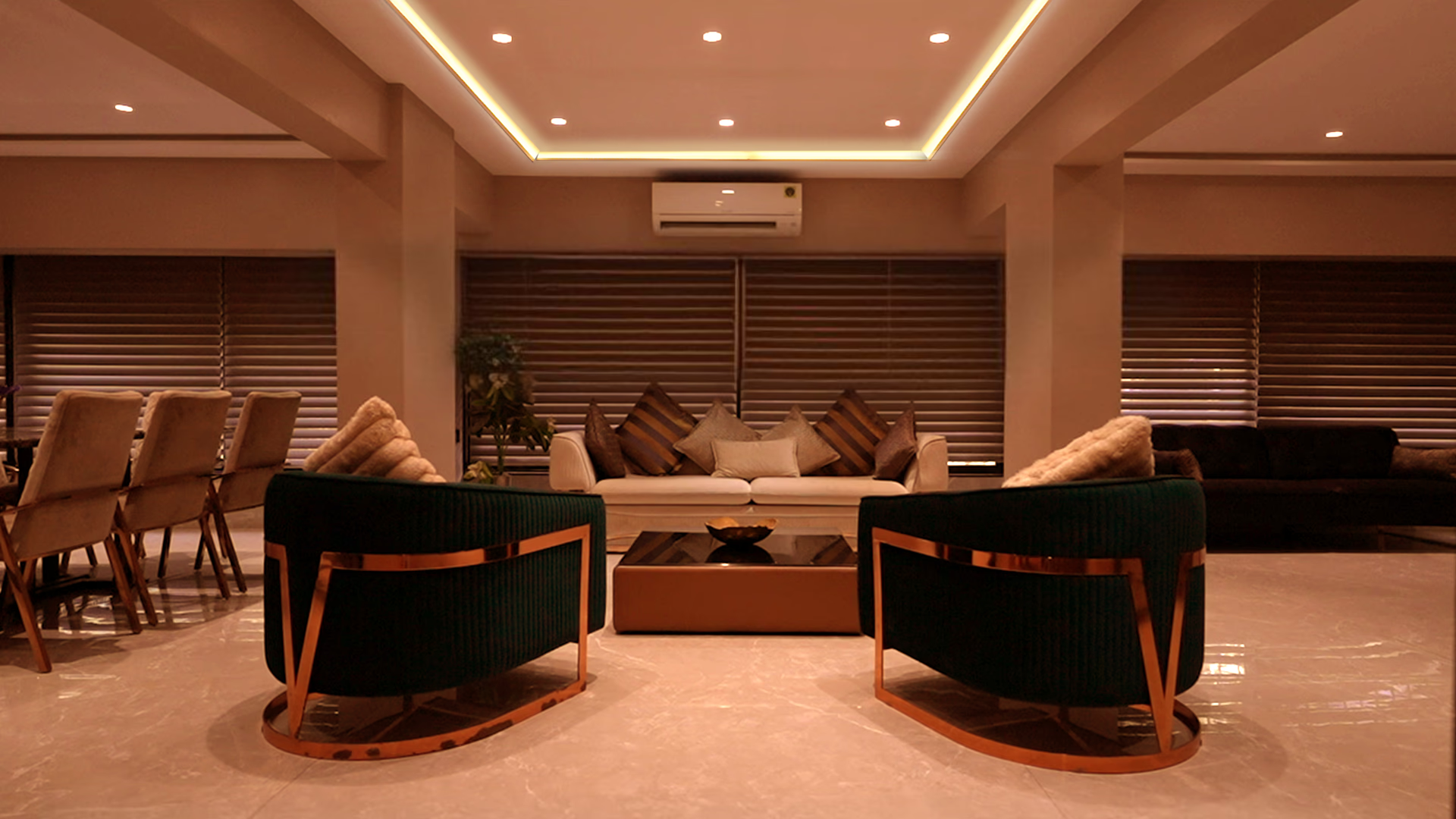
Santacruz West
AHA Smart Homes, Santacruz West, Mumbai, 2 minutes from Linking Road.
Open 11am - 7pm · Closed Tuesdays · Free parking
Get Directions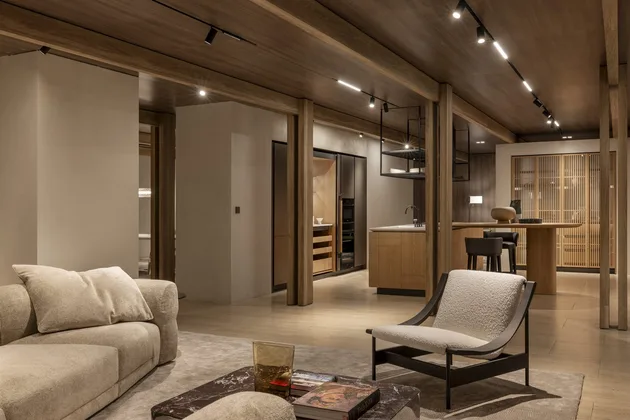
Lower Parel
AHA Smart Homes, Raghuvanshi Mills Compound, Lower Parel, Mumbai.
Open daily · 11am - 7pm · Free parking
Get Directions